
AI driven systems are changing how armored vehicles recognize and react to digital and physical risks, and some intrusion detection models already report 100% recall and 100% precision on in-vehicle network attack datasets with inference times around 0.3 milliseconds. In this article, we explain how these advances connect to real armored platforms from SchutzCarr and what decision makers should understand before specifying AI enabled protection.
Key Takeaways
| Question | Answer |
|---|---|
| What is AI driven threat detection in armored vehicles? | It is the use of machine learning models on vehicle networks, sensors, and cameras to identify abnormal events in real time and support safer decision making across platforms like the SchutzCarr armored vehicle fleet. |
| How does this relate to traditional BR6 and BR7 armor? | Ballistic protection handles physical impact, while AI driven detection focuses on monitoring data and surroundings, which can complement BR6 and BR7 configurations such as those discussed for the Toyota Land Cruiser 76 BR6 SUV. |
| Can AI monitoring fit into daily driven armored SUVs? | Yes, AI workloads can be integrated into existing electronic architectures while still respecting weight, comfort, and maintenance factors highlighted in guides on daily usability of armored SUVs. |
| Which vehicle platforms are often chosen for AI capable builds? | Body-on-frame SUVs and dedicated armored personnel carriers, such as the Land Cruiser platforms and APC configurations featured across the armored trucks vs armored pickups comparison, provide room and electrical headroom for AI hardware. |
| Why are private organizations considering AI in armored mobility? | They want structured, data driven monitoring for executive transport and logistics operations, a trend discussed in why private companies are turning to armored vehicles. |
| Does AI detection replace human judgement in the vehicle? | No, AI serves as an additional layer that can highlight anomalies for occupants, similar to how comparative analysis tools assist when choosing between Land Cruiser 76 and LC300 armored platforms. |
1. Why AI Driven Threat Detection Matters In Modern Armored Vehicles
Modern armored vehicles carry dense electronics, in-vehicle networks, and connectivity options that create new digital exposure alongside traditional ballistic considerations. Research into in-vehicle intrusion detection now shows some AI models achieving perfect scores on benchmark datasets, which signals how mature these tools are becoming for real deployments.
For us at SchutzCarr, this evolution is less about headlines and more about structured risk management that respects the realities of BR6 and BR7 platforms. We look at how AI modules can monitor networks, sensors, and external feeds without distracting from the primary role of the vehicle as a stable protective shell.
AI driven threat detection in this context focuses on patterns that deviate from learned norms in the vehicle environment. That includes network traffic on the CAN bus, sensor consistency, and in some architectures, external camera feeds to support early awareness for occupants.
2. From Steel To Silicon: How Protection Has Expanded Beyond Armor Levels
Traditional armored specifications concentrate on ballistic categories such as BR6 and BR7, which define how the vehicle resists specific physical threats. Our stock list at SchutzCarr Elite Protection Fleet reflects this, with platforms designed around clear protection baselines and payload considerations.
AI driven detection adds a second axis of protection that does not replace armor but works beside it. When an armored Toyota Land Cruiser 76 is equipped with robust network monitoring, for instance, the system can watch for anomalies in control messages in parallel with its ballistic glass and reinforced cabin.

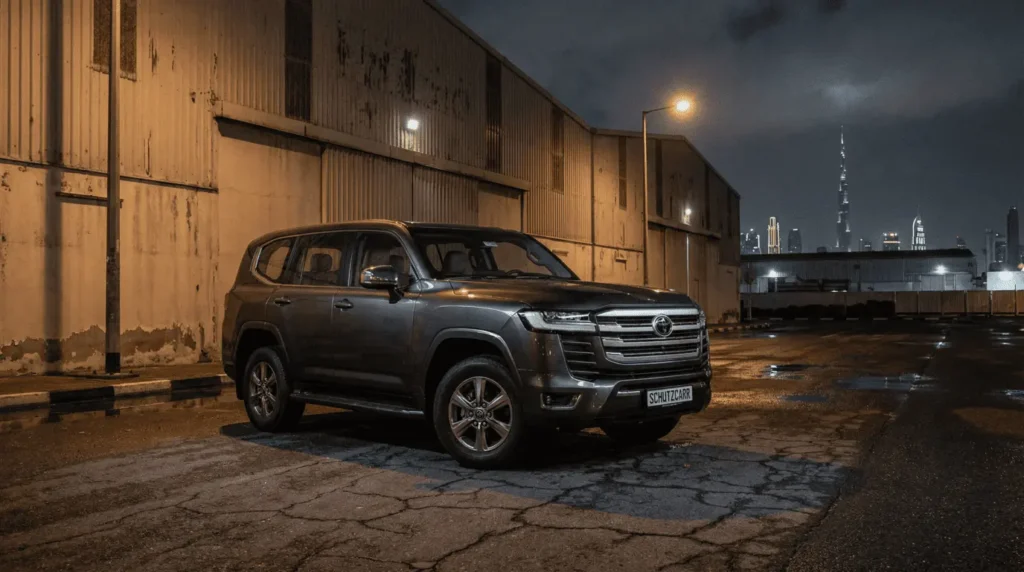
This shift from purely mechanical resilience to combined mechanical and digital resilience is what makes AI a relevant topic for armored buyers today. It turns the cockpit and electronic architecture into active observers, not just passive routing points for signals.
3. AI And The CAN Bus: Protecting The Nerve System Of Armored Vehicles
Most modern armored platforms are based on commercial chassis that rely on a Controller Area Network, or CAN bus, to coordinate engine, braking, stability control, and many auxiliary systems. Intrusion detection research for these networks now reports average accuracies above 93% on edge deployed models and extremely low detection latency.
In practice, this means a small embedded AI module can sit on the internal network of an armored SUV and learn what normal traffic looks like, then flag abnormal message patterns as potential issues. The aim is not to automate decisions, but to highlight and log suspicious behavior for follow up.
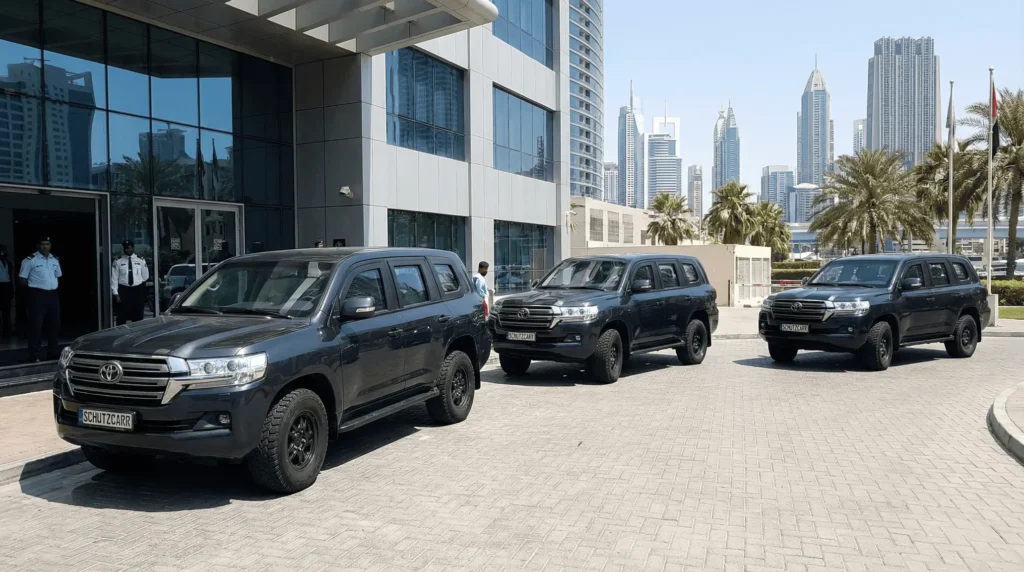
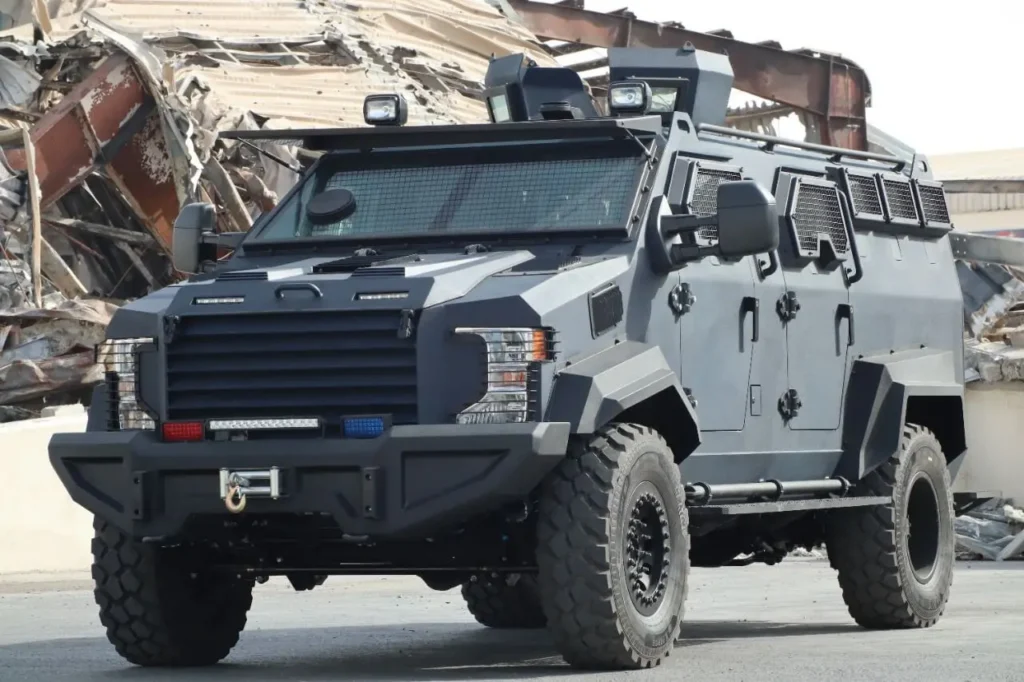
Some shallow learning approaches running on dedicated hardware have been measured at detection speeds around 0.0233 milliseconds per decision with accuracies close to 99.7%. That level of speed helps ensure the AI system does not introduce delays into powertrain or braking communication while still providing continuous oversight.
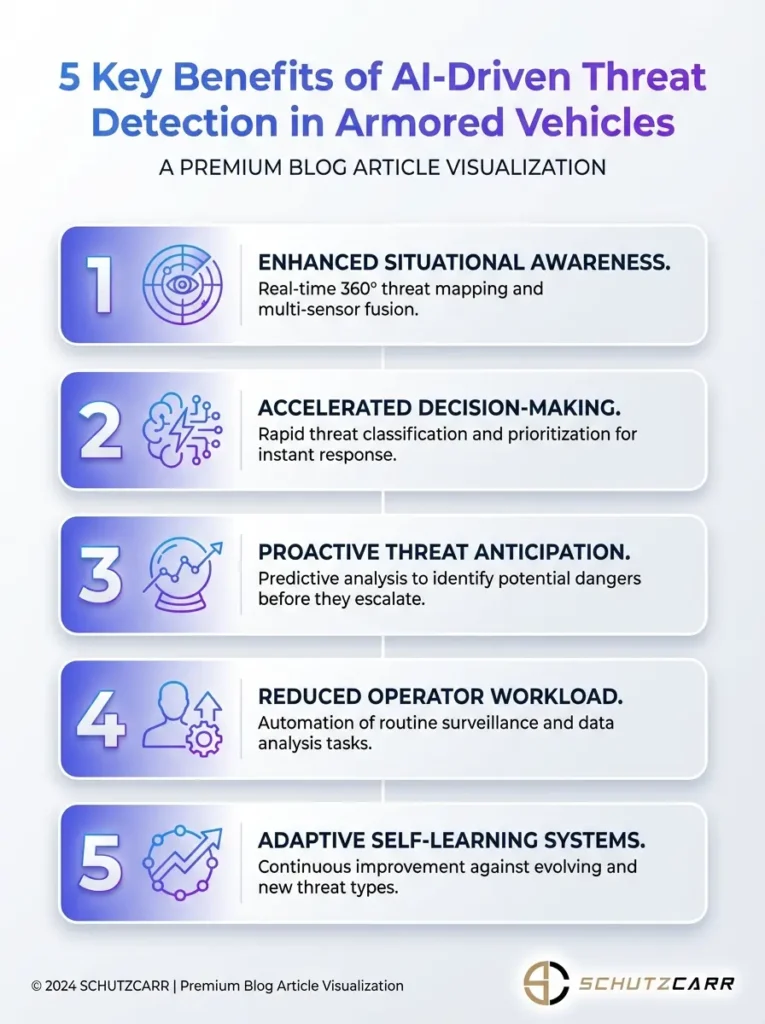
An infographic showing 5 key benefits of AI-driven threat detection in armored vehicles. Learn how real-time analysis enhances safety, responsiveness, and protection.
4. AI Driven Situational Awareness Around Armored SUVs And APCs
Beyond network security, AI driven threat detection can help interpret information from cameras, radar, or other sensors mounted around an armored vehicle. For private sector users who operate in busy urban environments, this can support awareness of unusual proximity patterns or unexpected behavior around the vehicle, within clearly defined privacy and regulatory constraints.
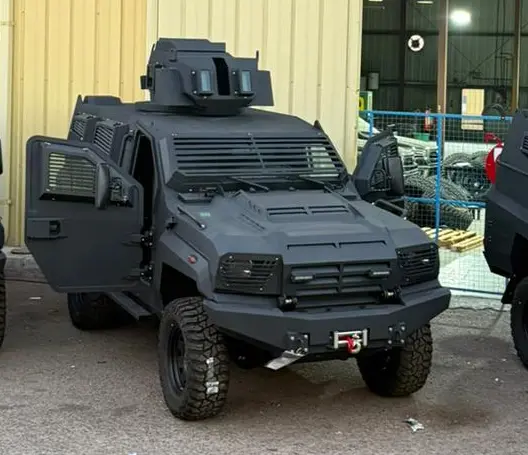
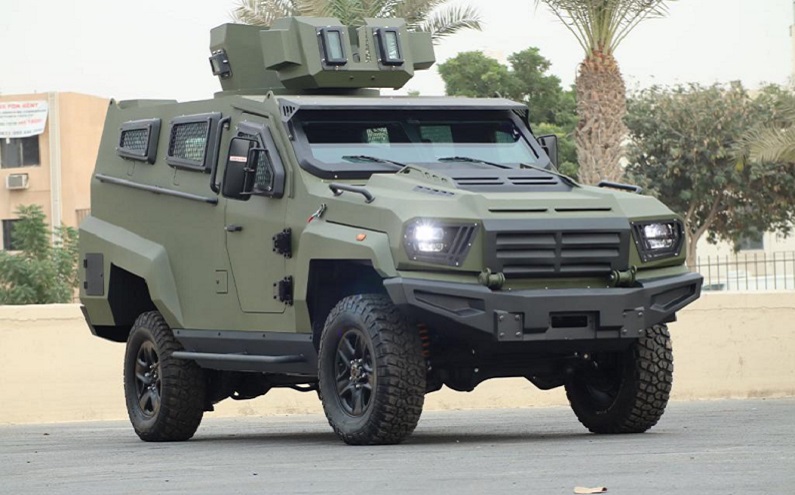
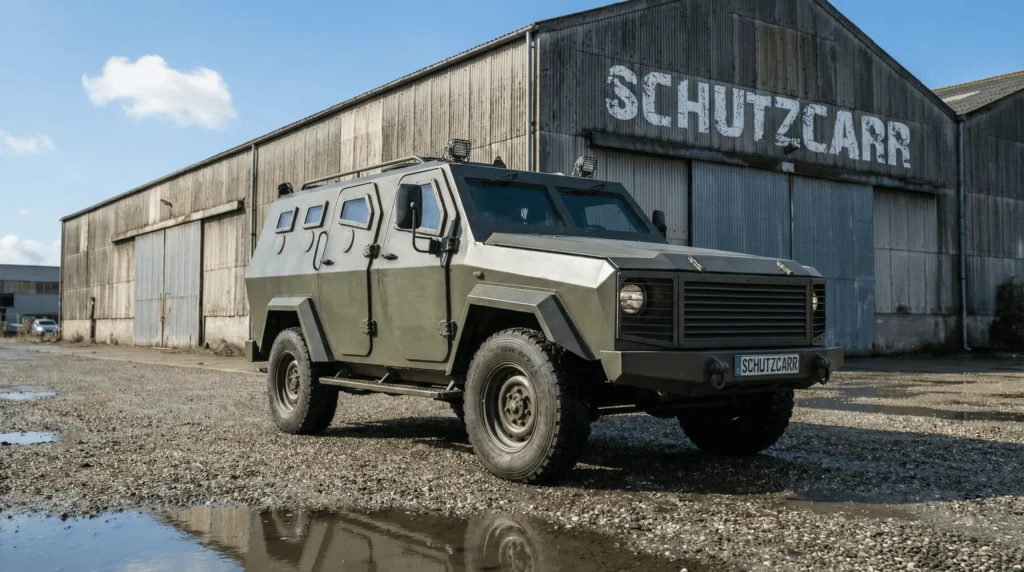
Platforms like the APC SHARK or GER 1D, which appear in our armored vehicle catalog, already allocate space and power for advanced communications and monitoring modules. Integrating AI workloads into these spaces allows for modular upgrades as detection models improve.
On the software side, attention based models such as those used in secure vehicular formations have demonstrated F1 scores up to 0.95 with decision latencies around 100 milliseconds. These characteristics are suitable for highlighting anomalies around a moving or stationary armored platform without constant manual observation of multiple screens.
Did You Know?
Zero-day botnet detection research in connected-vehicle networks reports average detection rates of about 92.8% for known attacks and 77.3% for previously unseen attacks, highlighting how AI can still surface novel threats that traditional rules might miss.
5. AI Workloads And The Realities Of BR6 / BR7 Armored Platforms
Any AI module in an armored vehicle has to coexist with additional weight from ballistic steel and glass, as well as reinforced suspension components. As our daily usability guidance for armored SUVs explains, weight influences acceleration, braking, parking, and maintenance scheduling.
When we consider AI driven detection in a BR6 or BR7 SUV, we account for power draw, heat generation, and mounting locations so that new electronics do not compromise the vehicle’s mechanical balance. Compact GPU accelerators or dedicated ASICs have become appealing here because they provide fast inference with controlled power use.
Research into GPU accelerated intrusion detection has measured training time reductions up to 159 times and prediction speed gains around 95 times compared with CPU bound models. For us, such gains make sophisticated algorithms realistic even in constrained automotive environments, which benefits armored builds where space and cooling are already under pressure.
6. Case Study Concepts: AI Ready Armored Toyota Land Cruiser 76
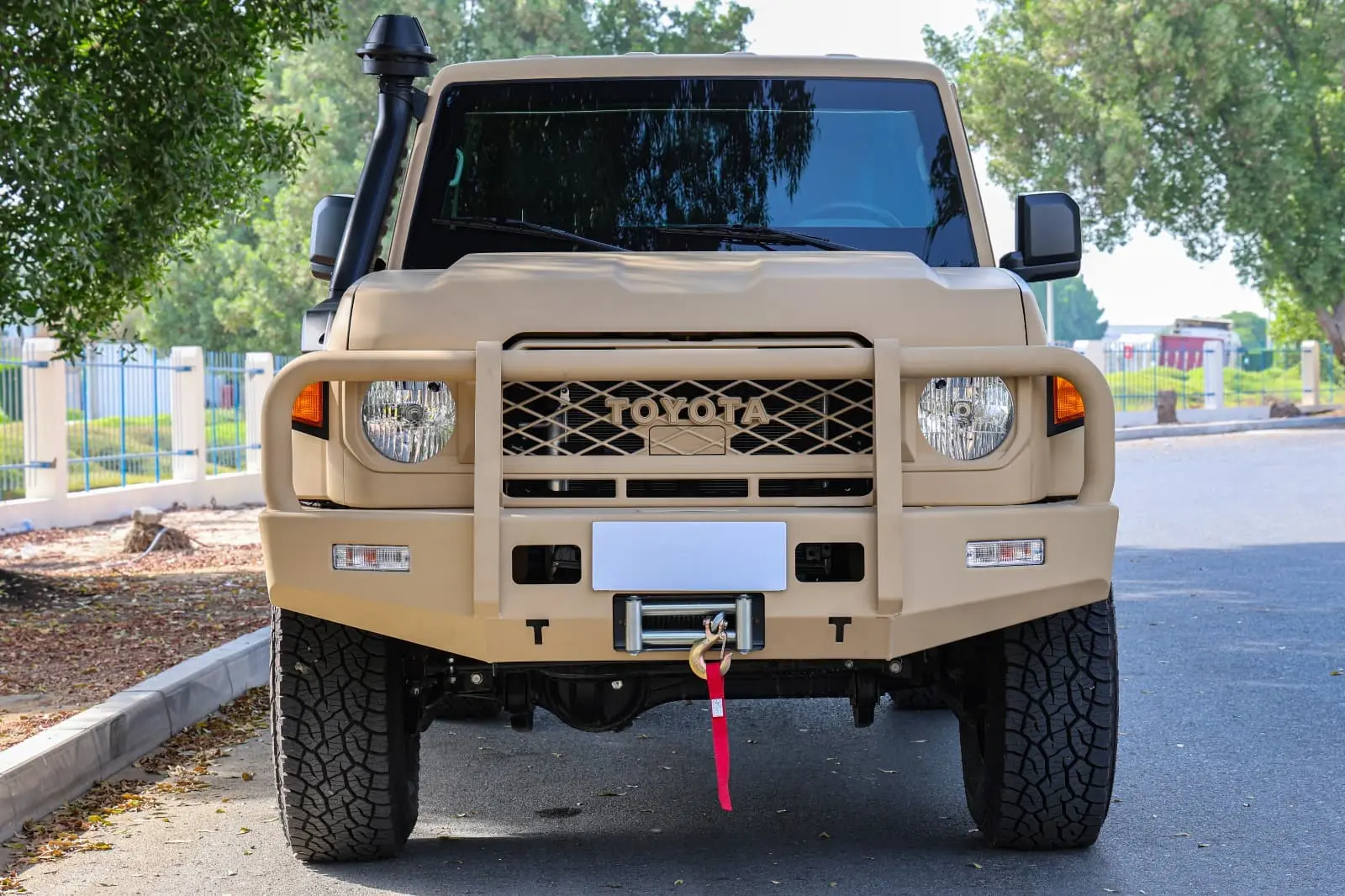
The Toyota Land Cruiser 76 platform, which we armor to BR6 configurations in our LC76 BR6 tactical SUV offering, illustrates how AI detection can align with a rugged chassis. The LC76 uses a proven mechanical base that tolerates extra weight and power consumption from both armoring and auxiliary electronics.
Inside the cabin, there is room to route wiring looms and mount compact compute units behind panels without disrupting seating or cargo. That makes it possible to integrate AI modules that watch the internal network, log anomalies, and optionally interface with display systems, while keeping the original ergonomic intent of the vehicle.
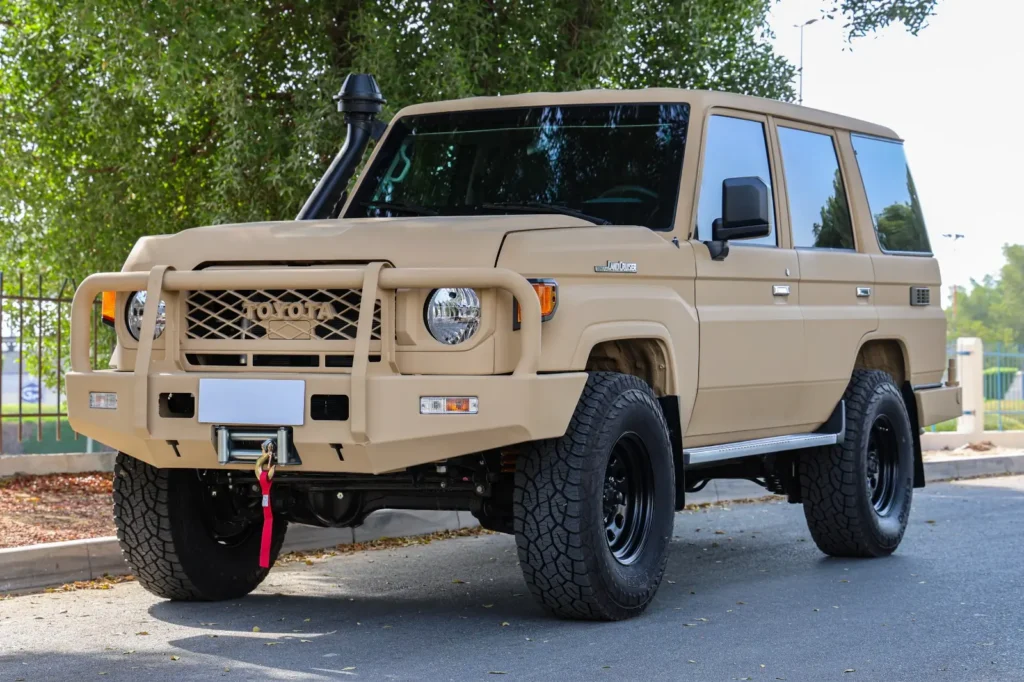
Because the LC76 is often selected for use in demanding environments, advanced monitoring complements its mechanical durability. Built in run flat systems and reinforced suspension address physical hazards, while AI detection focuses on digital and sensory anomalies that could otherwise go unnoticed.
7. Extended Wheelbase Platforms And AI Integration: Land Cruiser 2024 Extended
Longer wheelbase armored SUVs, such as the Land Cruiser 2024 Extended armored SUV, provide additional flexibility for AI driven detection hardware. The extended body creates more underfloor and side panel volume for cable runs, sensor placement, and secure mounting of computational modules.
This extra space can be useful when adding multiple cameras or environmental sensors whose feeds may be processed by AI models. Since the Land Cruiser 2024 Extended is built around BR6 protection with upgraded ballistic glass and a reinforced frame, the chassis is already engineered to carry added mass from both armor and electronics.
From a systems design perspective, we treat AI detection nodes much like other mission critical electronics. They must be mounted to withstand vibration, temperature swings, and electrical noise that are typical for armored SUVs that operate on varied surfaces and over long distances.
Did You Know?
GPU-accelerated machine learning libraries for connected-vehicle intrusion detection have been benchmarked with up to 159× faster training and about 95× faster prediction speeds than CPU-based approaches, which makes sophisticated AI threat detection feasible on armored-vehicle edge hardware.
8. Comparing Platforms For AI Driven Threat Detection: LC76 vs LC300
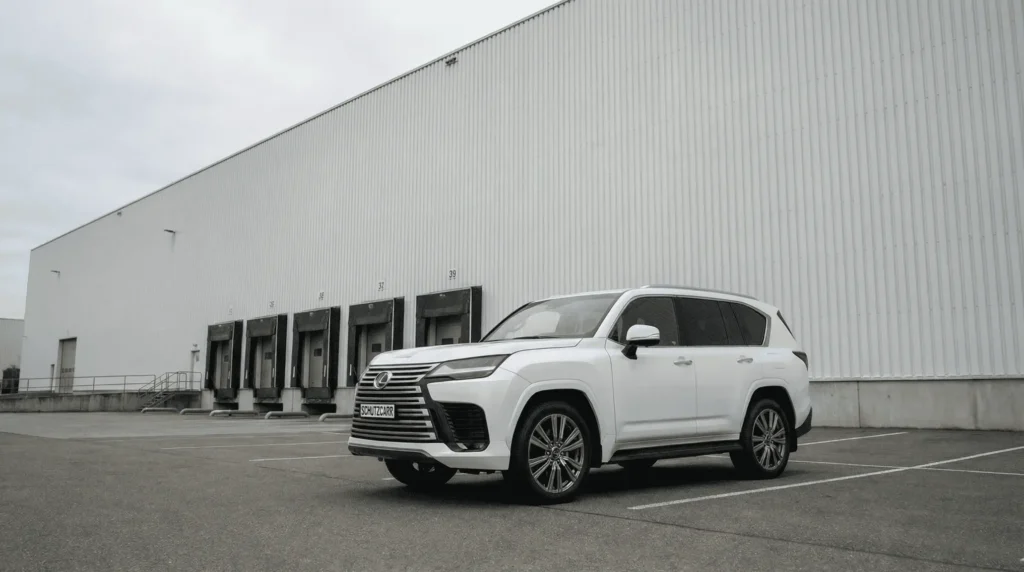
When buyers compare the Land Cruiser 76 with the LC300 GXR as armored bases, as outlined in our LC76 versus 300 platform comparison, their main focus is usually payload, comfort, and ride quality. AI readiness can be a secondary filter, but it still benefits from the same underlying structural choices.
The LC76 typically offers higher payload margins and a simpler electronics architecture, which can simplify AI intrusion detection because there are fewer subsystems to model. The LC300, in contrast, tends to provide more comfort and advanced features, which may offer richer data for AI systems but also require more careful network modeling.
In both cases, AI driven detection is most effective when we first map the vehicle’s communication flows and typical usage patterns. This mapping allows threat models to distinguish between genuine anomalies and normal variations in driving style or configuration.
9. Armored Trucks, Pickups, And APCs: AI Detection Across Vehicle Classes
AI driven threat detection is not limited to SUVs. Our analysis of armored trucks versus armored pickups touches on differences in chassis strength, payload, and configuration that also affect how and where AI modules can be installed.
Trucks and APCs may have more space for rack mounted electronics and dedicated sensor masts, which can create richer data streams for AI monitoring. Pickups, on the other hand, often favor more compact installations that focus on the most critical networks and exposure points.
In both cases, the aim is to design AI detection as an integrated part of the vehicle’s electrical and communication layout, not as an afterthought. Doing so helps preserve system stability and ensures that monitoring remains active and reliable across a range of loading and environmental conditions.
10. Practical Considerations When Planning AI Detection In An Armored Build
For decision makers considering AI driven threat detection in an armored vehicle, the starting point is usually a clear definition of what should be monitored. That can include in-vehicle network traffic, external sensor inputs, or even basic diagnostics on data links between the vehicle and external infrastructure.
Next, we look at constraints such as power availability, allowable weight, environmental conditions, and desired retention periods for logs. These factors guide the choice between lightweight embedded models and more compute intensive AI stacks, and they determine how maintenance teams will update and validate detection performance over time.
Finally, it is important to recognize that AI models work best when trained and evaluated on data that reflects realistic conditions. Research on connected-vehicle datasets has shown that over simplified or highly duplicated data can overstate performance, so we take care to align expectations with robust testing rather than headline metrics alone.
Conclusion
AI driven threat detection in armored vehicles is not a replacement for BR6 or BR7 protection, but a complementary layer that monitors networks, sensors, and surroundings in real time. As armored platforms grow more connected and electronics heavy, embedding well designed AI modules helps address digital and informational risks while the armor continues to address physical ones.
If you are planning an armored vehicle acquisition or upgrade and want to understand how AI monitoring could fit into your configuration, we are ready to discuss specific platforms and integration paths. You can get in touch with SchutzCarr directly through our contact page at https://schutzcarr.shop/contact/ so we can review your requirements in detail.