
ARTEC Boxer MedEvac layouts can carry up to seven seated casualties or three stretcher patients, which shows how much capacity planning shapes armored ambulance configurations for field missions.
Key Takeaways
| Q1: What is the main decision in armored ambulance configurations for field missions? | Choosing between a truck-style protected box, a pickup-based solution, or an SUV / APC platform that we can convert, similar to the options discussed in our armored truck platform guide. |
| Q2: How many patients can a typical armored field ambulance carry? | Historic references like the AMEV on the M113A4 chassis accommodate four litters or eight ambulatory patients, which we use as a benchmark when we plan interior layouts. |
| Q3: Which protection levels are common for field-focused armored medical platforms? | Most field-focused builds sit in the BR6 range for a balance of protection and mobility, in line with the guidance we outline in our ballistic protection levels overview. |
| Q4: Are SUVs viable bases for armored ambulances? | Yes, rugged SUVs like the Land Cruiser family can work for compact field ambulances, especially where daily usability and mixed on-road / off-road driving matter, as discussed in our armored SUV usability guide. |
| Q5: How do organizations choose between trucks and pickups for medical roles? | Armored trucks provide a single large protected medical space, while pickups offer flexible bed conversions and easier fleet integration, which we compare in detail in our trucks vs pickups guide. |
| Q6: Can the same platform support both patient evacuation and support roles? | Yes, modular layouts allow stretcher-heavy evacuation configurations or more seated setups similar to Boxer MedTreat concepts, which aligns with how we approach modular armored platforms like the APC Shark-style MRAP platforms. |
1. Why Armored Ambulance Configurations Matter In Field Missions
Every field mission has different terrain, distance, and access constraints, so an armored ambulance layout that works in one region might be unsuitable in another. We design each configuration to balance medical access, patient capacity, and mobility.
Historic benchmarks help define useful capacity targets, such as the AMEV on the M113A4 chassis, which supports four litters or eight ambulatory patients en route. We use similar planning anchors when we convert trucks, pickups, and SUVs into protected medical vehicles.
- Protected volume decides how many stretchers and staff can work safely.
- Headroom affects whether medical teams can work seated only or with partial standing room.
- Door design shapes how quickly stretchers can be loaded or unloaded.
- Chassis choice determines off-road reach and maintenance options.

2. Core Platform Choices For Armored Field Ambulances
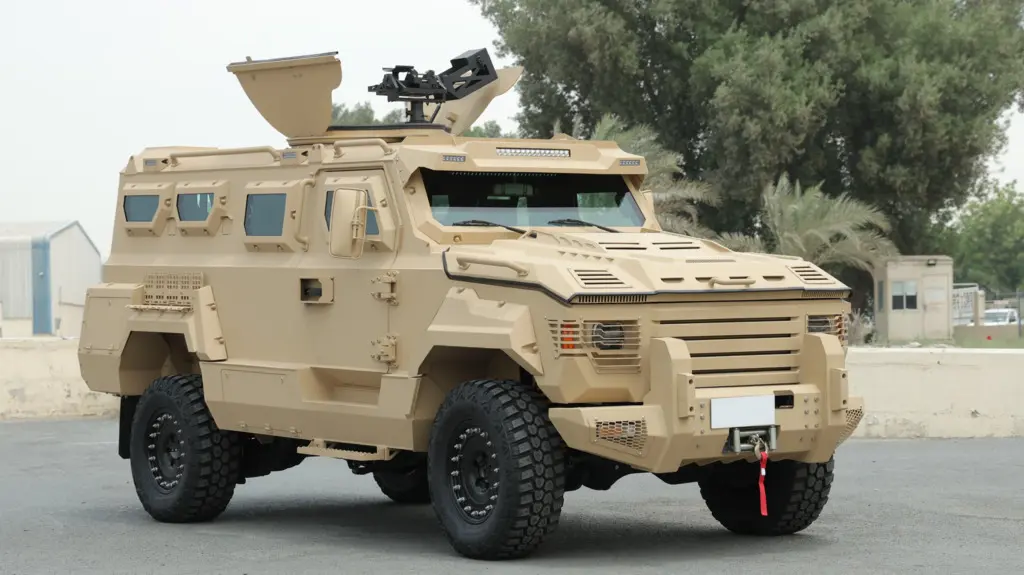
Most armored ambulance configurations for field missions start from three base platforms, trucks, pickups, or heavy SUVs / APC-style vehicles. We guide clients through how each base suits their mission profiles and fleet structure.
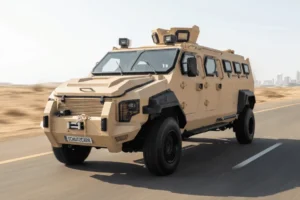
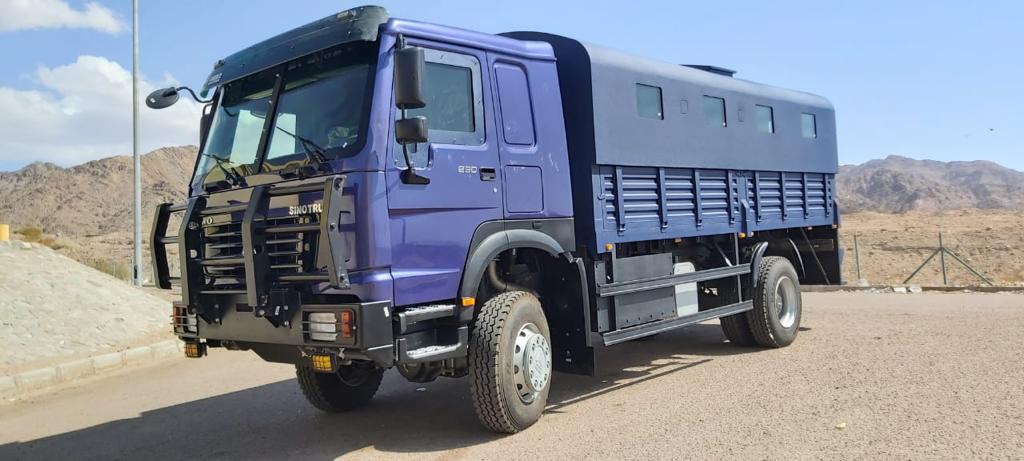
Truck-based solutions use a full box body that we convert into a protected medical module. Pickup-based builds often retain a crew cab and use the bed for a removable or fixed medical module.
| Base Platform | Typical Use In Field Missions | Config Highlights |
|---|---|---|
| Armored truck body | High-capacity medical evacuation and treatment near the field | Single protected box, many stretcher rails, central oxygen and monitoring |
| Armored pickup | Flexible evacuation with mixed cargo and patients | Modular bed pods, 1 to 2 stretchers, fold-down seating, equipment lockers |
| SUV / APC-style | Rapid field access, shorter routes, liaison roles | Compact interior with 1 stretcher or multiple seated casualties |
We also consider future adaptability, since some organizations later reconfigure medical modules into personnel carriers or vice versa. Interior mounting systems and wiring routes influence how easily those conversions happen.
3. Patient Capacity And Layout Planning For Field Missions
Capacity drives almost every other design decision in armored ambulances. We start by clarifying whether missions require more stretcher patients, more seated casualties, or a flexible mix.
Reference platforms show how this plays out in practice, such as the ARTEC Boxer MedEvac layout with capacity for seven seated casualties or up to three stretchers. Similar flexibility guides how we space stretcher rails, jump seats, and equipment racks.
- Stretcher-first layouts for longer-range evacuation.
- Seating-heavy layouts when most casualties can sit during transit.
- Mixed layouts for variable mission profiles.
We also consider caregiver positions so that staff can reach IV lines, monitoring devices, and storage without unsafe movement. Ceiling height, floor drains, lighting, and HVAC are tuned around these use patterns.
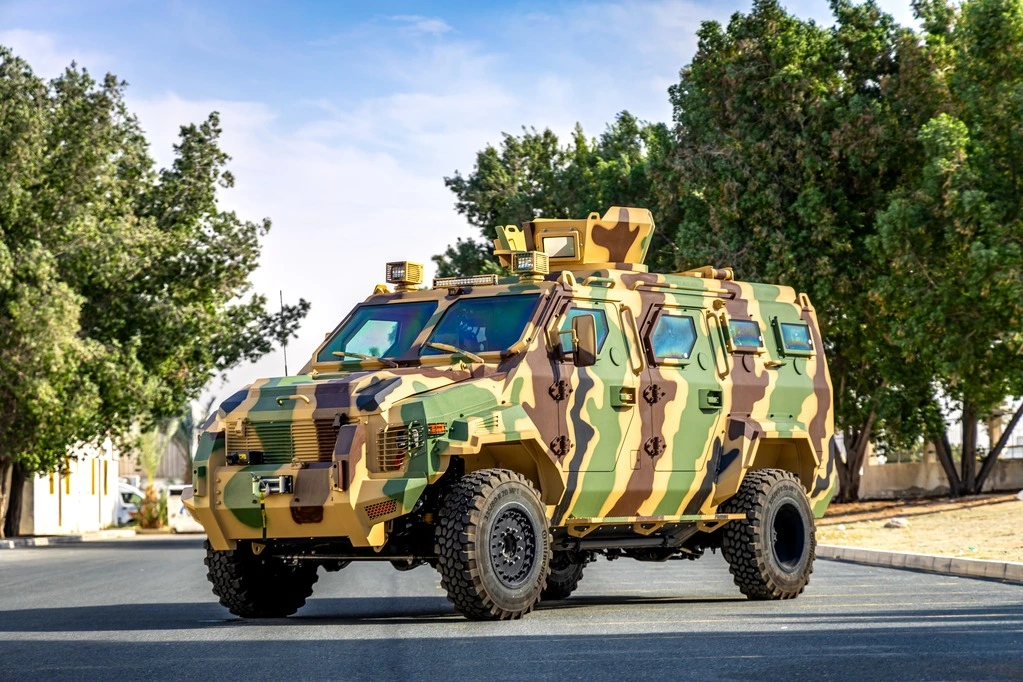
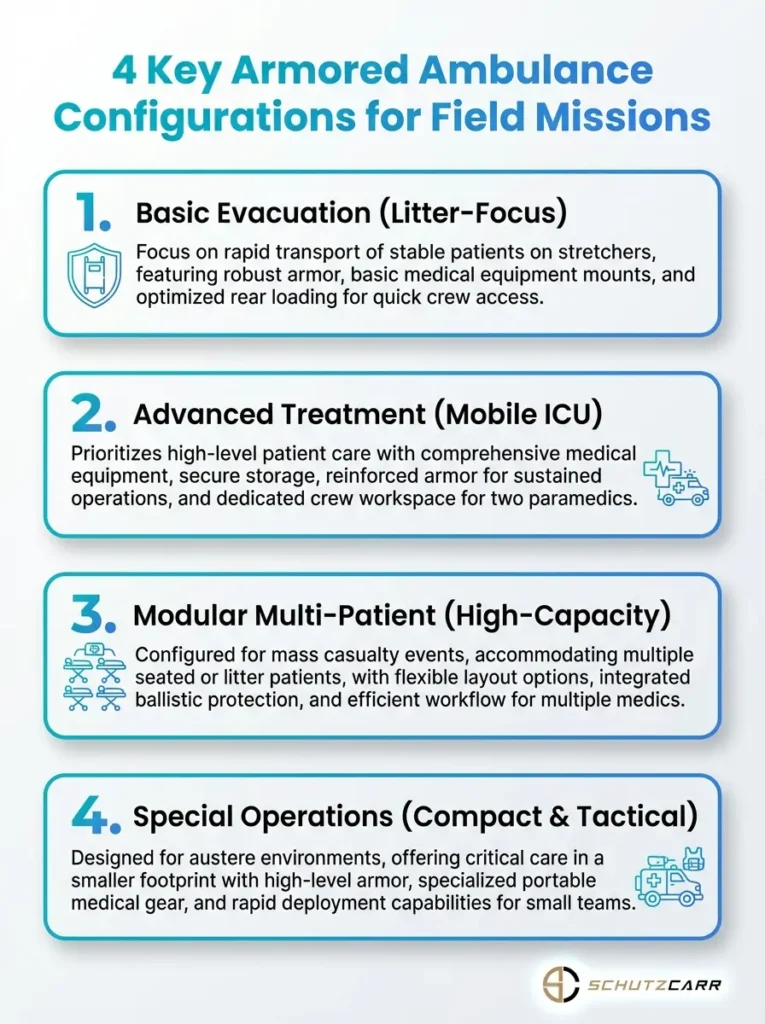
This infographic highlights four key armored ambulance configurations used on field missions. It outlines design features, protection levels, and the trade-offs between mobility and resilience.
Did You Know?
ARTEC Boxer MedTreat ambulance layouts provide 1.85 meters of headroom and about 17.5 cubic meters of protected interior volume, underscoring how crucial space and ergonomics are for medical work during field missions.
4. Protection Levels And Medical Mission Profiles
Field medical missions often pass through the same risk environments as other protected vehicles, so protection levels need to match broader fleet standards. We usually see BR6 ballistics as a practical starting point for field ambulances.
Higher protection levels increase weight, which affects payload, braking, and acceleration. Our engineers work from the ballistic target first, then adjust drivetrain, suspension, and tire selection to handle the final operating weight.
- BR4 to BR5 where threats are limited and weight must stay low.
- BR6 as a standard for many field-focused fleets.
- Higher levels only when mission profiles require them and chassis can support the extra mass.
We also consider underbody and side protection when planning routes that may involve rough tracks or unprepared ground. Careful integration avoids intrusion into the medical space while still covering vulnerable vehicle zones.


5. Truck-Based Armored Ambulances: High-Capacity Field Configurations
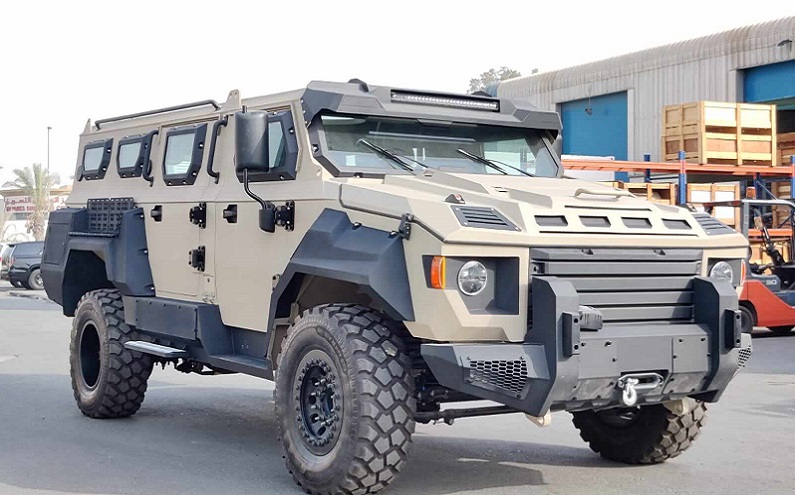
Armored truck bodies are the closest civilian analog to large reference platforms like the M577A4, which adds two extra litters compared to earlier medical variants through a raised hull and more internal space. We take similar layout thinking and apply it to modern truck chassis.
These vehicles usually feature a rectangular box where we can install up to four or more stretcher positions, seated spots along the sides, and integrated storage. Climate control and lighting systems are sized for that bigger protected volume.
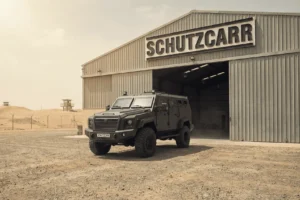
Truck-Style Medical Modules From SchutzCarr
We often start from configurations similar to our troop carrier layouts, then adapt them for medical roles. The high roof allows overhead storage for oxygen cylinders, medical kits, and spare linens.
Interior walls support modular rail systems for stretchers and seats, which we can reconfigure if mission needs change over time. Access is usually via double rear doors or a combination of side and rear entry.
6. Pickup-Based Armored Ambulances: Modular Bed Conversions
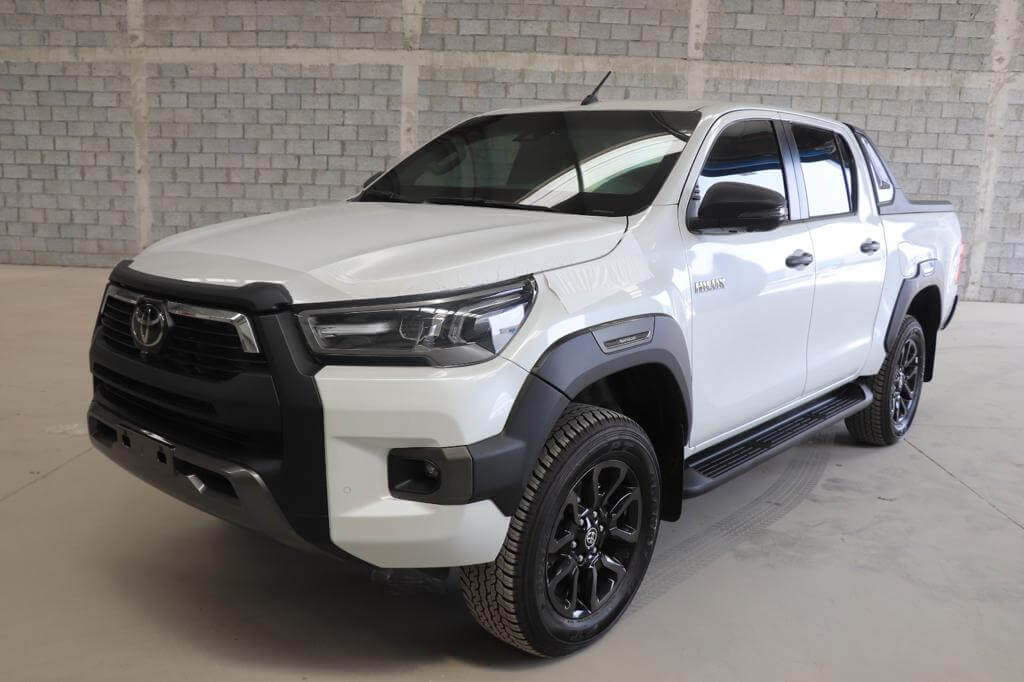
Pickup-based armored ambulances suit organizations that already operate pickup fleets or that need more flexible cargo roles around medical work. The protected cab can carry the medical team, while the rear module focuses on patients and equipment.
For some missions, a single stretcher with fold-down side seats is enough. Other missions benefit from low-roof modules with two stretcher spots and standing room at the rear for loading and basic care.
Examples From SchutzCarr Pickup Platforms
We often use platforms similar to armored Toyota Hilux or Tundra builds as the starting point for bed-mounted ambulance pods. These pods can be permanent or removable, depending on fleet planning.
Ground clearance and suspension are tuned so that the extra mass of armor and medical equipment does not limit off-road reach. We also review ramp or lift options where handling heavier patients is a requirement.
Did You Know?
The AMEV on the M113A4 chassis can carry four litters or eight ambulatory patients, a capacity benchmark that many modern armored ambulance designers still use when sizing field medical interiors.
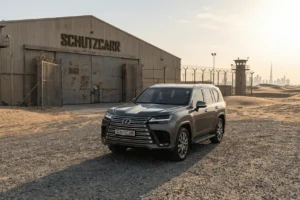
7. SUV-Based Field Ambulances: Land Cruiser 76 And Similar Platforms
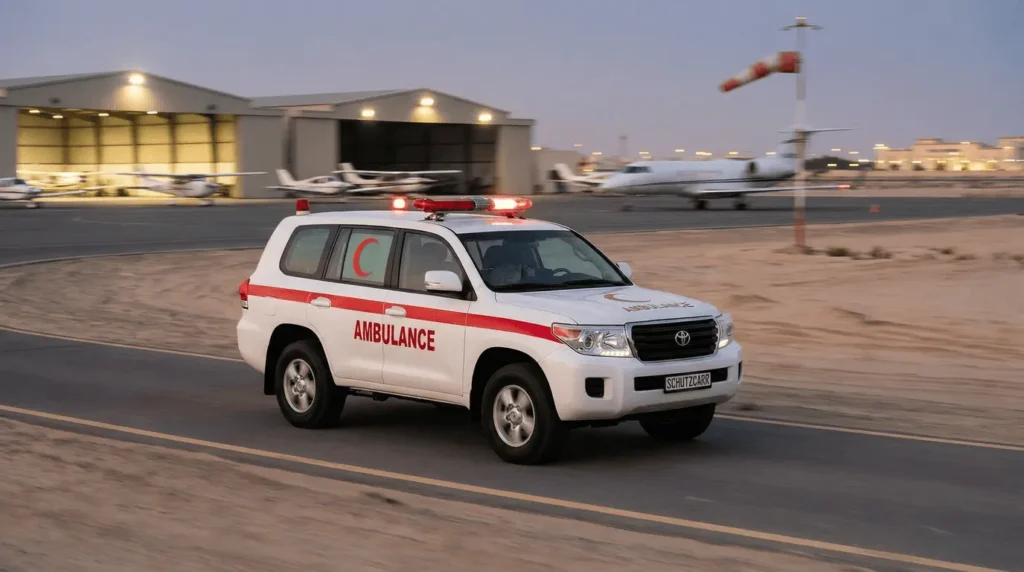
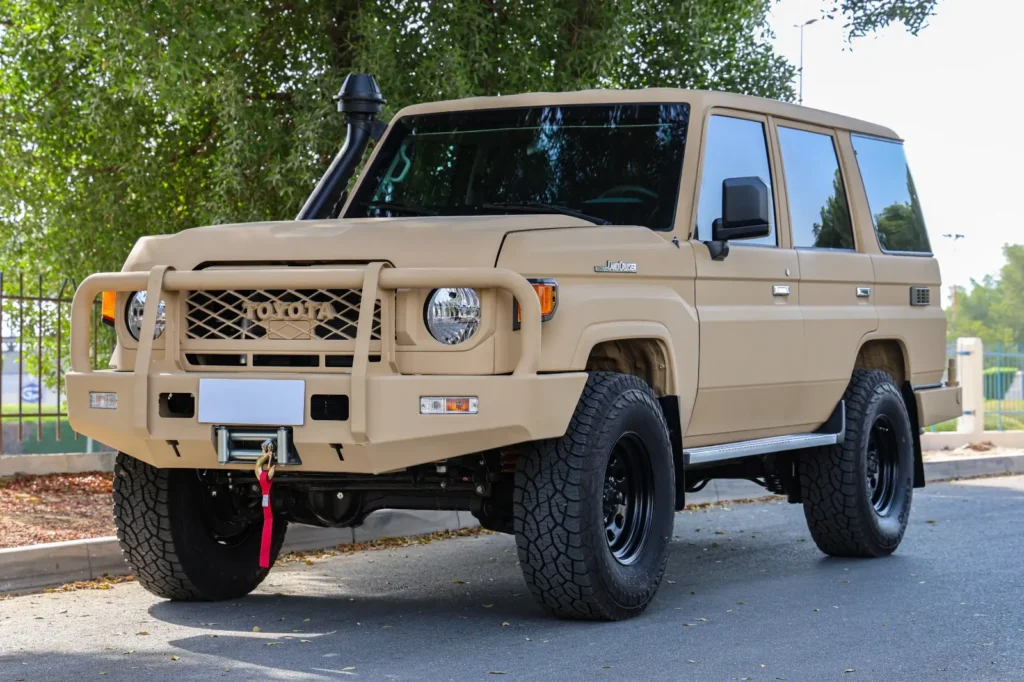
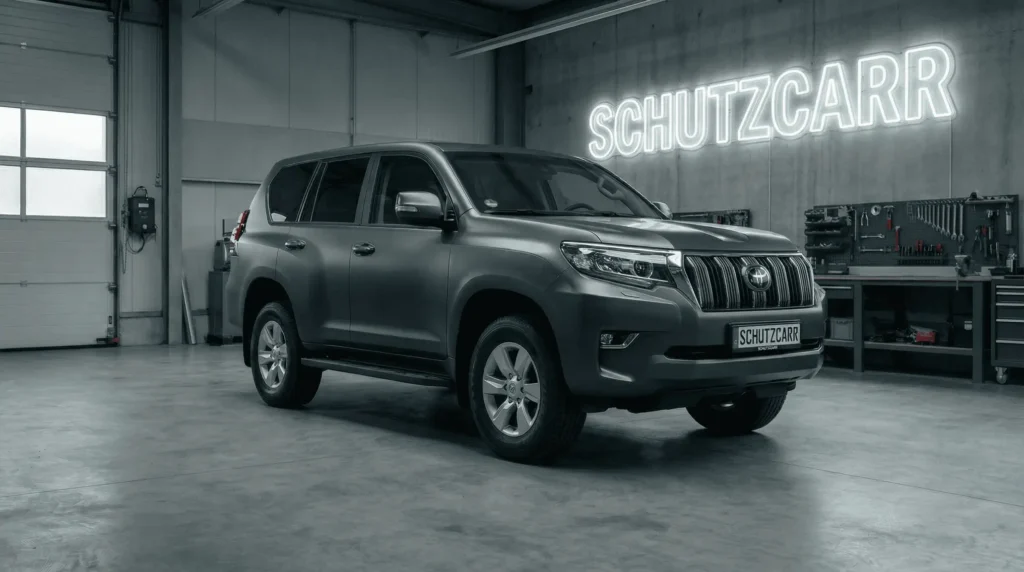
Rugged SUVs provide a compact base for field missions where access, daily driving, and mixed roles matter as much as raw capacity. The armored Toyota Land Cruiser 76 is a common reference point for this type of build.
On the LC76, we can remove or reconfigure rear seating to accommodate a stretcher and medical storage, or keep more passengers and run a first-response configuration. The high roof and boxy shape help with interior packaging.
SchutzCarr Armored Toyota Land Cruiser 76
Our LC76 builds feature BR6 or BR7 protection options with multi-layer ballistic glass and reinforced chassis components. The platform is particularly suitable for organizations that need robust off-road reach paired with straightforward maintenance.
For field ambulance use, we fit mounting rails, oxygen brackets, and power points into the rear compartment. A typical layout supports one stretcher along one side with fold-down seats on the other.
8. Balancing Daily Usability With Medical Capability
Field missions often involve long days, frequent stops, and regular driving on paved roads. An armored ambulance that drives predictably and parks easily can make operations smoother for medical teams.
We pay close attention to visibility, steering feel, and braking performance, especially for SUV-based ambulances. Our work on platforms described in our daily usability guide feeds directly into how we configure medical variants.
- Suspension upgrades to handle extra weight without harsh ride quality.
- Brake system tuning for controlled stops under load.
- Interior noise and vibration management to support communication inside the medical bay.
We also plan storage for day-to-day items like personal protective equipment, documentation, and portable devices. These details help the vehicle serve as both a medical platform and a daily working tool.

9. Interior Medical Systems: Power, Oxygen, And Storage
Once we agree on the basic platform and layout, we focus on medical systems that support care during transport. This includes electrical power, oxygen distribution, lighting, and storage.
Power systems usually involve auxiliary batteries and inverters to support monitors, suction units, and charging points. We route cabling in protected channels inside the armored shell.
- Overhead and task lighting with adjustable intensity.
- Oxygen bottle racks with secure mounts and clearly marked shutoffs.
- Cabinets and drawers with positive latches for rough terrain.
We also review surface materials for cleanability and durability. Antimicrobial or easy-wipe finishes help maintain hygiene inside the ambulance over many missions.

Did You Know?
The Boxer ambulance module is designed so that one stretcher position remains accessible for intensive medical care during movement, which shows how interior layouts can prioritize advanced treatment instead of pure evacuation capacity.
10. Discreet Styling And Dual-Role Field Ambulances
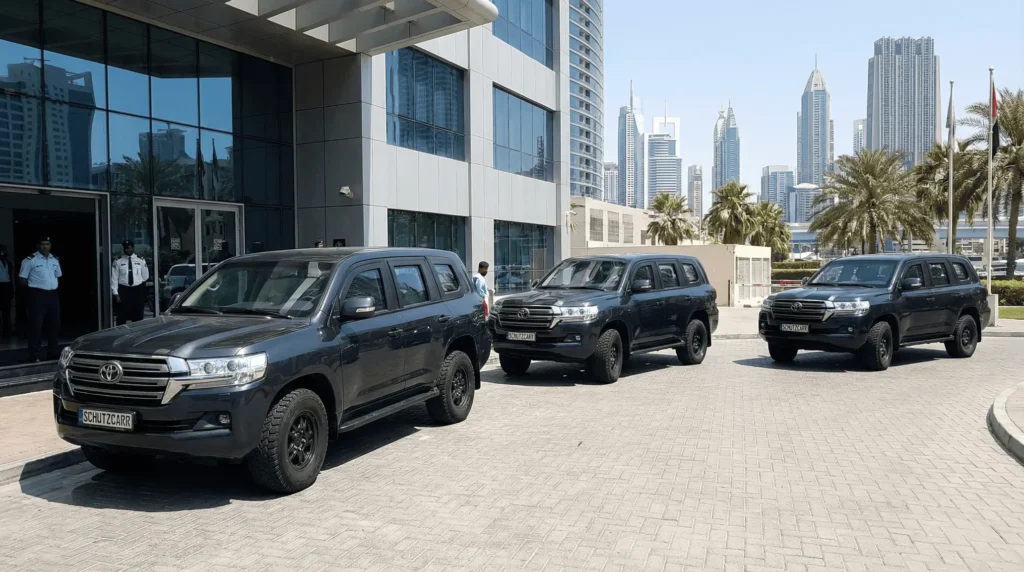
Some organizations require armored ambulances that do not immediately stand out as specialized vehicles. Discreet styling can help when vehicles must operate in populated areas or move between medical and liaison roles.
In these cases, SUV-based builds or low-key truck configurations work well. We preserve the original silhouette, keep exterior changes minimal, and hide armor behind factory-style panels.
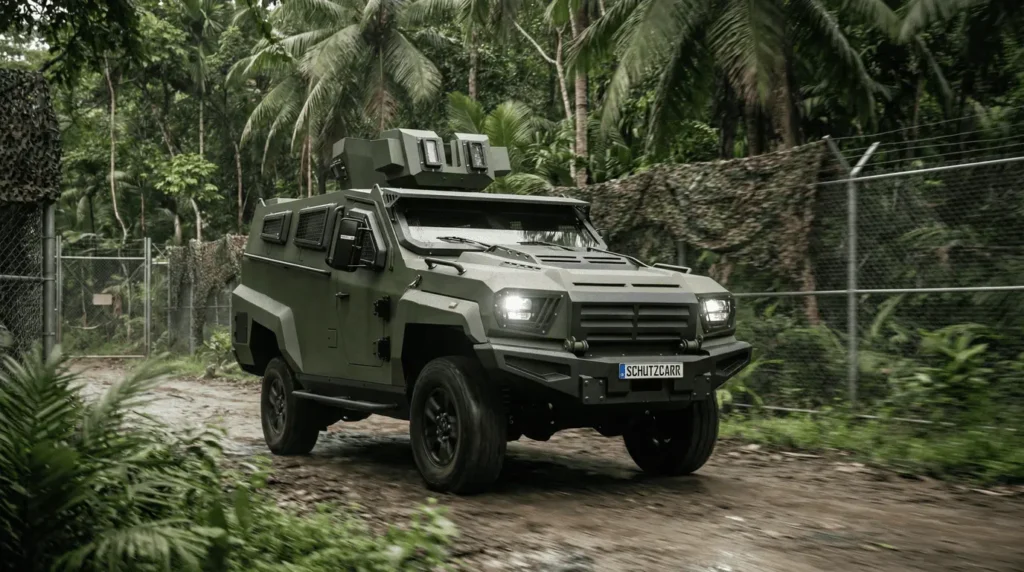
Styling Approaches Used By SchutzCarr
We often use OEM wheels, trims, and paint finishes so the vehicle looks like a standard SUV or work truck at first glance. Larger medical markings can be added or removed depending on mission requirements.
Ballistic glass is cut and framed to look as close as possible to factory glass. This approach aligns with the discreet styling principles we apply in executive protection vehicles, adapted for field medical use.


11. Long-Term Ownership And Fleet Planning For Field Ambulances
Armored ambulances are long-term assets, so configuration choices should account for future maintenance, refits, and changing field needs. We encourage clients to consider the full life of the vehicle, not just the initial build.
Chassis selection, parts availability, and simplicity of onboard systems all affect downtime. Our long-term ownership guidance helps organizations plan maintenance and refurbishments so that medical equipment and armor can remain effective over extended use.
- Shared platforms across fleets simplify spares and training.
- Modular interiors ease updates to medical standards or workflows.
- Clear documentation supports certification and export compliance.
We also discuss potential reconfiguration paths, such as converting a stretcher-heavy ambulance into a mixed personnel and equipment carrier later in its life. Thinking ahead protects the value of each armored platform over time.
Conclusion
Effective armored ambulance configurations for field missions start with clear capacity targets, a suitable base platform, and realistic assumptions about terrain and usage. From there, interior layouts, protection levels, and medical systems can be tuned to support reliable care during movement.
At SchutzCarr, we work with organizations to design armored ambulances that fit their specific field conditions and fleet structures. If you are planning new medical vehicles or considering upgrades to existing assets, we invite you to get in touch with our team through our contact page at https://schutzcarr.shop/contact/ so we can help you explore the right configurations for your missions.