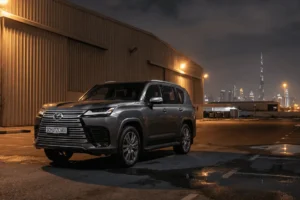

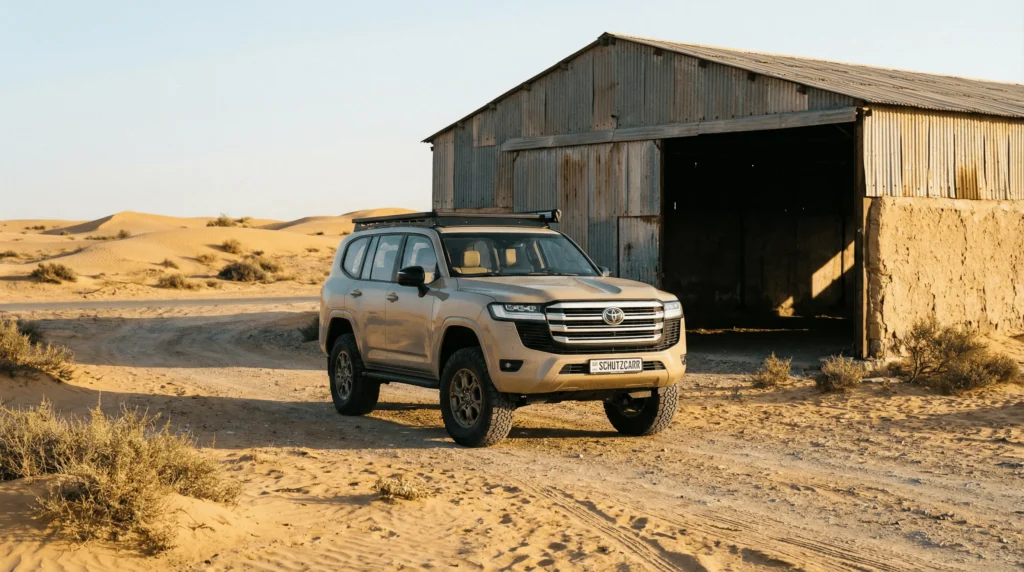
When we help clients armor a Toyota Land Cruiser 300 GXR, the first surprise is usually how much weight underbody protection actually adds. For example, a full three piece skid system for the LC300 in heavy duty aluminum can still weigh around 75 to 100 lb, while equivalent steel options can push significantly higher. That extra mass changes how the GXR drives, stops, and performs off road, so choosing the right armor is as much about balance and strategy as it is about raw protection.
Key Takeaways
| Question | Short Answer |
|---|---|
| 1. What protection level suits a Land Cruiser 300 GXR for civilian use? | For most GXR clients, a BR6 configuration similar to our Toyota Land Cruiser 300 BR6 Extended delivers balanced civilian protection with full 360 degree coverage and discreet integration. |
| 2. How do I compare the LC300 GXR with other armored platforms? | We recommend starting with a broad guide such as our armored car buyer’s guide, then narrowing down to SUVs and specific configurations like the 300 GXR. |
| 3. Is the Land Cruiser 300 GXR a good base for private armored use? | Yes. Guides such as Best Armored SUVs for Civilian Use consistently highlight the LC300 platform for its reliability, chassis strength, and strong support network. |
| 4. How does the 300 GXR compare with older Land Cruiser 76 builds? | The LC300 GXR focuses more on comfort and electronics, while the LC76, as shown in our armored Land Cruiser 76 overview, offers a more utilitarian platform with similar BR6/BR7 options. |
| 5. Where can I see other armored platforms if I am still comparing? | Browse our armored vehicles collection to compare SUVs, pickups, APCs, and purpose built platforms side by side. |
| 6. Are there situations where a larger platform makes more sense than a GXR? | For high threat or off road intensive roles, some clients review specialist options like those in our civilian MRAP lineup before settling on an LC300 based solution. |
| 7. What if I want a lower profile, chauffeur driven vehicle instead of an SUV? | In that case, our discreet armored sedans guide shows how we configure BR6 sedans with less visual presence than a 300 GXR. |
1. Understanding the Land Cruiser 300 GXR As an Armoring Platform
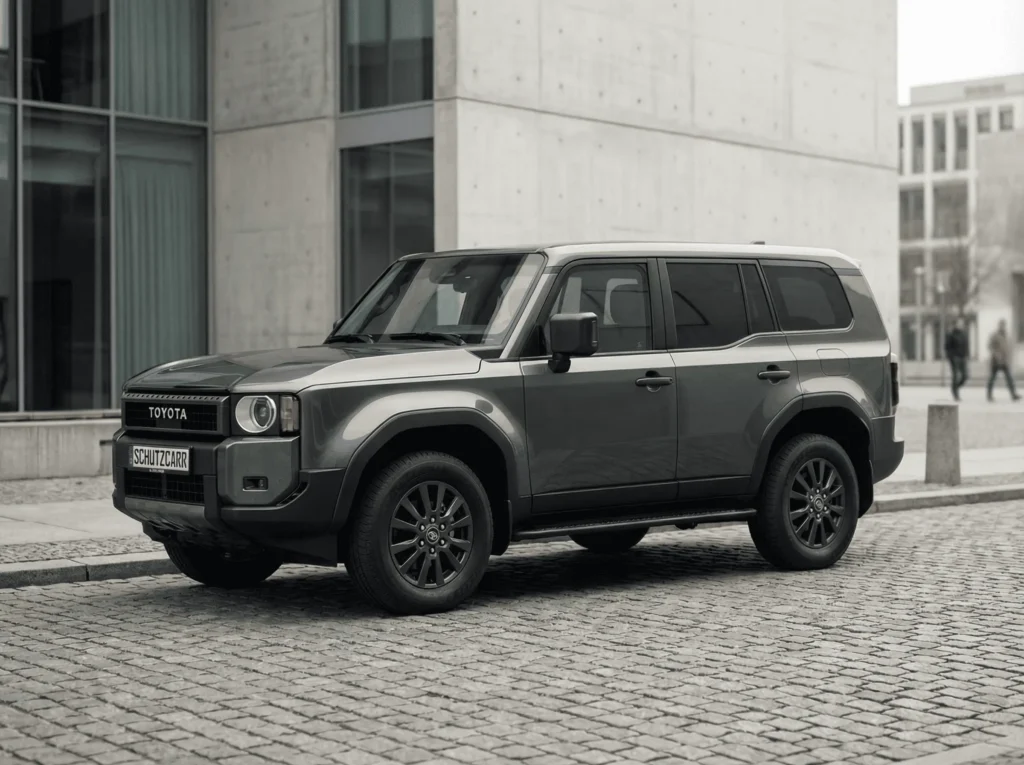
The Toyota Land Cruiser 300 GXR sits in a useful middle ground for armoring. It has a modern chassis and electronics suite but retains body on frame construction and genuine off road ability, which is crucial once we add ballistic steel, composite panels, and underbody armor.
When we configure armor for a GXR, we treat it as a flexible platform. Clients use it for executive transport in cities, mixed urban and rural travel, and long distance routes on secondary roads. Our engineering and configuration decisions always start with those real routes and risks.
2. Choosing Protection Level: Why BR6 Is the Baseline for a 300 GXR
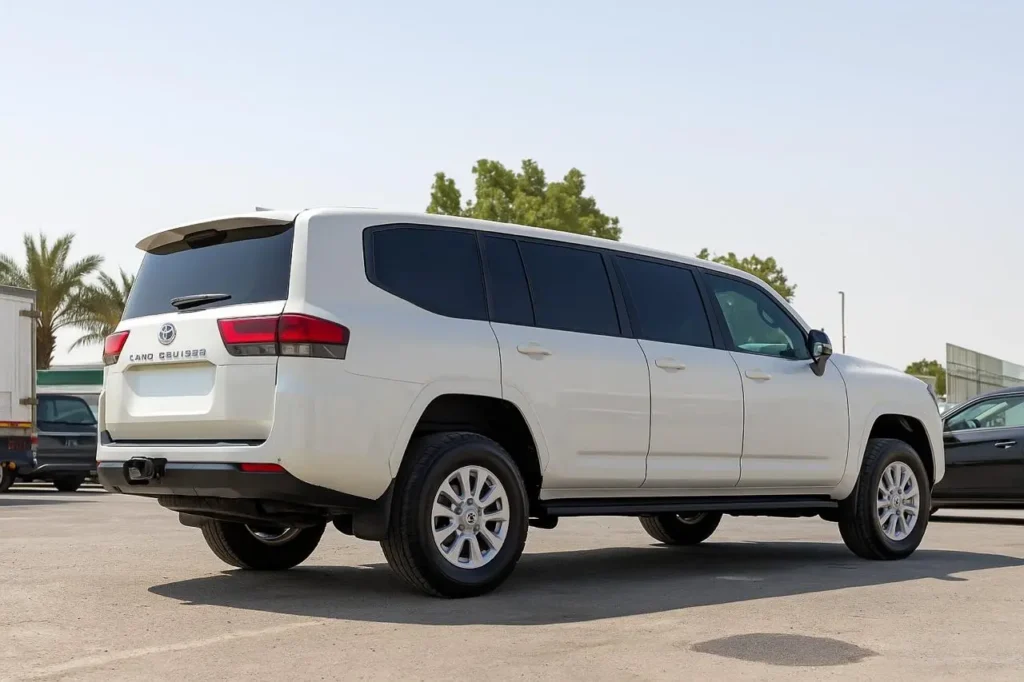
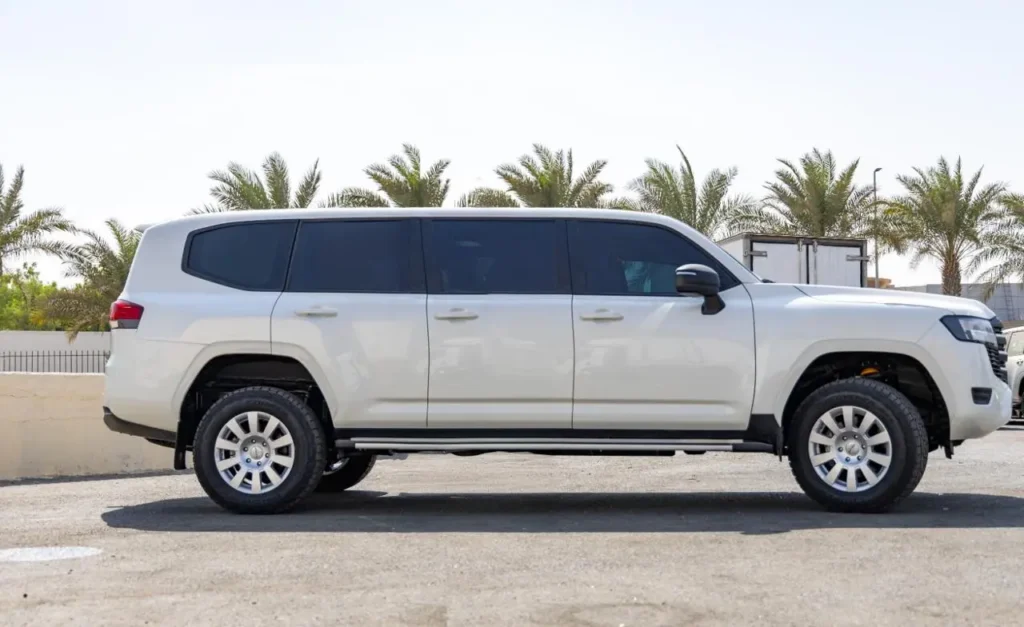
For the Land Cruiser 300 GXR, BR6 is the reference point for most of our civilian builds. It is the level used on our showcased Toyota Land Cruiser 300 BR6 Extended configuration, which includes 360 degree armoring, ballistic glass, and discreet integration that preserves the GXR’s visual profile.
BR7 is technically possible in specialized configurations but introduces significant weight and engineering compromises. In many civilian cases, the limiting factor is not the ballistic threat itself but how much weight the chassis and suspension can handle while still delivering predictable handling, braking, and off road performance.
| Feature | Typical BR6 GXR Build | Heavier BR7 Style Build |
|---|---|---|
| Ballistic glass | Multi layer glazing sized to GXR apertures | Thicker glass, more weight per door |
| Body armor | Overlap joints, 360 degree coverage | Heavier steel or composite mix, tighter tolerances |
| Ride and handling | Close to stock feel with upgraded suspension | Noticeably firmer, slower, higher wear items |
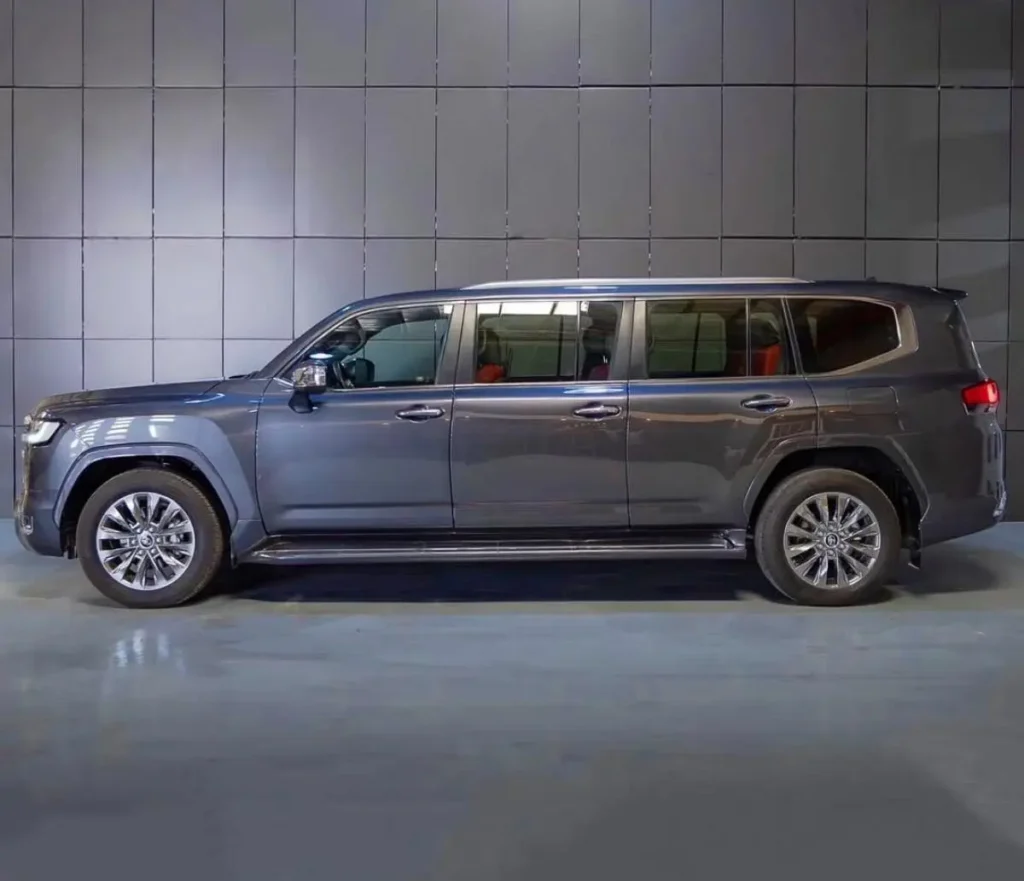
3. Body Shell, Glass, and Discreet Integration on the GXR
Armoring a 300 GXR starts with its body shell and glass. We remove interior trims, measure and template each cavity, and install overlapping armor panels to avoid weak spots at joints and seams. The goal is continuous protection around the passenger cell while retaining factory ergonomics as much as possible.
For glass, we use multi layer ballistic glazing cut to each specific aperture, integrating it into door frames and seals that can handle the extra weight. Where clients request maximum discretion, we match tints and external finishes so that the vehicle presents as a standard GXR in traffic and parking environments.
Did You Know?
LC300 skid plates from FK Off Road use 8 mm high-strength aluminum alloy, and a three piece kit weighs about 74.96 lb, which is enough to provide serious underbody protection while still keeping weight manageable for daily use.
4. Underbody Armor for the 300 GXR: Skid Plates and Critical Zones
Underbody zones are where the LC300 GXR platform really benefits from careful armor selection. Engine, transmission, transfer case, fuel tank, and control arms are all exposed on rough ground, and at the same time any extra weight here directly affects ride comfort and suspension life.
Clients often underestimate how quickly these components add up. A complete three piece aluminum skid kit can reach around 75 to 80 lb, while steel variants can get closer to or beyond 100 lb. For mixed city and highway use with occasional off road, we usually favor aluminum solutions to preserve handling and braking margins.
- High priority zones: engine, transmission, transfer case, fuel tank.
- Secondary zones: A arms, exhaust crossovers, lower radiator area.
- Optional zones: rock sliders and rear differential armor for heavy trail use.
5. Steel vs Aluminum Armor on a Land Cruiser 300 GXR
We work with both steel and aluminum for GXR underbody armor, and each has a place. Steel delivers high impact strength and abrasion resistance, but adds significant unsprung mass that you will feel every time the suspension works. Aluminum keeps weight under control but needs more thickness to reach equivalent strength.
For example, engine skid plate options for an LC300 are often quoted at 3/16 inch steel around 51 lb or 1/4 inch aluminum around 21 lb. Across a full system, that difference easily reaches dozens of kilograms. On a fully armored GXR that already carries ballistic glass and body armor, we pay close attention to every extra kilogram introduced below the frame rails.
| Material | Pros for GXR | Cons for GXR |
|---|---|---|
| Steel | High impact resistance, good for frequent rock strikes | Heavy, increases braking distance and suspension wear |
| Aluminum | Much lighter for similar coverage, resists corrosion | Thicker to achieve strength, can deform more under extreme hits |
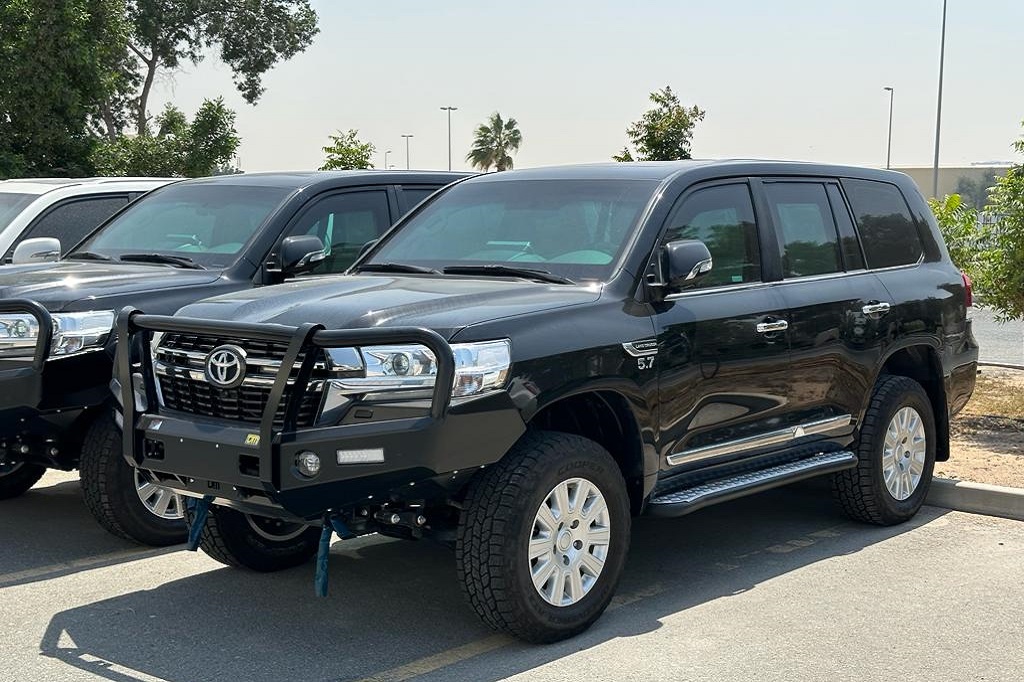
6. Comparing the 300 GXR With Classic Land Cruiser 76 Armored Builds
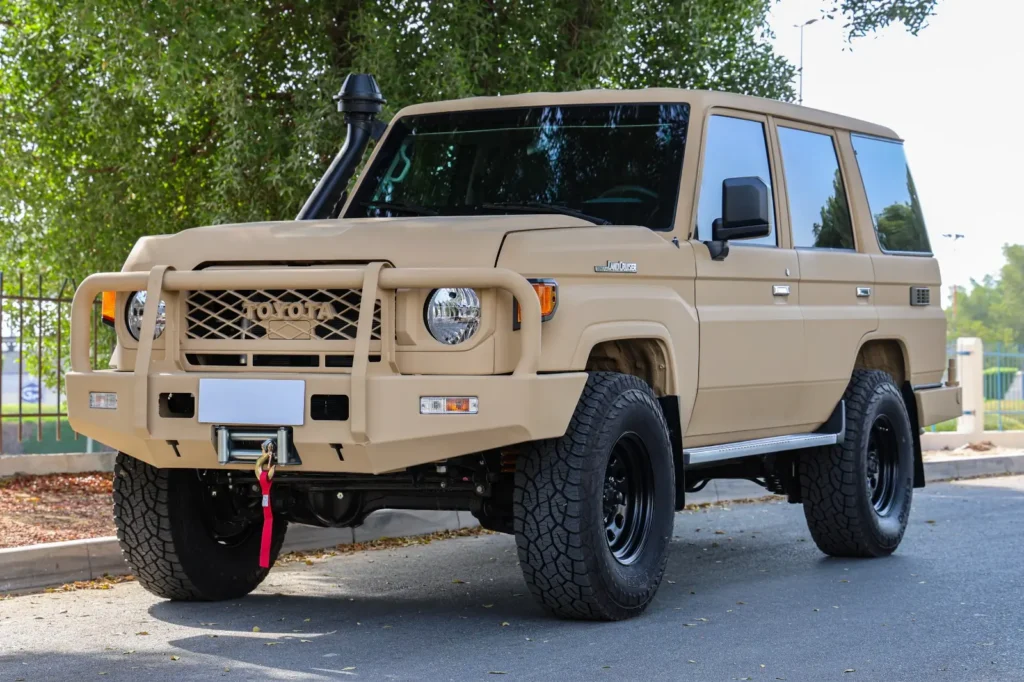
Many clients ask us to compare the 300 GXR with older 70 series platforms, particularly the Land Cruiser 76, before they commit to a configuration. Our Toyota Land Cruiser 76 BR6 Tactical Armored SUV product gives a sense of how we equip that platform and why some organizations still favor it.
The LC76 offers a simpler, more mechanical platform. In contrast, the 300 GXR provides better on road comfort, refinement, and driver assistance features. When the primary use case is executive or family protection with occasional rough terrain, we usually point clients toward the GXR; when work involves remote, rough routes every day, the LC76 still deserves consideration.
7. Real Examples: Our Armored Toyota Land Cruiser Lineup
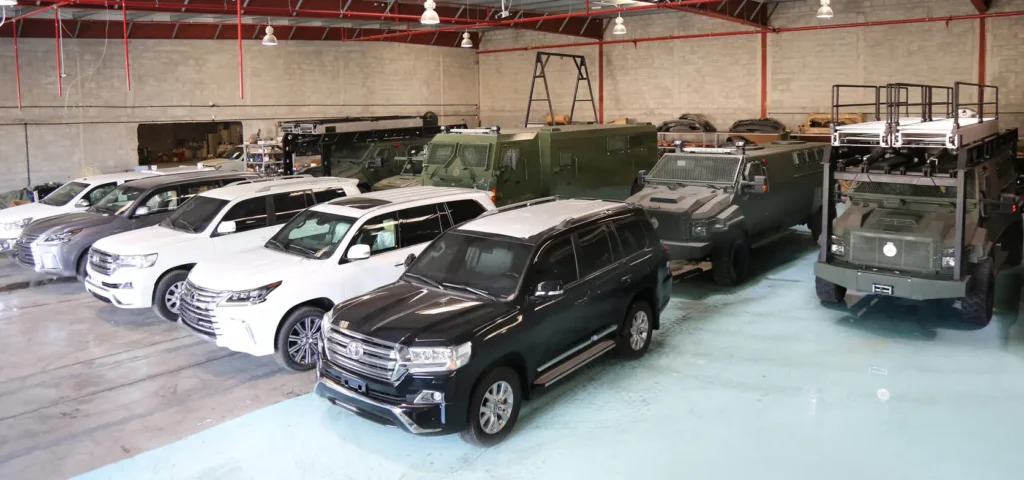
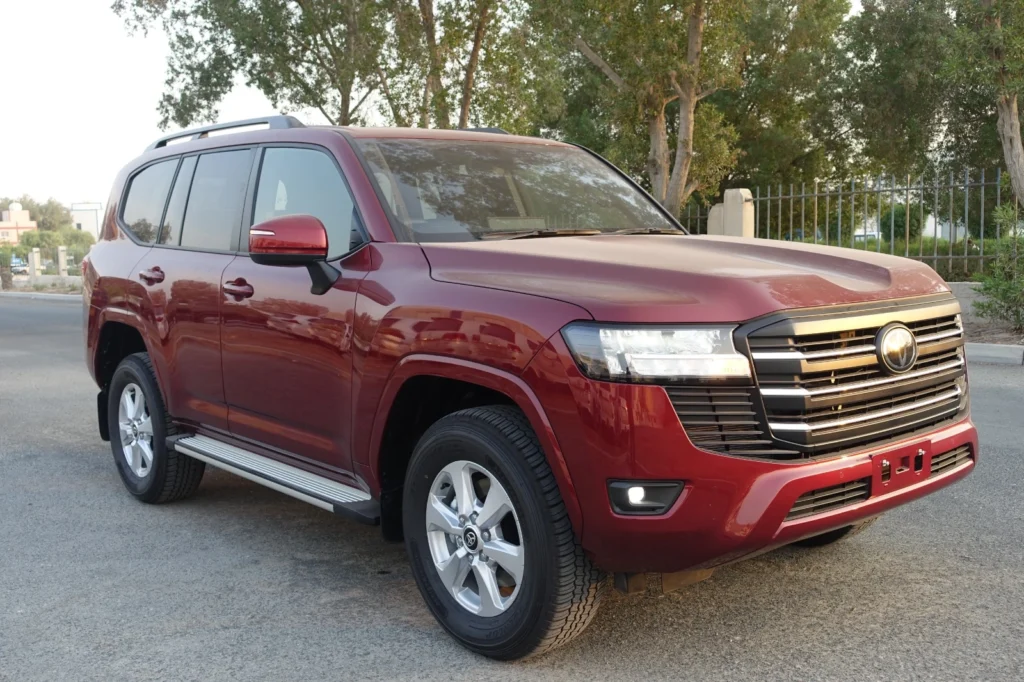
To understand how we approach the 300 GXR, it helps to look at our broader Land Cruiser lineup. Our stock Toyota Land Cruiser 300 GXR armored build follows the same principles as the Extended BR6 configuration, but tuned for stock wheelbase and specific client requirements.
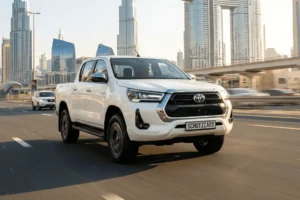
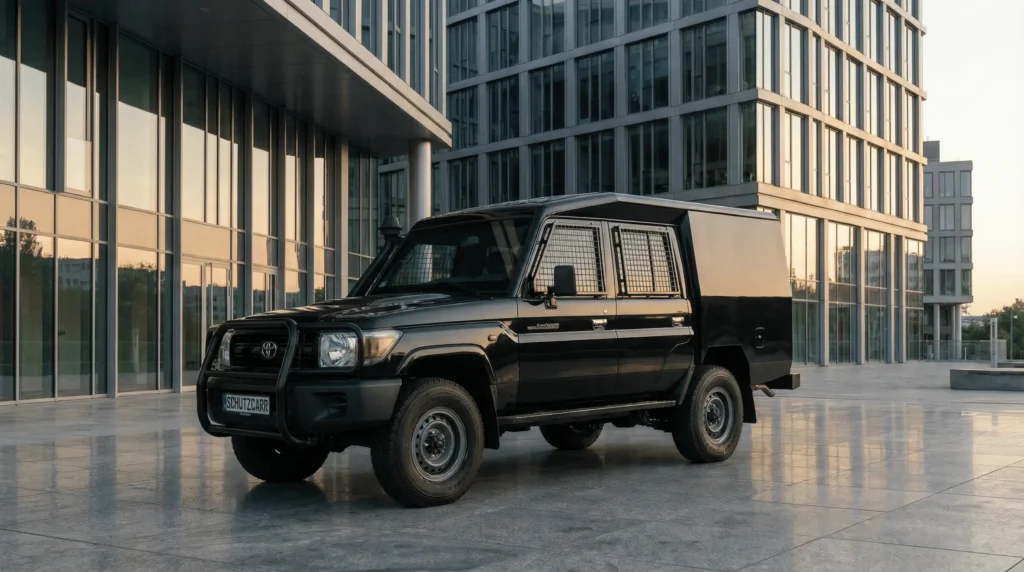
Alongside the GXR, we stock and build platforms like the Land Cruiser 76 and Hilux based vehicles. This shared experience lets us tune suspension, brakes, and armor layouts across the family, then apply the most successful patterns back to the LC300 GXR when we see what works best in different climates and on different surfaces.
Did You Know?
A full three piece skid plate package for the LC300 that covers front, transmission, and transfer case can weigh roughly 100 lb in steel or about 65 lb in aluminum, a difference that has a clear impact on how an armored GXR accelerates, stops, and rides.
8. Beyond the GXR: When Larger Platforms Make Sense
There are situations where an LC300 GXR, even with a comprehensive BR6 package, is not the best primary tool. Long distance travel on unmaintained roads, or roles that require carrying multiple occupants and cargo along very rough routes, can push us toward larger APC or MRAP based platforms instead.
Our GER 1 D armored personnel carrier and similar vehicles exist for those scenarios. These are designed from the chassis up around blast and ballistic resistance and are better suited when the mission profile routinely exceeds what a modified civilian SUV is designed to handle.
9. How the LC300 GXR Fits Into a Mixed Armored Fleet
Many of our clients run more than one armored vehicle. A Land Cruiser 300 GXR might work alongside armored pickups for support roles, or share duty with luxury SUVs that handle airport runs and formal events. The GXR’s dimensions and drivability make it a strong backbone vehicle for fleets like this.
In that context, we keep armor layouts, control placements, and maintenance procedures as consistent as possible across the fleet. Whether we are working with a GXR, a Hilux based build, or a luxury model such as the Maybach GLS, shared standards make it easier for drivers and maintenance teams to move between vehicles without confusion.
10. Practical Checklist For Choosing Armor For Your 300 GXR
When clients come to us with a Land Cruiser 300 GXR and ask where to start, we walk through a simple but detailed checklist. It keeps the focus on actual use rather than abstract specification comparisons and helps avoid overbuilding or underbuilding the vehicle.
- Define routes and usage: Daily city only, mixed city and rural, or regular rough track use.
- Clarify threat profile: What calibers and scenarios we need to design against.
- Select protection level: Usually BR6 for balanced civilian use.
- Decide on underbody coverage: Full engine, transmission, transfer case, and fuel tank armor or partial kit.
- Choose materials: Steel or aluminum for skid plates based on weight priorities.
- Plan handling upgrades: Suspension, brakes, and tires to support added mass.
- Consider fleet integration: How this GXR fits with other armored assets.
Conclusion
Choosing armor for a Toyota Land Cruiser 300 GXR is not just a matter of picking a protection level and signing off on a spec sheet. It is a structured process that starts with routes and risk, then moves through body armor, glass, underbody protection, and finally suspension and braking upgrades that keep the fully armored GXR predictable and safe to drive.
Our role is to map that process with you, explain the trade offs clearly, and then engineer a configuration that suits how you actually use your vehicle. With the right combination of BR6 protection, carefully chosen skid plates, and thoughtful integration, the Land Cruiser 300 GXR can serve as a durable, discreet, and highly capable core vehicle in any civilian protection plan.