
STANAG 4569 defines how light and logistics vehicles are tested against specific ballistic and blast threats, and Level I alone already covers three kinetic threats at 30 meters, including 5.56×45 mm M193 at 937 m/s, which surprises many buyers who expect a much lower starting point.
Key Takeaways
| Question | Short Answer |
|---|---|
| What is STANAG 4569 and who is it for? | It is a standardized protection framework for logistic and light armored vehicles, defining Levels I–VI for ballistic and mine threats, which aligns closely with how we design and explain civilian and VIP platforms in our B4 to B7 ballistic protection overview. |
| How do Levels 1–3 compare to civilian B4–B7 ratings? | Level 1 is broadly comparable to lower handgun and light rifle bands, while Levels 2 and 3 move into stronger rifle and armor‑piercing territory, similar in spirit to the jump from B4 to BR6/BR7 explained in our BR6 versus BR7 guide. |
| Why does test distance matter? | STANAG 4569 uses standardized 30 m test distances with defined velocities, similar to the structured testing behind the civilian ratings we reference in our bulletproof car guide. |
| What is the main difference between Level 1 and Level 2? | Level 2 introduces 7.62×39 API BZ at 30 m and a defined mine threat, so armor and underbody design must handle higher energy, in the same way that BR6 vehicles like our LC76 builds must manage more weight and structural load as discussed in our LC76 BR6 article. |
| What makes Level 3 a significant step? | Level 3 requires resistance to 7.62×51 AP and 7.62×54R API plus heavier mine threats, which has a noticeable influence on mass and vehicle dynamics, similar to the BR6/BR7 platform choices we outline for SUVs and APCs in our armored vehicle catalog overview. |
| How should civilian buyers use STANAG 4569 Levels 1–3? | Treat them as a technical benchmark when discussing threat bands, glass thickness, and underbody design with us, alongside civilian standards and practical guidance such as our best armored SUVs for civilian use guide. |
1. What STANAG 4569 Levels 1–3 Actually Cover
STANAG 4569 focuses on protection for logistic and light armored vehicles, defining clear test conditions for kinetic energy threats, fragments, and mines. Levels 1 to 3 sit at the lower to mid range of this spectrum, which is where many civilian and VIP platforms conceptually align.
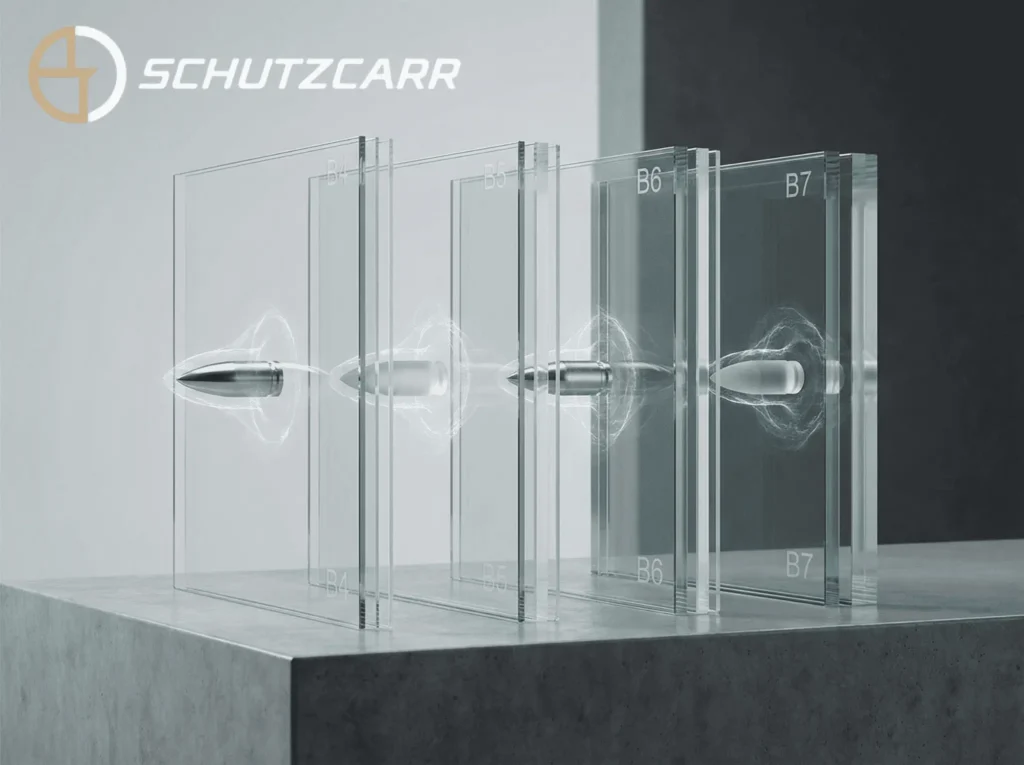
Each level specifies caliber, round type, impact velocity, distance, and shot angle, instead of vague claims about “rifle protection.” This structured approach mirrors how we explain B4 to B7 bands for civilian vehicles, where we map threats to practical platform choices and weight impact.
From our perspective, the key value of Levels 1–3 is clarity. They help frame discussions about what a vehicle is realistically designed to resist, and where weight and usability constraints begin to appear.
When we work with clients who are familiar with STANAG 4569, we often translate those expectations into civilian standards and platform capabilities. That way, you can compare like for like instead of relying on generic wording.
2. Level 1 Explained: Baseline Ballistic And Fragmentation Protection
Level 1 sets the starting point, yet it is more capable than many expect. It covers three kinetic threats at 30 m, including 7.62×51 NATO Ball (M80) at 833 m/s, 5.56×45 NATO SS109 at 900 m/s, and 5.56×45 M193 at 937 m/s.
In addition to bullets, Level 1 also includes an artillery-type hazard, with 155 mm high explosive at 100 m and associated fragments. This combination pushes designers toward multi‑layer materials that manage both penetration and spall.
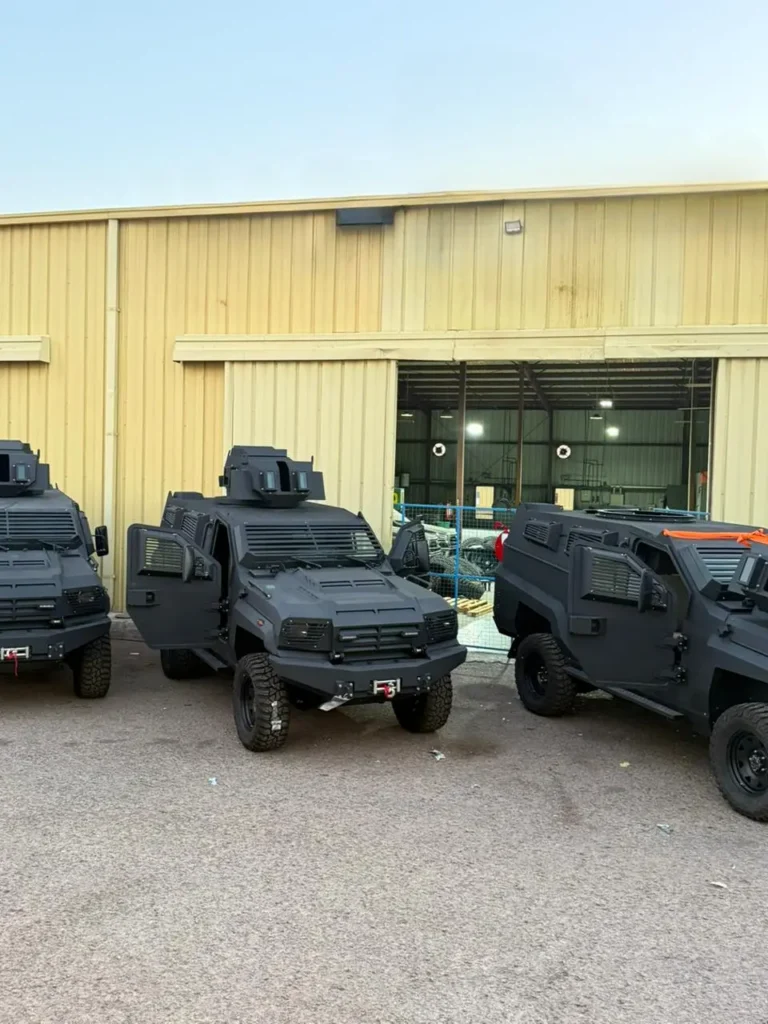
In civilian terms, Level 1 sits broadly near the lower end of the threat band that overlaps with handgun and lighter rifle fire. When we discuss civilian B4 or BR4 protection, we often explain that these standards also occupy this general region of performance, although the underlying test protocols differ.
For many low‑risk profiles, an equivalent to Level 1 type coverage can be sufficient. The critical point is to align the threat band with realistic exposure instead of defaulting to heavier solutions that may be unnecessary.
3. Level 2 Explained: Stepping Up To API Rifle And Mine Threats
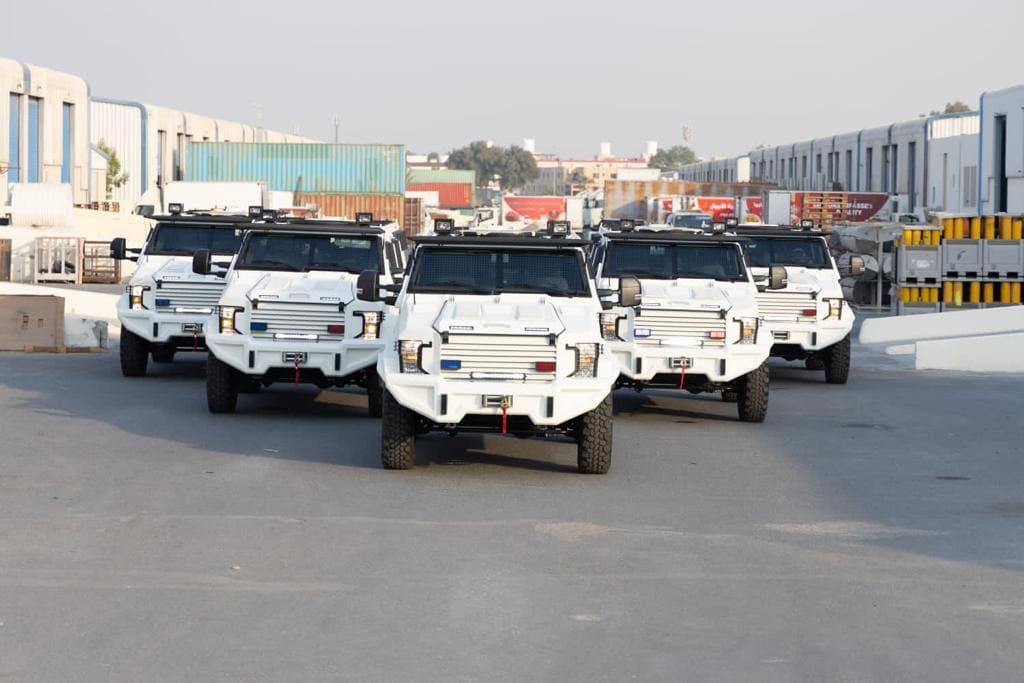
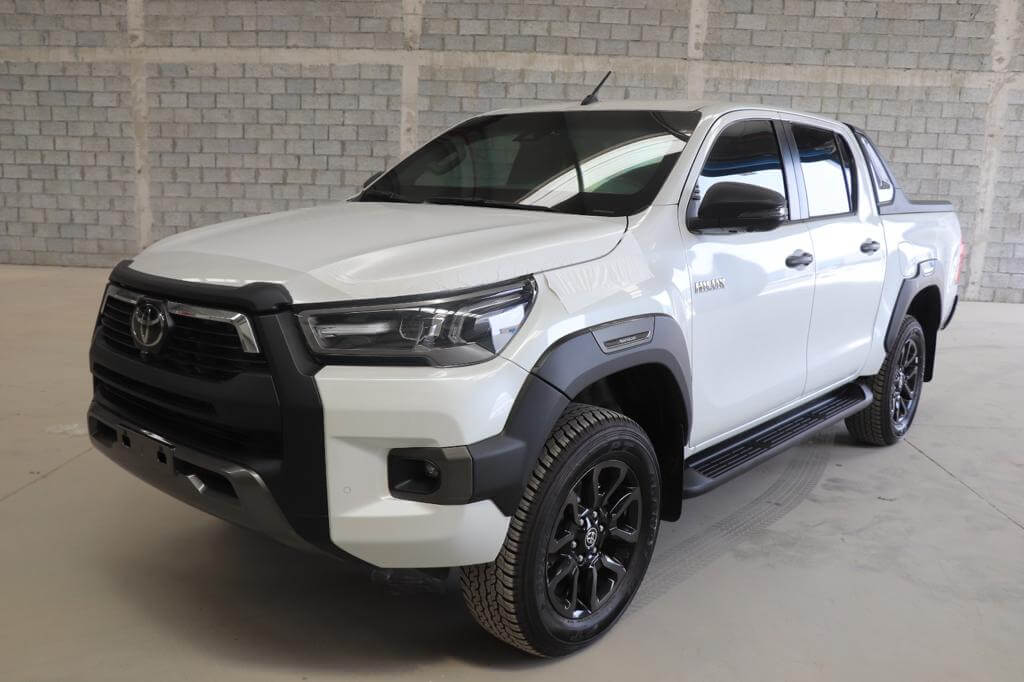
Level 2 is where the standard begins to deal with stronger rifle threats. The key kinetic requirement is 7.62×39 API BZ at 30 m, tested at 695 m/s, which means the armor must manage both penetration resistance and incendiary effects.
On the blast side, Level 2 defines a 6 kg mine threat, either under the wheel (2a) or under the center of the vehicle (2b). These conditions drive underbody shaping, reinforcing, and mounting solutions that can redirect energy away from occupants.
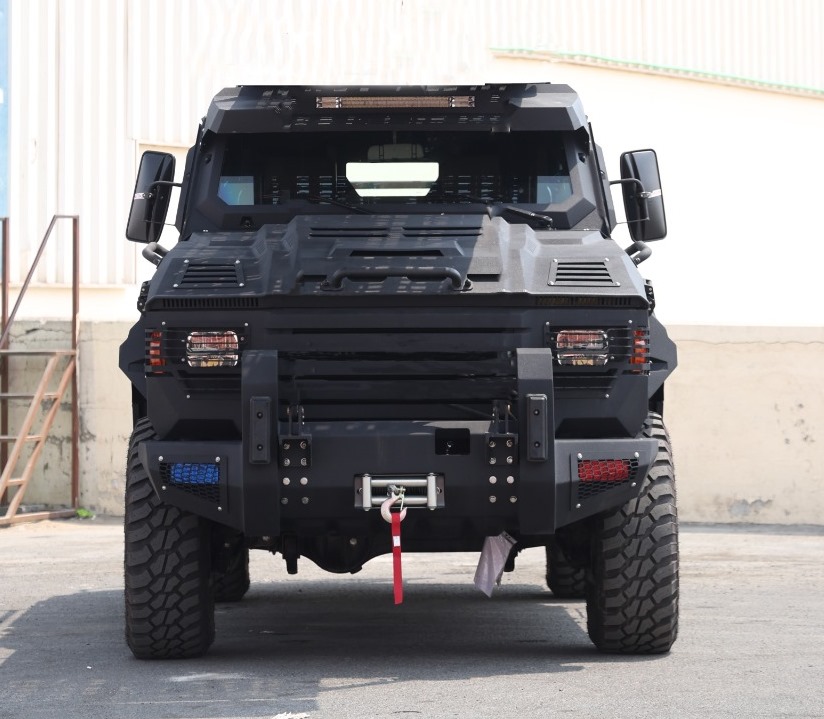
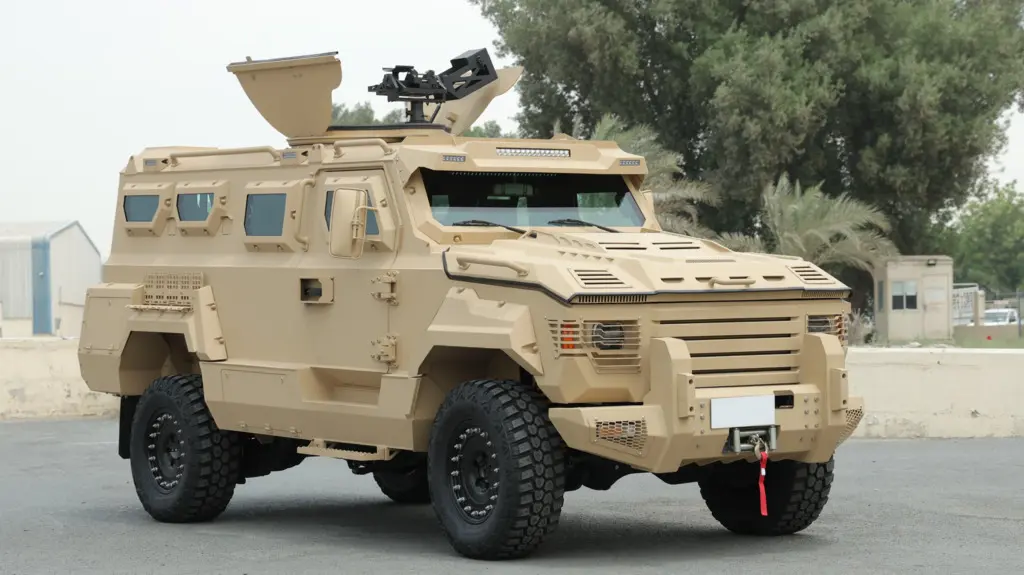
From an engineering point of view, the jump from Level 1 to Level 2 is substantial. Thicker armor, more complex material stacks, and reinforced floor structures increase mass, which directly affects handling and braking.
In our work with BR6 civilian vehicles, we see the same pattern. For example, BR6 SUVs need upgraded suspension, brakes, and sometimes wheel and tire packages to keep vehicle dynamics within safe and predictable ranges while carrying higher protection levels.
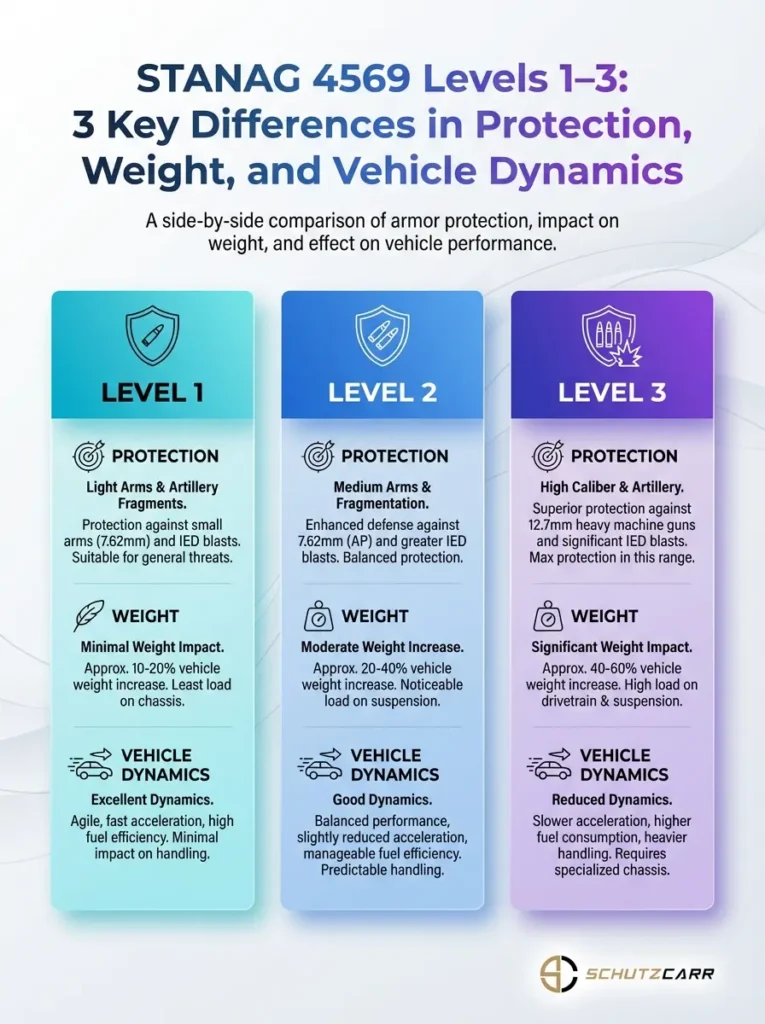
An infographic explaining STANAG 4569 Levels 1–3. It highlights three key differences in protection, weight, and vehicle dynamics.
Did You Know?
Level II mine protection in STANAG 4569 is defined as a 6 kg explosive mass under the wheel or under the vehicle, which has a direct influence on floor geometry and structural reinforcement.
4. Level 3 Explained: AP Rifle And Higher Mine Threats
Level 3 represents a clear escalation in both ballistic and blast performance over Level 2. The core kinetic requirements are 7.62×51 AP with a tungsten carbide core at 30 m at 930 m/s and 7.62×54R B32 API at 30 m at 854 m/s.
On the mine side, Level 3 uses an 8 kg explosive mass under the wheel or centerline. This requires not just thicker floor armor but also thoughtful integration with seat mountings and structural members to control deformation.
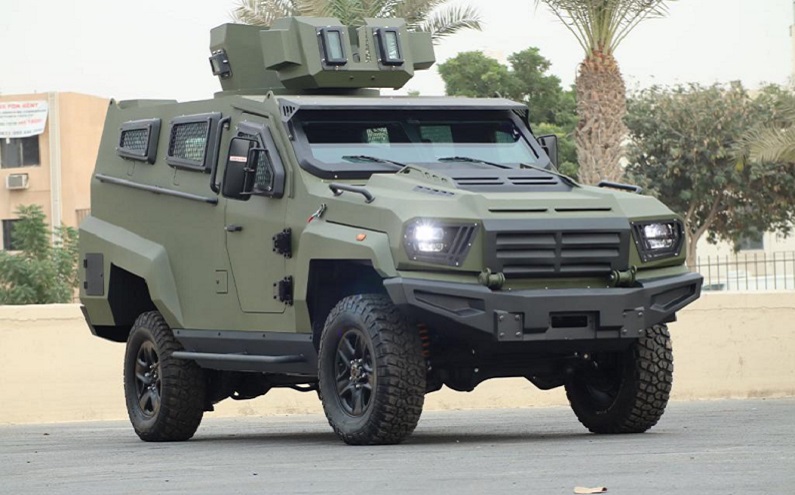
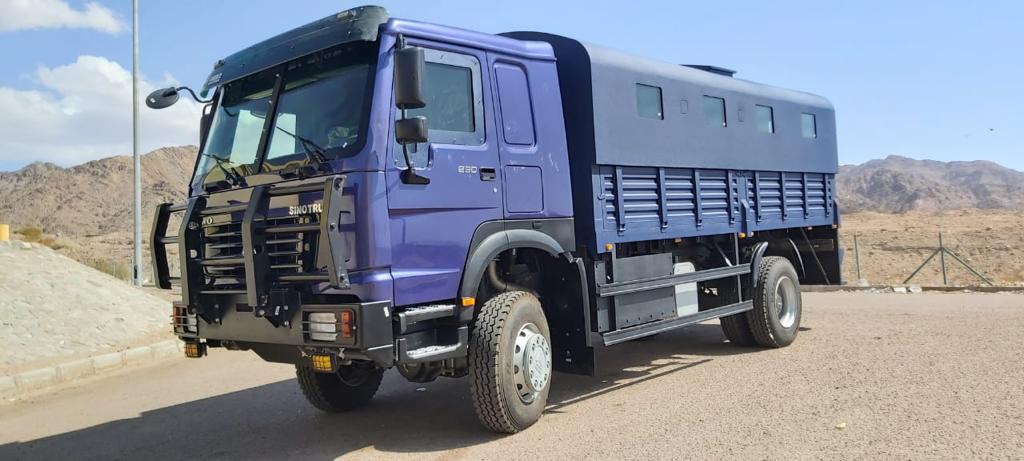
STANAG 4569 sets precise test geometry for these threats, including 0° obliquity at 30 m and velocity tolerances around ±20 m/s. That precision ensures results are repeatable and allows comparability across platforms and suppliers.
In civilian work, the closest analog to Level 3 type ballistic performance is BR7 and certain heavy BR6 configurations. These usually require purpose‑designed platforms or extensive re‑engineering to carry the armor mass safely while preserving acceptable handling.
5. How Levels 1–3 Compare To Civilian B4–B7 Ratings
Many civilian buyers first encounter B4 to B7 or BR4 to BR7, which follow EN 1063 and related standards, not STANAG 4569. Although they are different frameworks, there is practical overlap in the threat bands they address.
For reference, you can think of the progression broadly like this.
| Concept | STANAG 4569 Level | Typical Civilian Band | Typical Use Case |
|---|---|---|---|
| Baseline rifle and fragments | Level 1 | B4 / BR4 region | Light protection with minimal weight |
| API rifle and 6 kg mine | Level 2 | Lower BR6 region | Heavier armor on robust platforms |
| AP rifle and 8 kg mine | Level 3 | Upper BR6 / BR7 region | Specialized or heavily re‑engineered vehicles |
This is not a formal equivalence chart, but it gives a sense of how the bands relate in practice. When we talk with clients who reference both systems, we always clarify that test setups differ, so these are directional comparisons, not strict conversions.
In our B4 to B7 Ballistic Protection Levels Explained material, we approach the civilian side using the same logic. We group levels into threat bands, then focus on the tradeoffs in glass thickness, body armor, and overall vehicle mass.
The key takeaway is that both frameworks move from lighter, more usable vehicles toward heavier, more specialized ones as protection levels increase. Weight, braking distances, turning radius, and maintenance all track that curve.
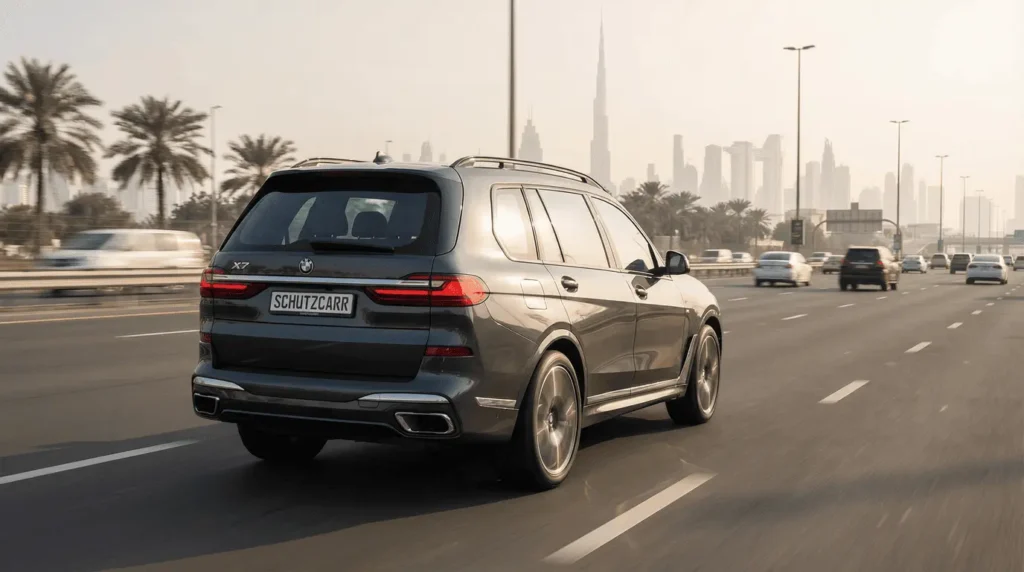
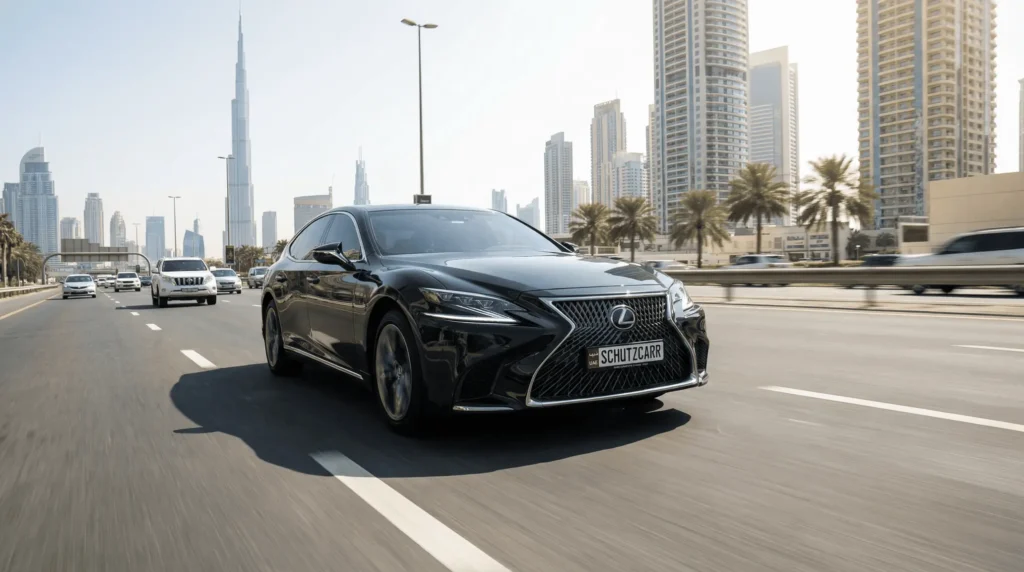
6. Weight, Glass Thickness, And Vehicle Dynamics Across Levels 1–3
As protection levels increase, so does mass, particularly from glass and steel or composite armor. In our civilian projects, a BR6 upgrade alone can add around 38 mm of ballistic glass and roughly 360 kg to a vehicle, which is a useful reference when you think about STANAG Level 2 and 3 type performance.
Glass is often the most visible change. Thicker panes mean heavier doors, altered window regulators, and a different feel when opening and closing doors.
Chassis components also see higher loads, so suspension tuning and brake upgrades are essential for stability and stopping performance. We pay attention to these details on platforms comparable in spirit to Level 2–3 protection bands, particularly heavier SUVs and APC‑style builds.
From the driver’s seat, the difference between a light Level 1‑type vehicle and a heavy Level 3‑type one is most obvious during emergency maneuvers or steep gradients. That is why we always factor daily drivability into discussions, not only threat coverage.
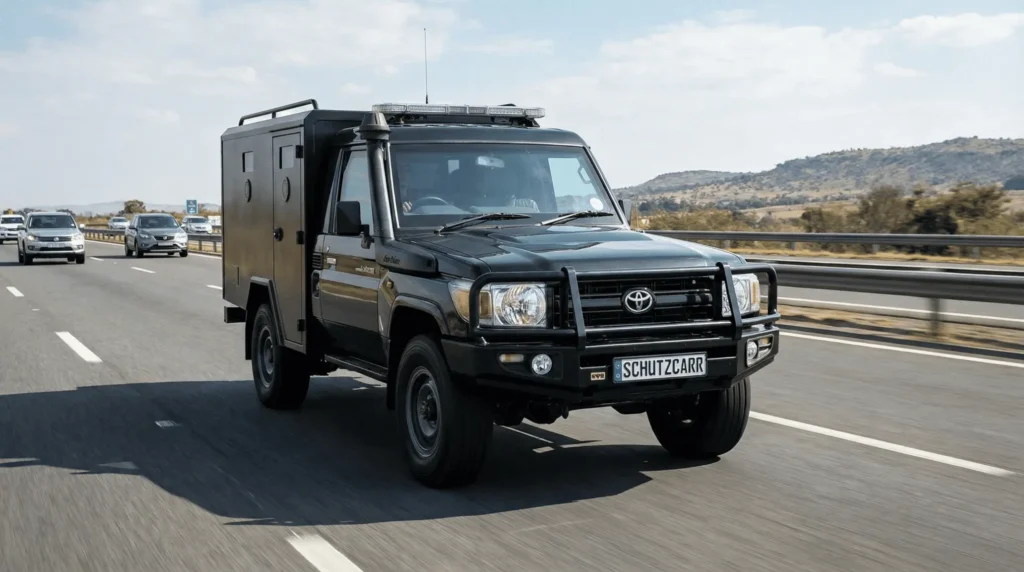
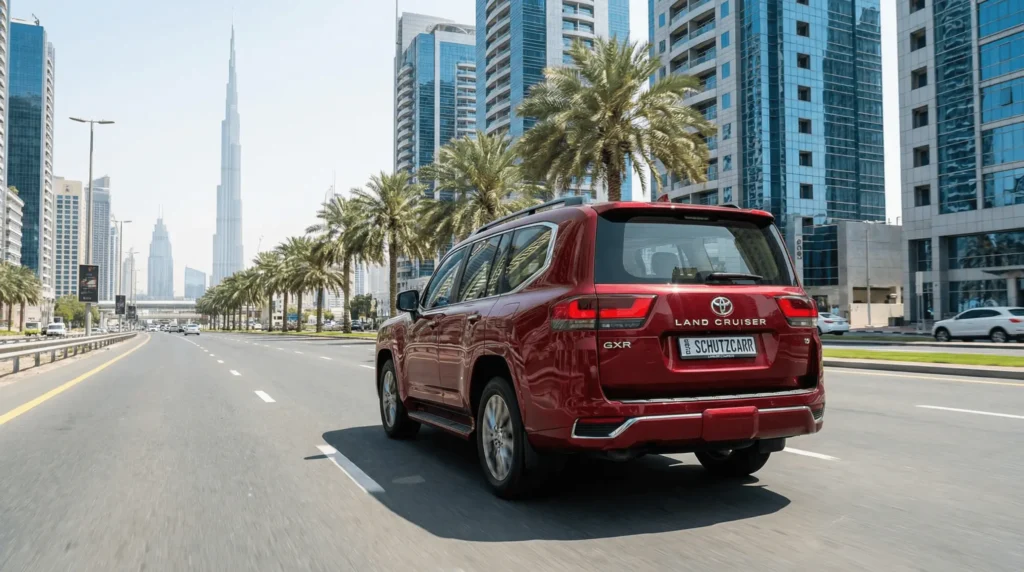
7. Real‑World Platforms That Reflect Level 2–3 Style Protection
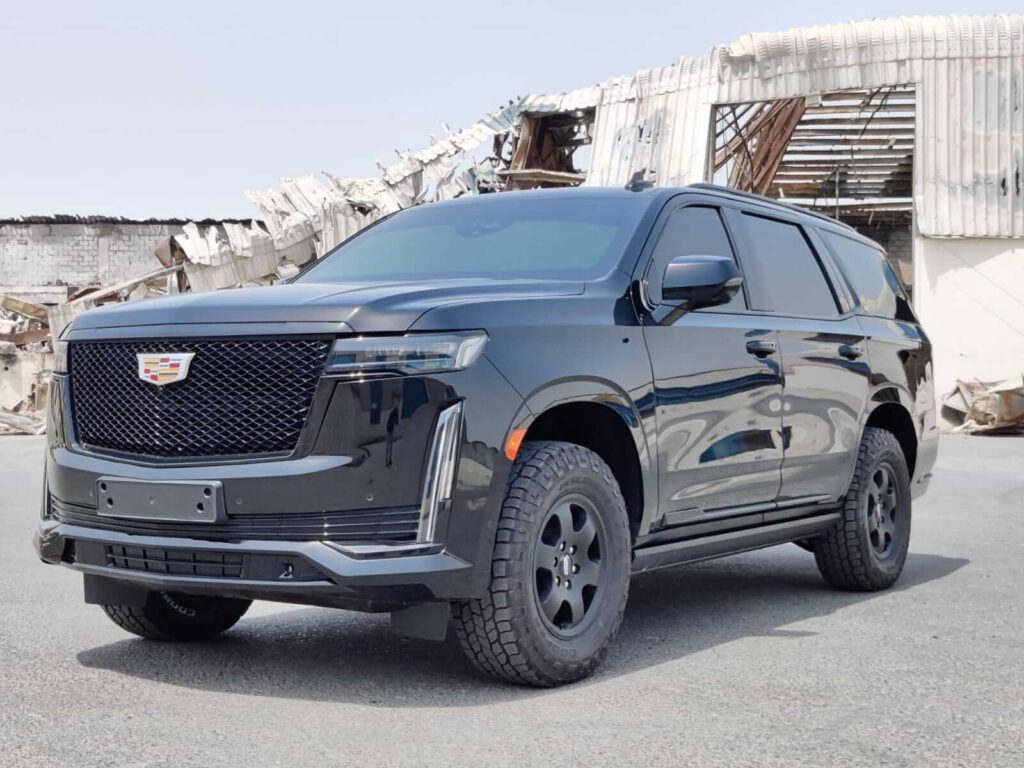
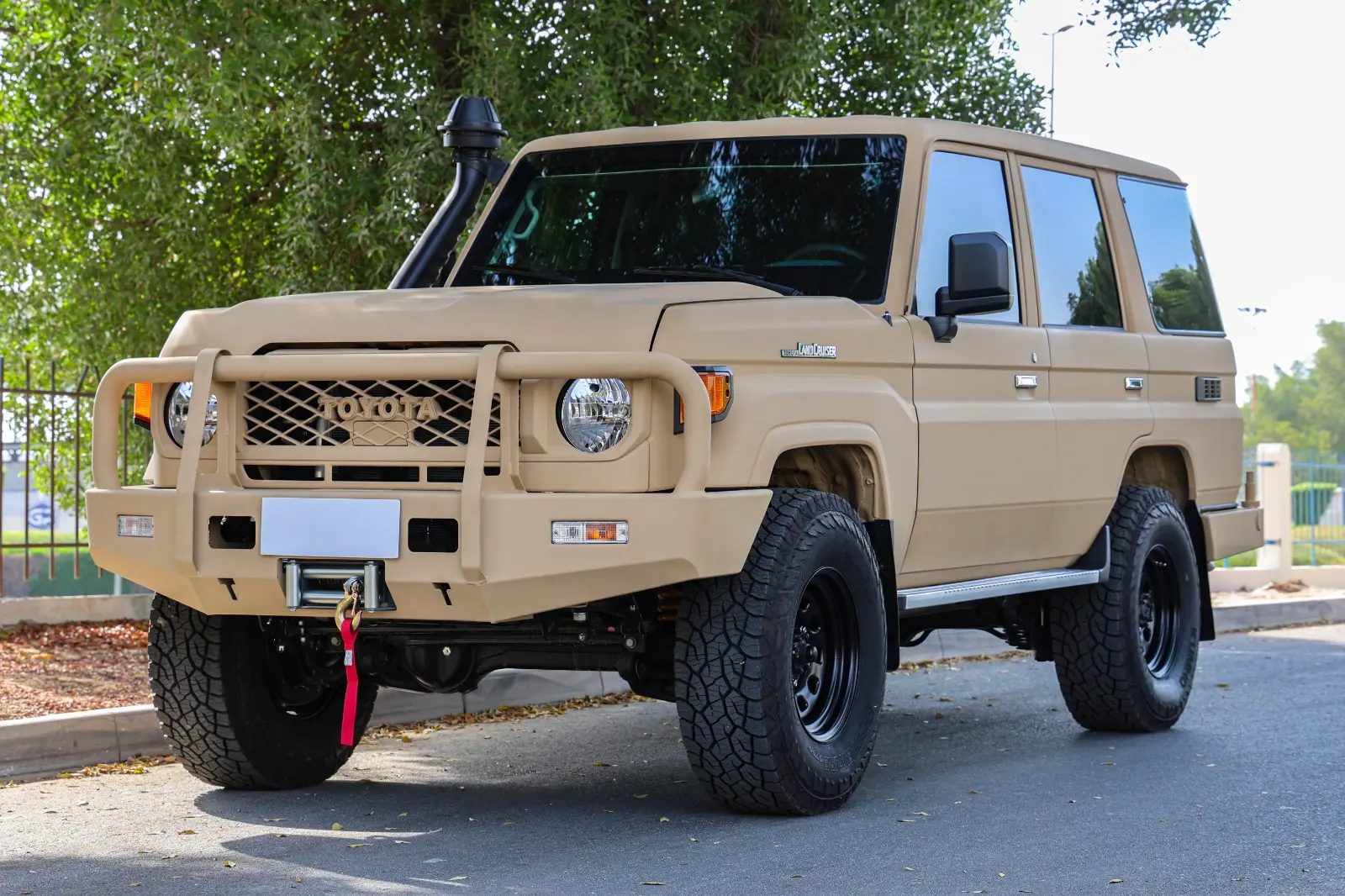
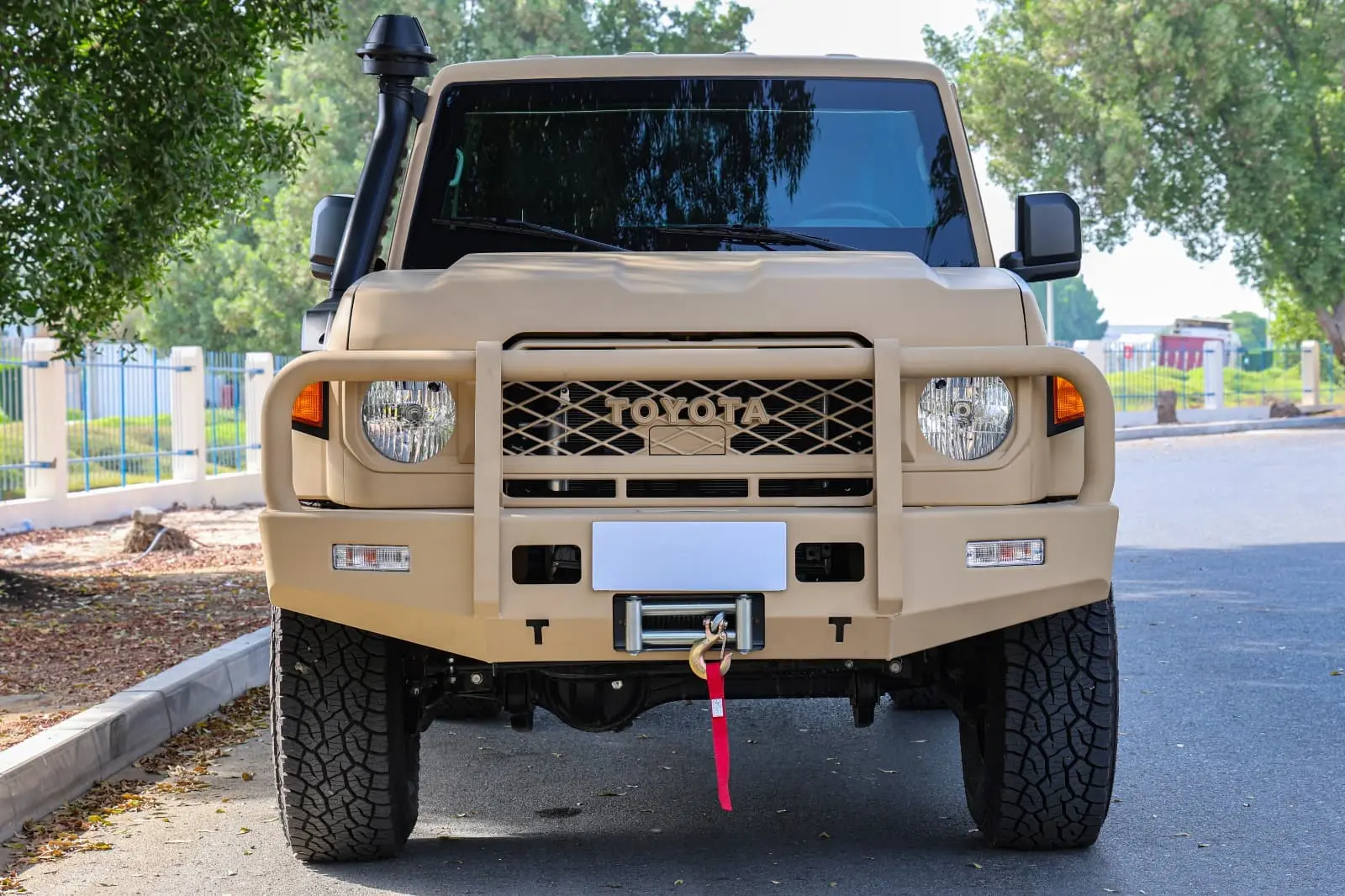
Toyota Land Cruiser 76 BR6: Comparable To Mid‑Band Threats
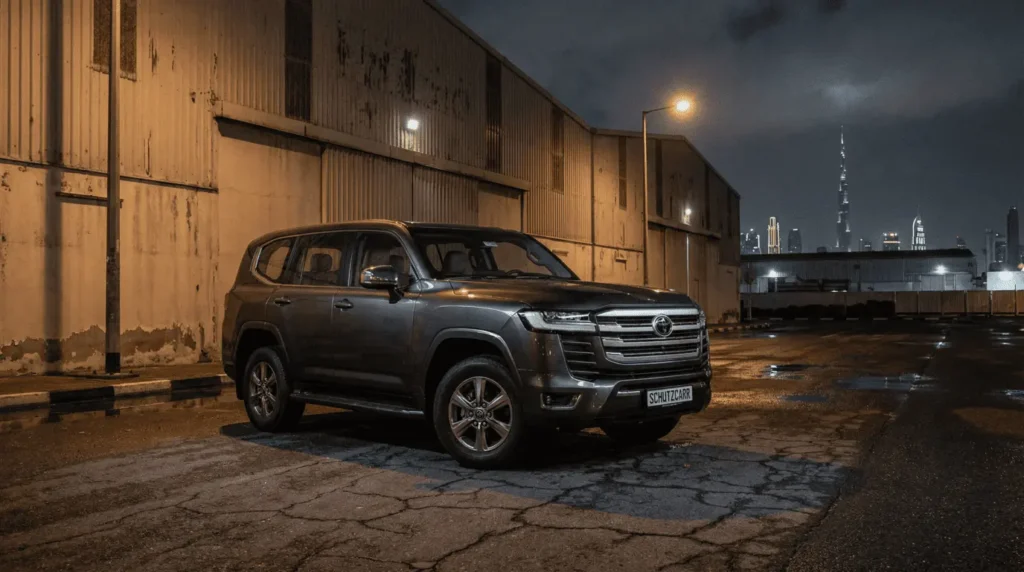
Our armored Toyota Land Cruiser 76 in BR6 configuration is a good example of a platform that reflects mid‑band rifle and blast considerations similar to Level 2 in spirit. It combines a ladder‑frame chassis, available BR6 or BR7 packages, and carefully integrated glass and steel protection.
The vehicle is listed from $85,000 in armored form with BR6/BR7 options. We keep its exterior as close as practical to the original profile, which many clients prefer for discretion.
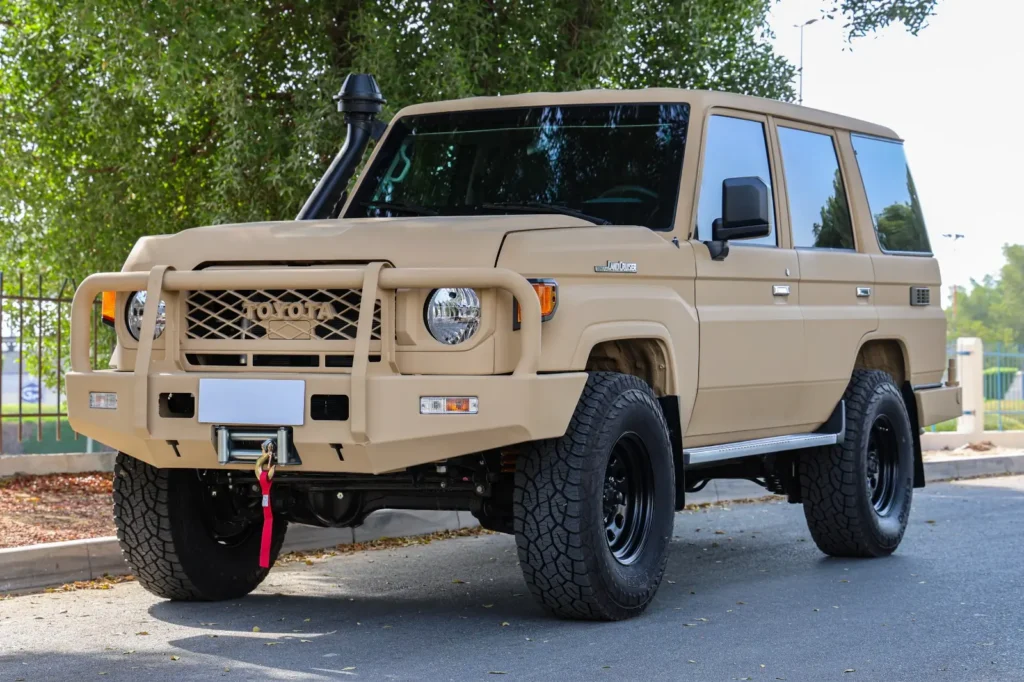
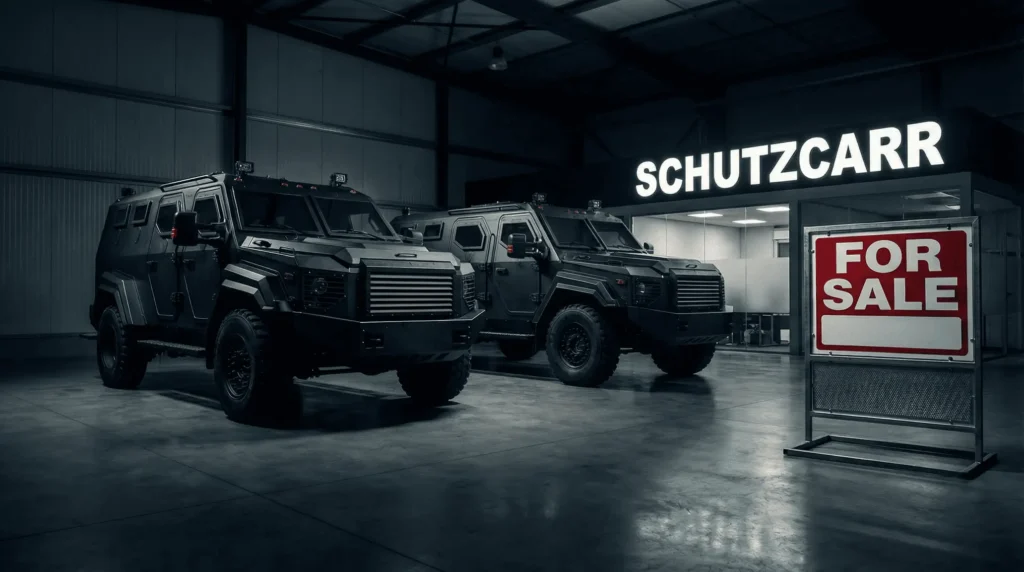
APCs And MRAPs: Aligning With Heavier Level 3 Style Protection
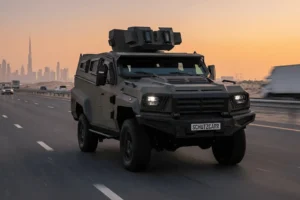
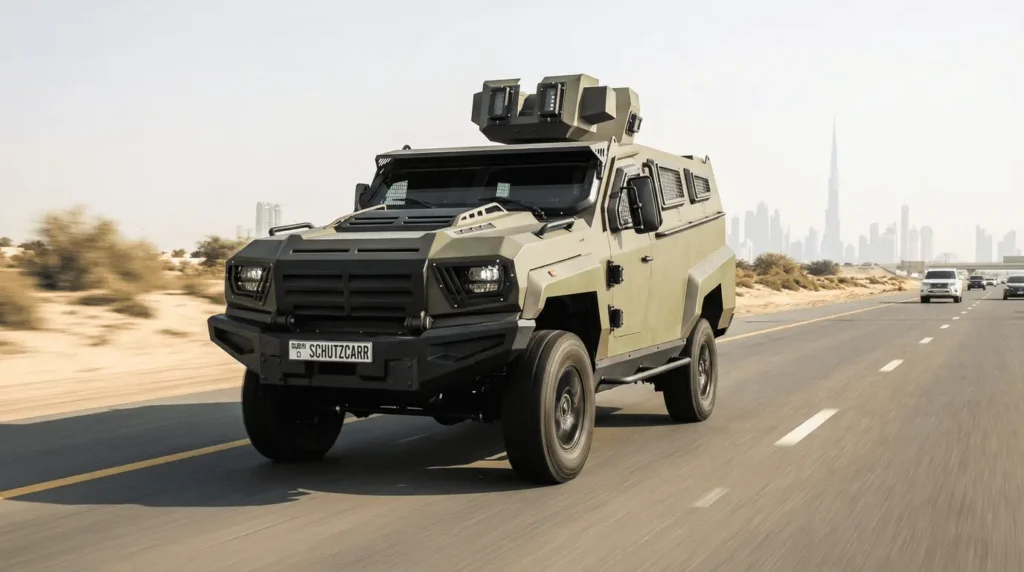
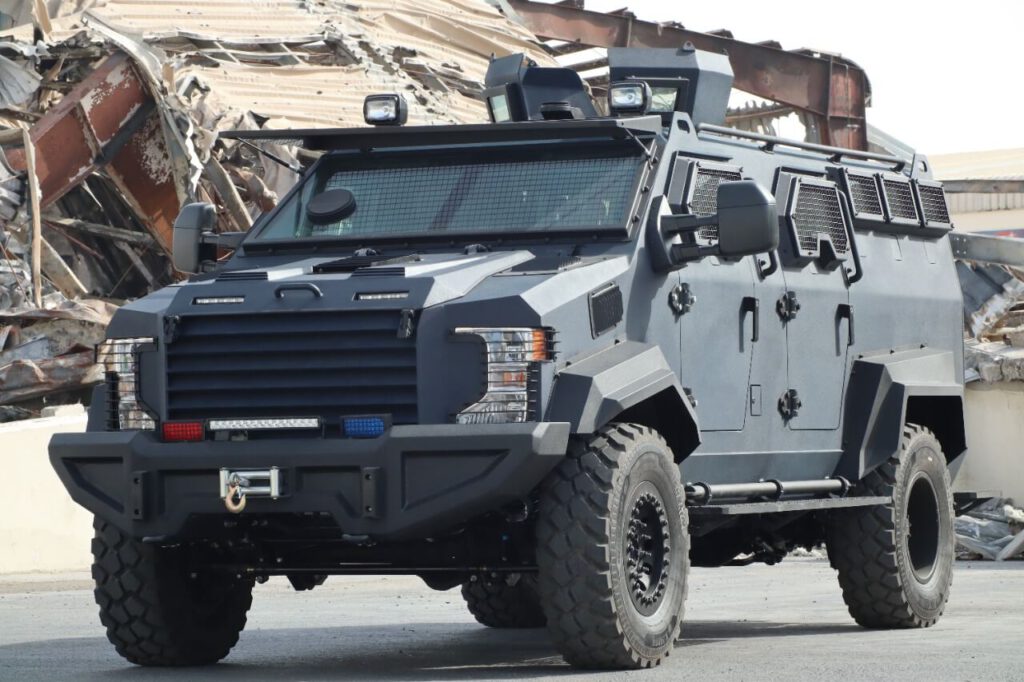
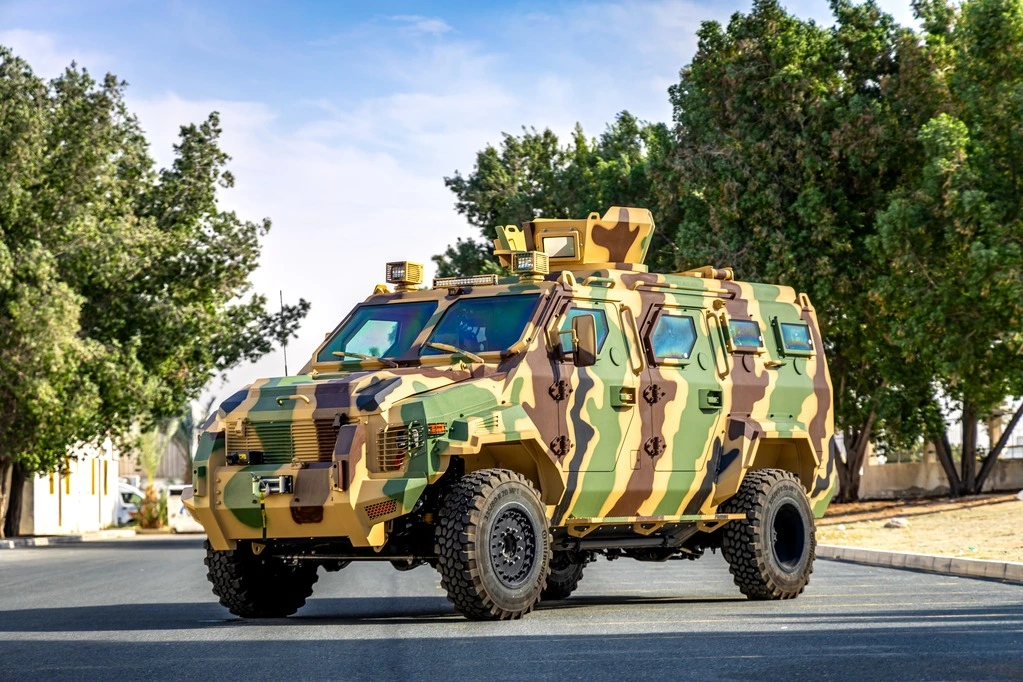
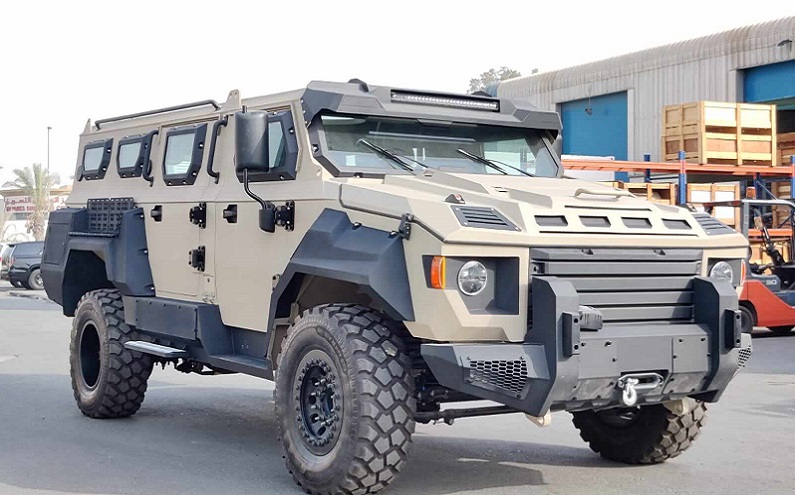
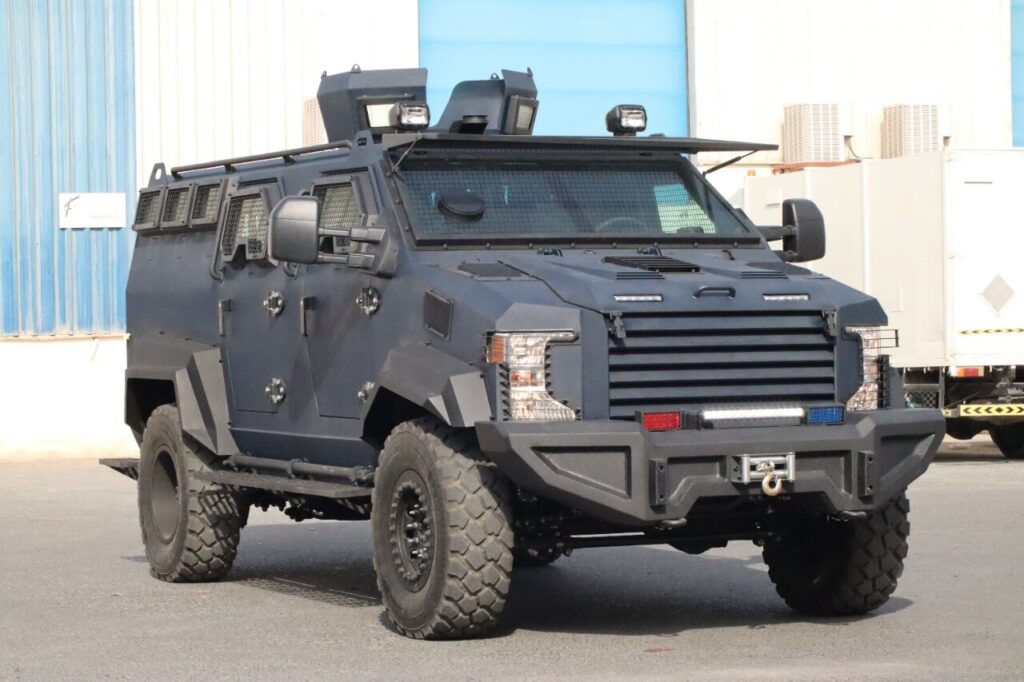
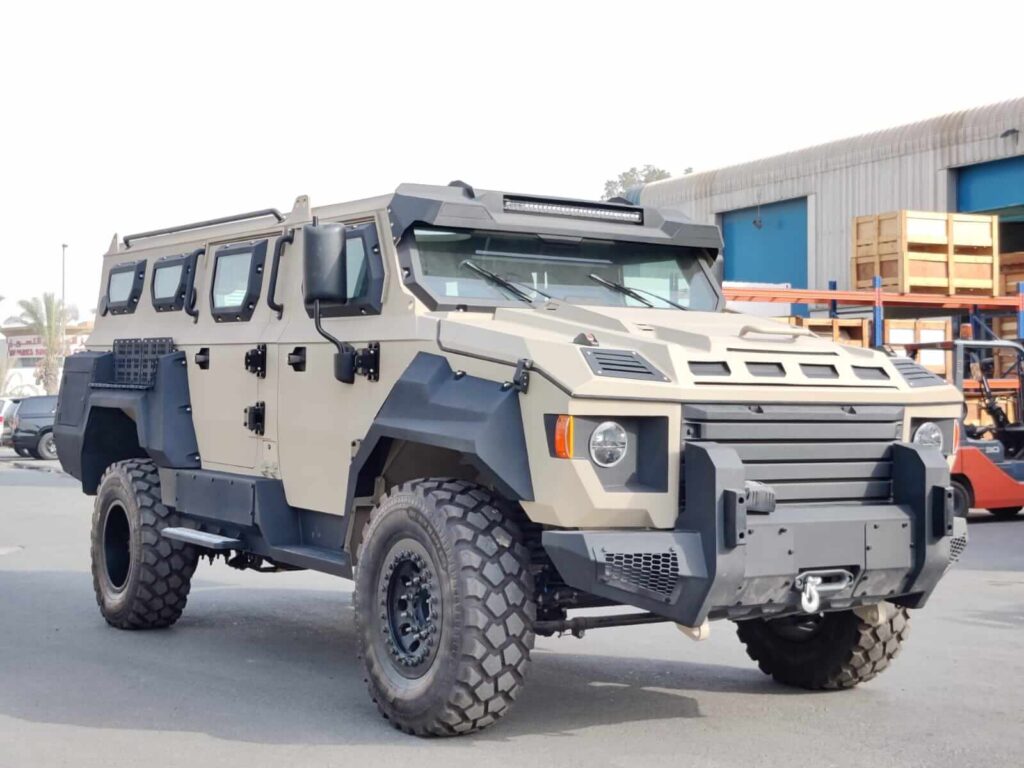
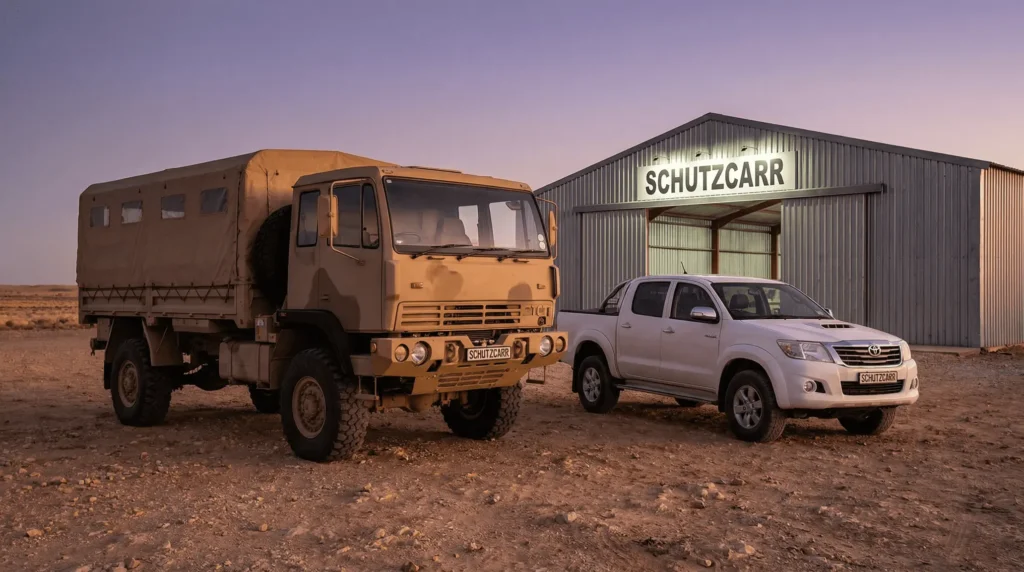
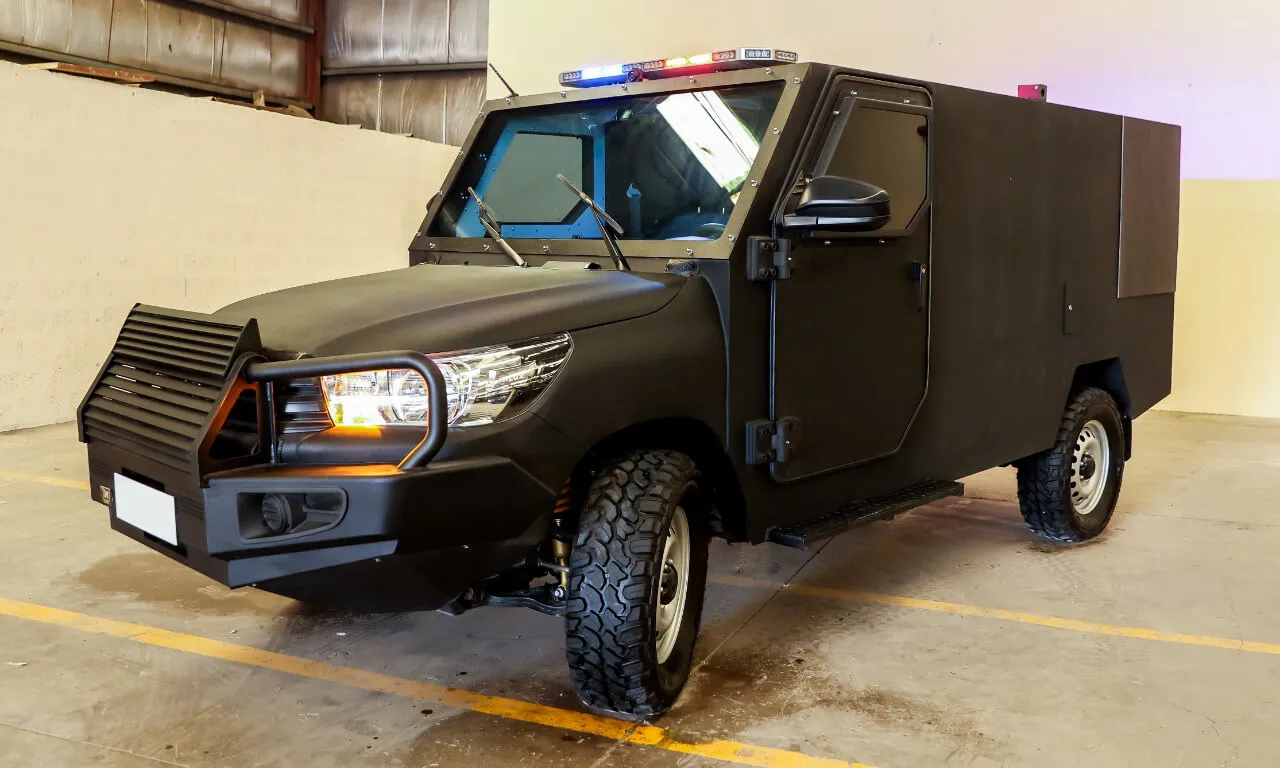
On the heavier side, multi‑purpose APC and MRAP configurations from our portfolio reflect threat considerations akin to Level 3. These vehicles use specialized hull shapes, heavy floor armor, and high‑capacity drivetrains to manage mass while still covering demanding ballistic and blast envelopes.
We design these platforms around dedicated chassis or purpose‑built structures. That approach gives more freedom to place armor, components, and seats for controlled deformation and energy paths.
Did You Know?
STANAG 4569 is specifically intended for logistic and light armored vehicles and defines Levels I–VI across kinetic, fragmentation, and mine threats, which is why it is a useful reference when discussing SUVs, pickups, and APCs rather than heavy tracked platforms.
8. Lexus LX600 BR6 And High‑End SUVs In A Level 2–3 Context
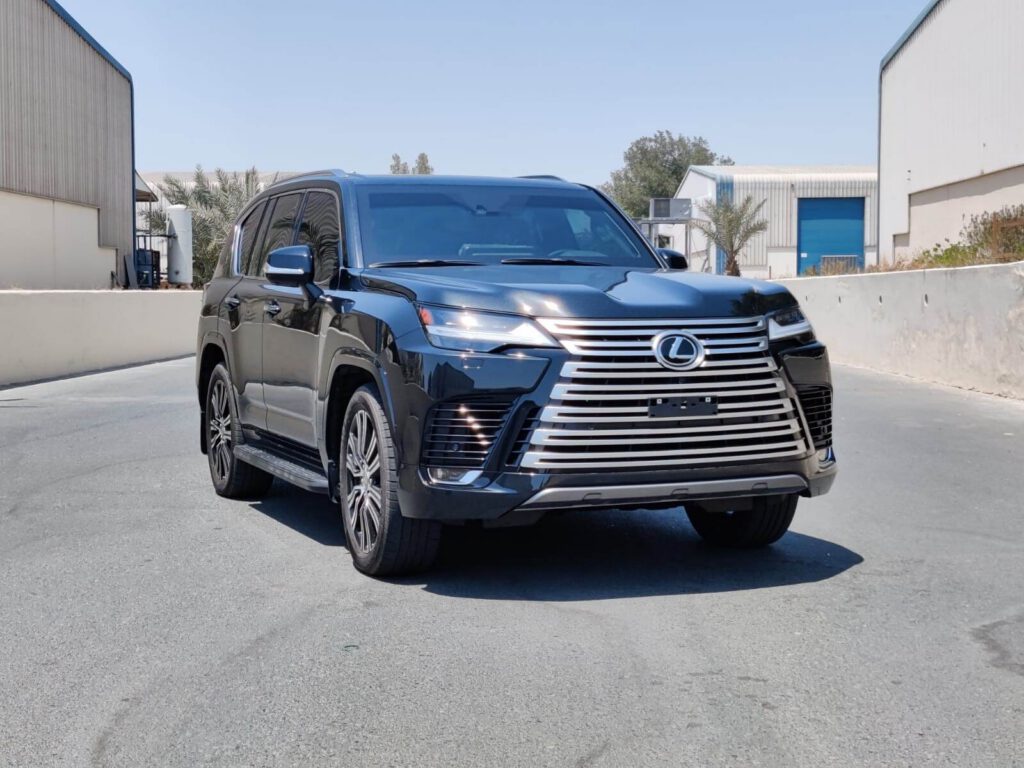
Lexus LX600 BR6: Luxury Platform With Mid‑High Protection
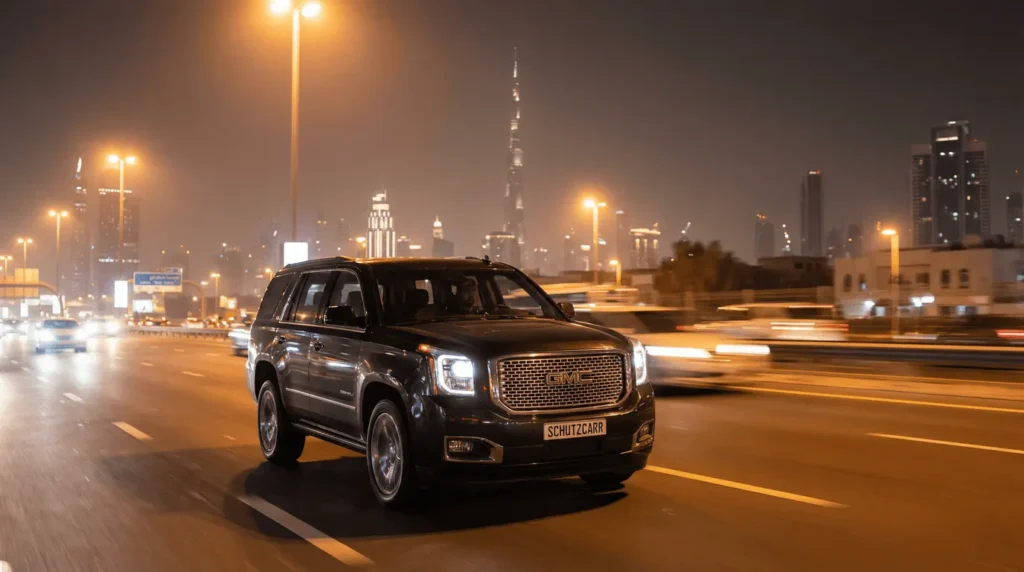
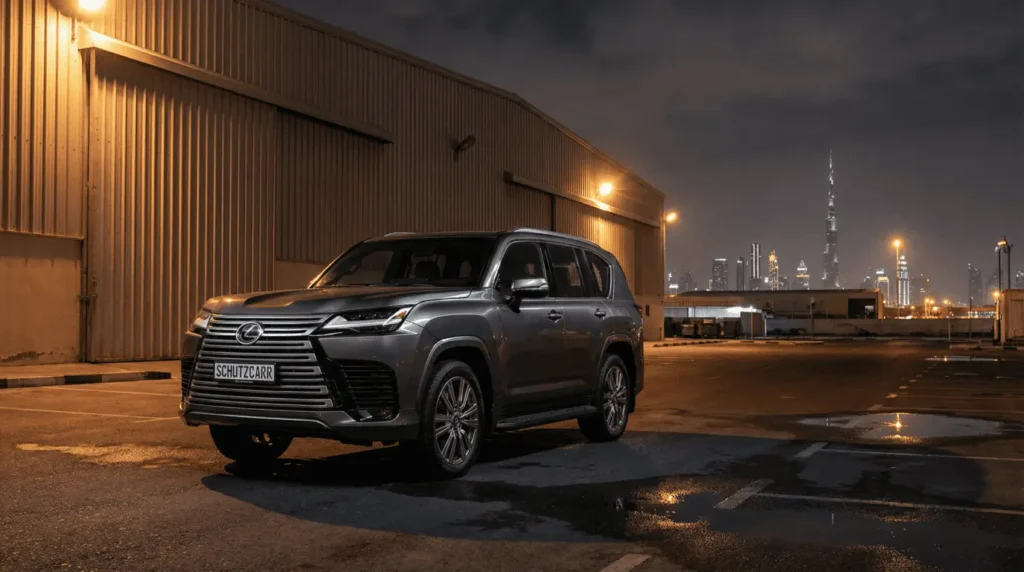
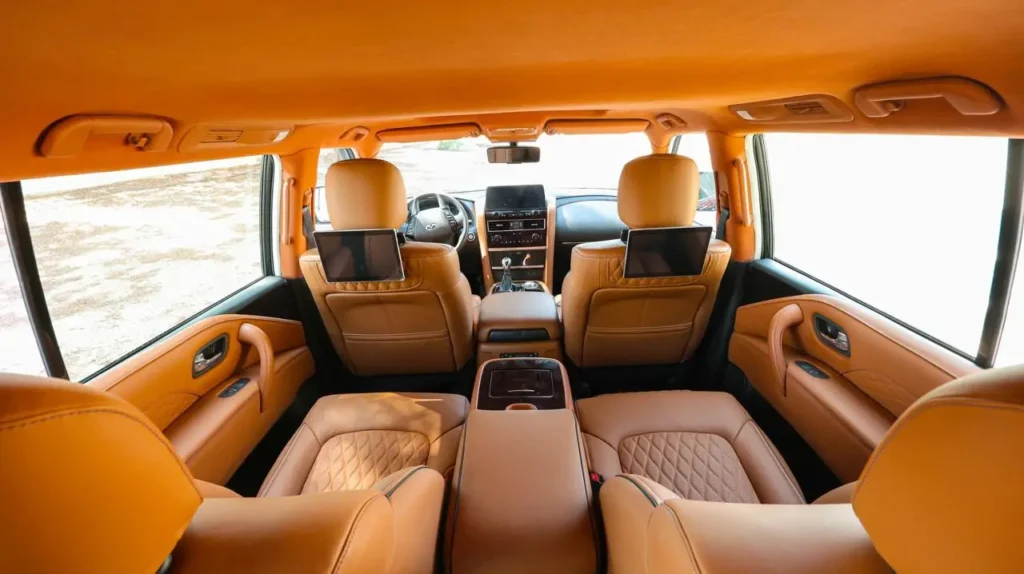
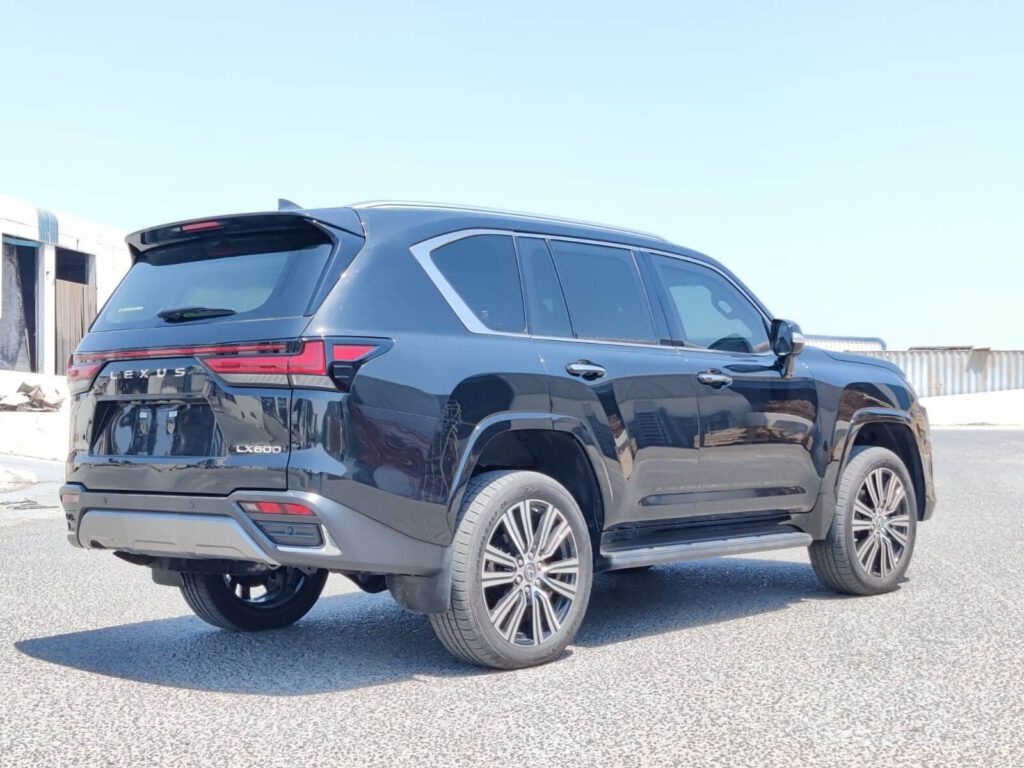
The Lexus LX600 BR6 armored SUV that we build is a strong example of blending higher ballistic performance with comfort and refinement. Its protection concept is aligned with risks that sit near the upper part of the Level 2 band and touching Level 3 style ballistic expectations, depending on configuration.
We reinforce pillars, doors, floor, and roof to provide 360° ballistic coverage while preserving the interior design. That combination appeals to clients who need higher capability without moving into fully specialized APC shapes.
Range Rover, Maybach GLS, And Similar SUVs
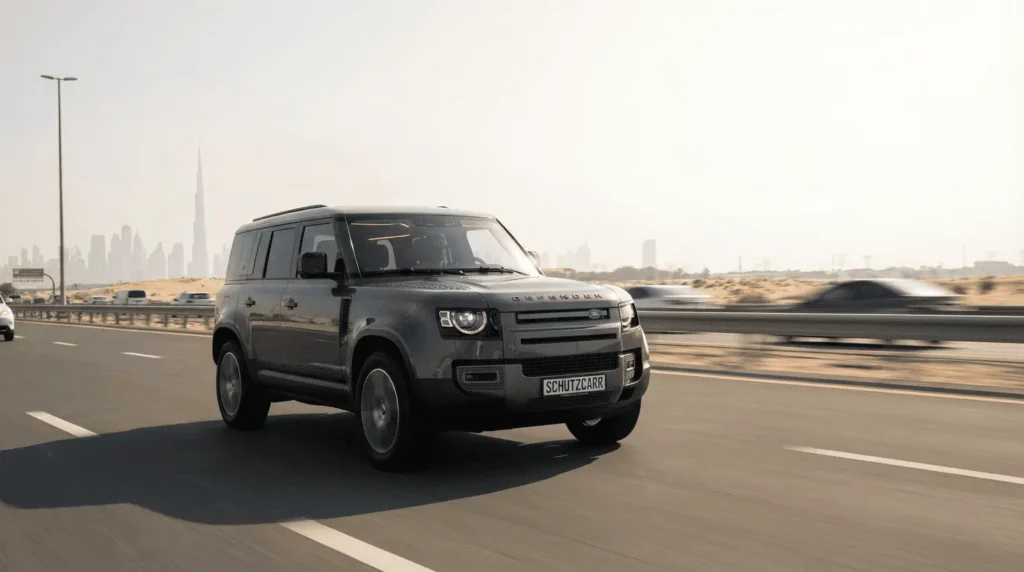
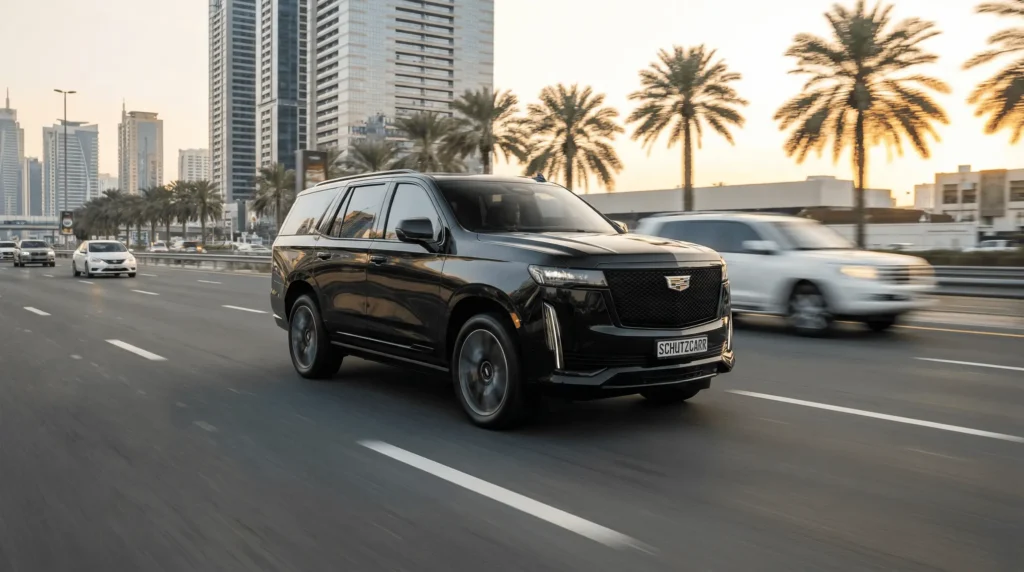
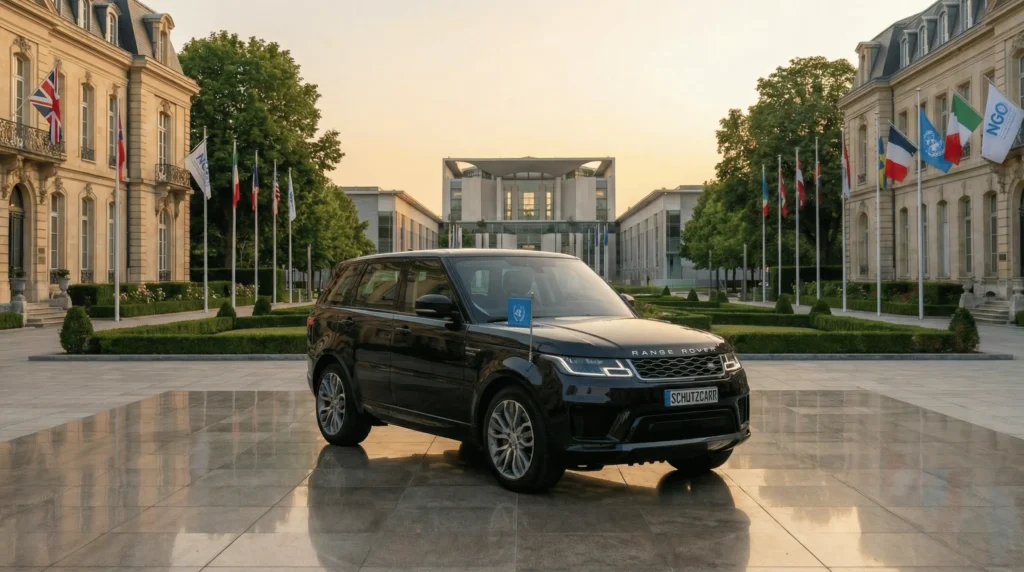
Other high‑end SUVs such as extended Range Rover builds or Maybach GLS configurations can also be adapted for higher bands. These platforms carry sufficient baseline chassis capability to handle increased mass when appropriately engineered.
From a STANAG 4569 viewpoint, you can think of well‑executed BR6 builds on such platforms as conceptually overlapping with Level 2 to early Level 3 style threats. The exact alignment depends on the chosen armor package and any underbody work.

9. Matching STANAG Levels 1–3 To Use Cases And Risk Profiles
Choosing a protection band is ultimately about aligning realistic risk with acceptable vehicle characteristics. Level 1 type coverage, in both STANAG and civilian contexts, suits users who prioritize lighter vehicles and focus on more limited ballistic scenarios.
Level 2 style requirements introduce stronger rifle threats and meaningful mine considerations. This level suits robust SUVs and pickups with reinforced underbodies, as well as lighter APC designs that still need significant mobility.
Level 3 type performance is best thought of as a heavy band that demands careful platform selection and engineering. Buyers looking in this direction usually prioritize protection coverage first and accept that mass and operating characteristics will reflect that choice.
When we guide clients through these decisions, we often start with simple questions about travel patterns, typical routes, and any specific concerns. We then map those answers to a realistic protection band and suitable platforms, referencing both STANAG expectations and civilian standards where helpful.
10. How We Use STANAG 4569 In Our Engineering And Client Discussions
Although civilian projects are usually certified under other standards, we regularly use STANAG 4569 Levels 1–3 as a shared technical language. It helps engineers, security advisors, and informed buyers discuss threats in concrete terms.
We reference the kinetic tables, mine levels, and test geometries when sizing armor stacks and evaluating candidate materials. This ensures that our internal design assumptions stay anchored to recognized performance envelopes, not vague labels.
At the same time, we always translate those numbers into practical implications. This includes changes in fuel consumption patterns, maintenance cycles, brake wear, and tire selection that accompany different protection bands.
For many buyers, seeing the connection between a specific Level and a concrete change, such as a heavier door or modified suspension, is what makes the technical framework meaningful. Our role is to keep that connection clear and grounded in realistic vehicle behavior.
Conclusion
STANAG 4569 Levels 1, 2, and 3 provide a clear, structured way to talk about ballistic and mine protection for light and logistics vehicles. When we relate those levels to civilian B4–B7 standards, real‑world platforms, and weight and usability tradeoffs, they become a practical tool instead of just technical jargon.
If you would like to discuss how STANAG 4569 Levels 1–3 relate to a specific vehicle or protection requirement, we are ready to help. You can get in touch with us directly through our contact page at https://schutzcarr.shop/contact/ so we can walk through options and clarify which protection band makes sense for your needs.