
The Toyota Hilux has a long reputation for durability, and that reputation increasingly extends to armored variants. In 2025 alone, one specialist armoring shop reported 90 Hilux units armored in a single year, making it their top model for armoring and highlighting how often fleets and organizations choose this platform for secure transport. In this guide, we explain what an armored Toyota Hilux offers, how different builds compare, and what to consider if you are evaluating this vehicle for high‑risk operations, logistics, or protected mobility.
Key Takeaways
| Question | Quick Answer |
|---|---|
| What is a Toyota Hilux armored vehicle? | An armored Toyota Hilux is a Hilux pickup upgraded with certified ballistic protection, reinforced structure, and security-focused components, such as BR6 armor, as shown on our Toyota Hilux 2.7 Petrol BR6 model. |
| Which protection level is common on armored Hilux pickups? | Many professional builds use CEN-compliant BR6 protection on both transparent and opaque areas, similar to the specification on the Toyota RHD Hilux 2.8L BR6 Armored Pickup. |
| Are right-hand drive (RHD) armored Hilux options available? | Yes, we offer dedicated RHD configurations, such as the Toyota RHD Hilux 2.8L BR6 Armored Pickup, which suits regions where right-hand drive is standard. |
| Can the Toyota Hilux be adapted for cash-in-transit work? | Yes, our Toyota Hilux cash box solutions show how the platform can be configured for secured valuables transport. |
| How does the armored Hilux compare with armored SUVs? | Armored Hilux pickups share similar BR6 protection concepts with SUVs like the Toyota Land Cruiser 76 BR6 Armored SUV, but offer an open or boxed rear bed that suits logistics and utility roles. |
| Where can I view more armored vehicle options beyond the Hilux? | Our broader lineup, including pickups, SUVs, and APCs, is presented in the armored vehicle overview category. |
1. Why the Toyota Hilux Is a Natural Platform for Armoring
When fleets and organizations consider a secure pickup, the Toyota Hilux often appears at the top of the list. Its long production history, wide availability of parts, and proven reliability give armoring specialists a familiar and robust base to work from.
The Hilux chassis and suspension accept additional weight from armor packages with carefully engineered reinforcements. Over time, this has led many armoring companies to standardize specific Hilux configurations, making the build process more predictable and repeatable for clients who need consistent performance across a fleet.
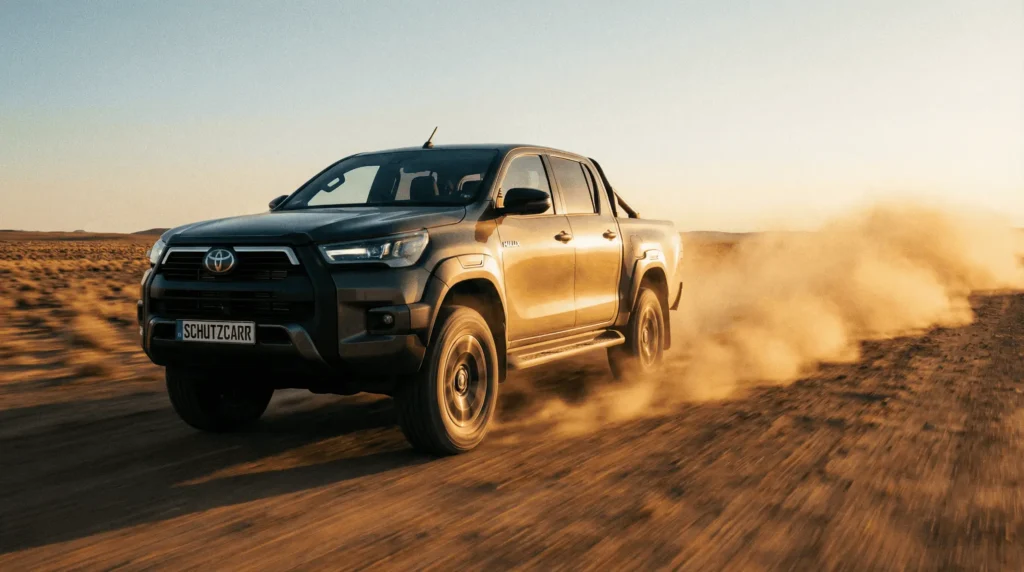

Market data reflects this role. In one regional market, the Hilux has repeatedly led sales in the light commercial vehicle segment, with several months above 3,000 units registered. That level of presence on the road aligns closely with the strong demand we see for armored conversions built for patrol, escort, and secure logistics duties.


2. Understanding BR6 Protection on the Armored Hilux
Many armored Toyota Hilux builds use BR6 ballistic protection, following CEN 1522/1523 standards for both transparent and opaque areas. In practice, this means multi-layer ballistic glass paired with carefully formed steel or composite armor panels, all installed to create an overlapping protective shell.
Our Toyota Hilux 2.7 Petrol BR6 integrates a self-supporting armored passenger cell with reinforced doors, pillars, and floor. Transparent areas and opaque steel surfaces follow the same protection level, so occupants enjoy uniform shielding around the cabin rather than isolated protection zones.


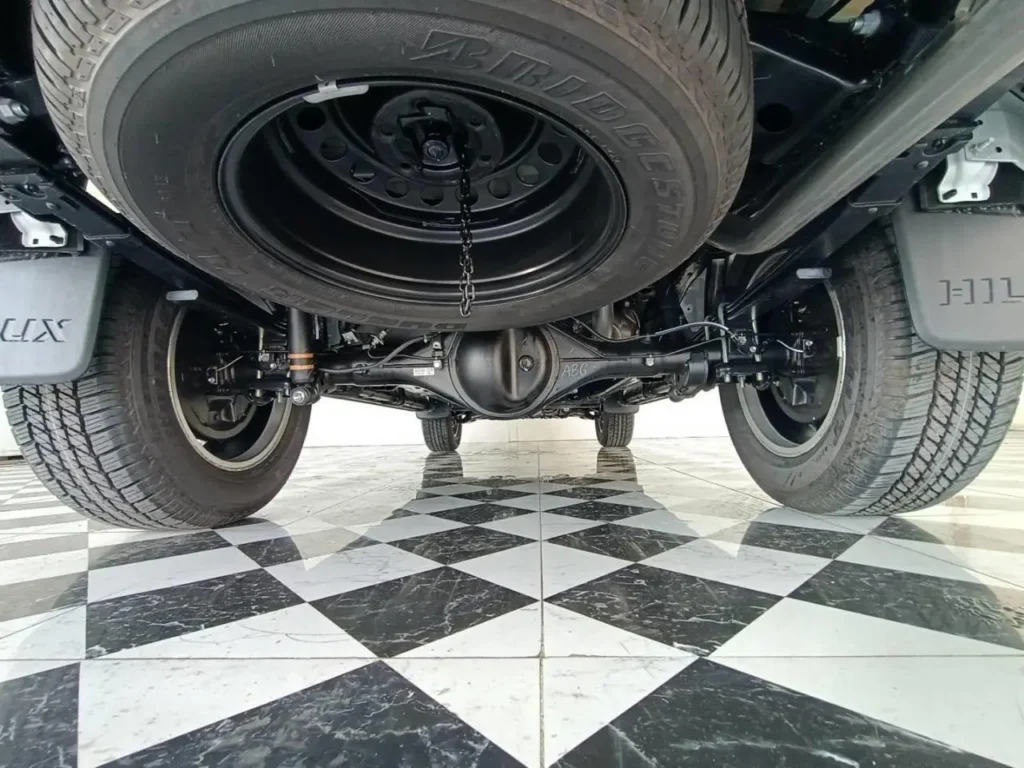
To complement the armor, we typically add features such as run‑flat inserts for all wheels, upgraded door hinges, and reinforced suspension components. Each of these upgrades supports the overall protection concept so that the vehicle maintains mobility and structural integrity while carrying the added mass of BR6 materials.


3. Toyota Hilux 2.7 Petrol BR6: Stock Armored Configuration
Core Features and Layout
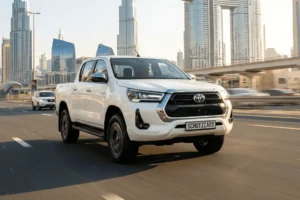
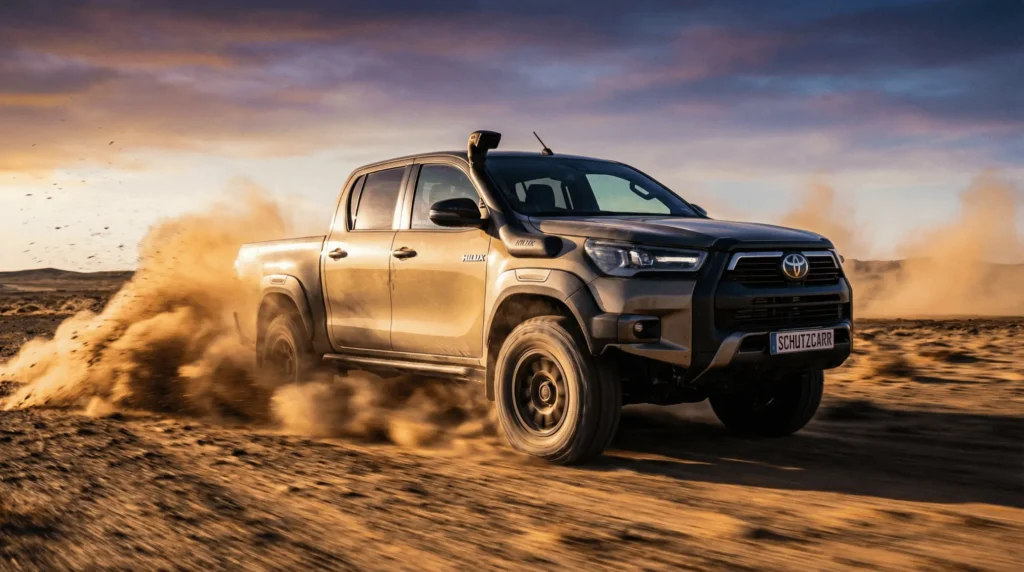
Our Toyota Hilux 2.7 Petrol BR6 is a representative stock configuration used by many customers who need a balanced mix of off-road performance and protected transport. The 2.7 petrol engine offers steady power delivery, while the double-cab layout provides seating for personnel alongside a functional cargo bed.
Inside, we retain the original Hilux ergonomics, then adapt them for armored service. That often includes optional VIP seating trims, upgraded upholstery, and thoughtfully placed control switches for auxiliary systems such as lights or communication equipment, depending on project requirements.
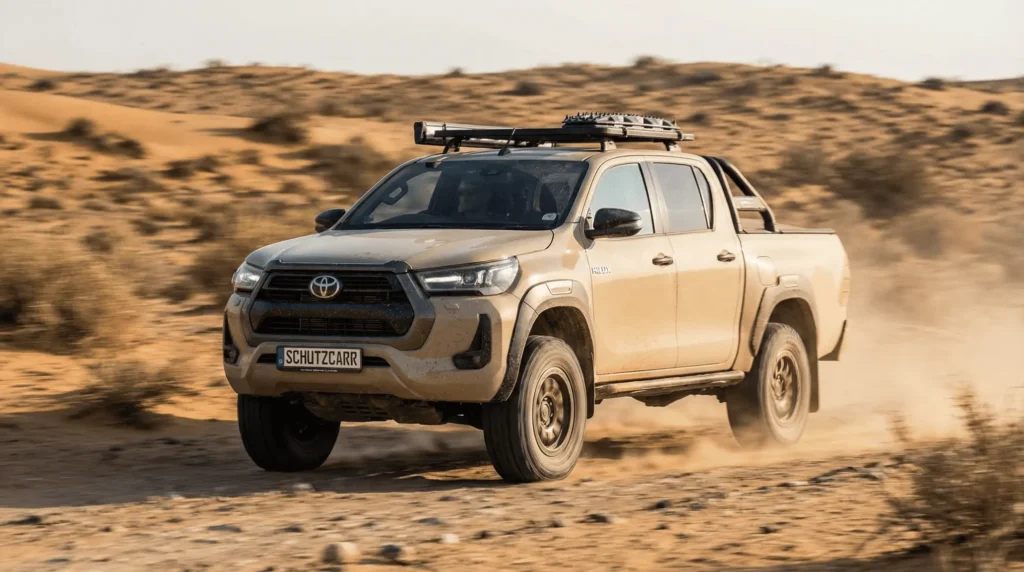

Typical Armoring Package
- BR6 ballistic glass, including front windshield, side windows, and rear glass.
- Steel armor for doors, pillars, roof, firewall, and rear bulkhead.
- Armored floor and footwells to address underbody threats at cabin level.
- Run‑flat inserts on all wheels for continued controlled driving after tire damage.
This stock configuration is suitable for users who require a defined specification without lengthy customization. Many fleets standardize a model like this across multiple regions so that drivers, maintenance teams, and logistic planners work with familiar vehicles every day.
Did You Know?
In 2025, a major South African armoring specialist listed the Hilux as its top model for armouring, with 90 units converted, far ahead of the next models on its list.
4. Toyota RHD Hilux 2.8L BR6: Diesel Power and Global Compatibility
RHD Layout and 2.8L Diesel Engine
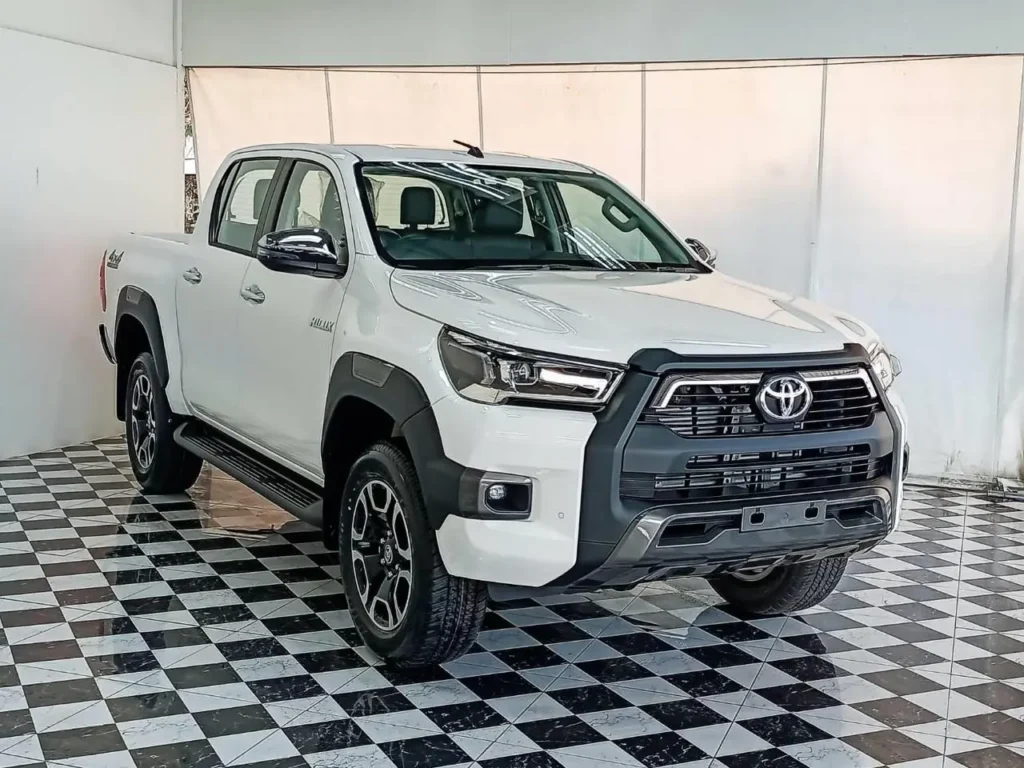
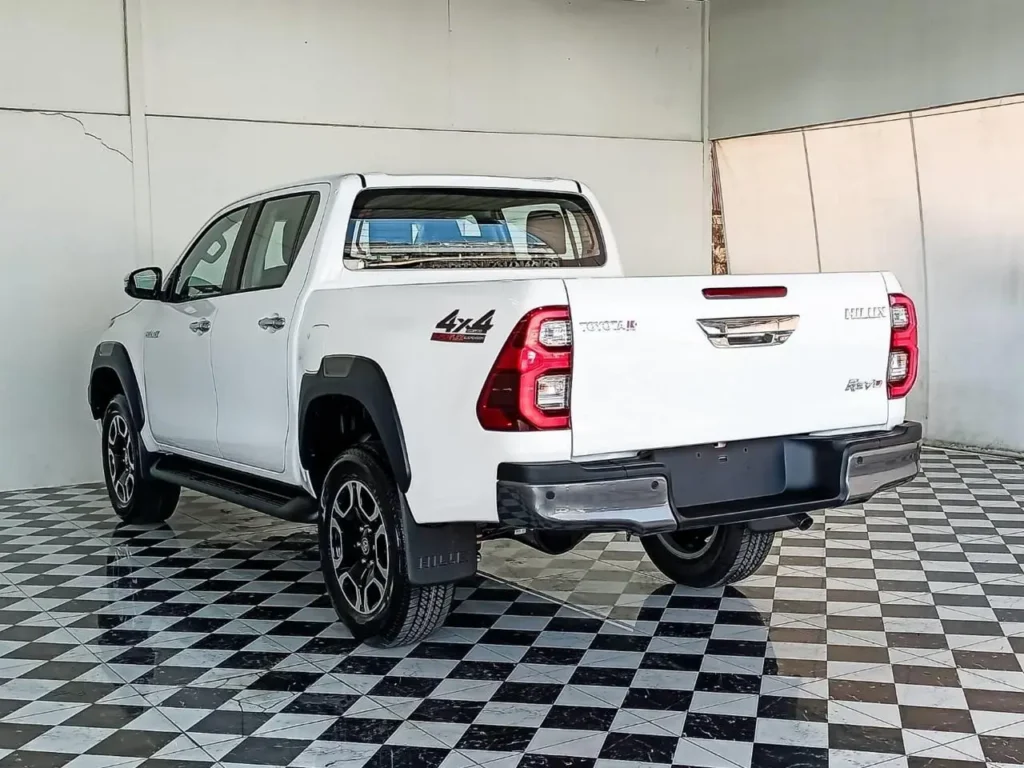
Many regions use right-hand drive vehicles, so we offer the Toyota RHD Hilux 2.8L BR6 Armored Pickup to suit those markets. This model combines a 2.8L diesel engine with a 4×4 drivetrain, giving users usable torque at low speeds and strong performance on challenging terrain.
The RHD configuration also helps fleets standardize driver training and operating procedures where right-hand traffic is the norm. Combined with familiar Hilux ergonomics, this reduces adaptation time when personnel move between non-armored and armored vehicles in the same fleet.
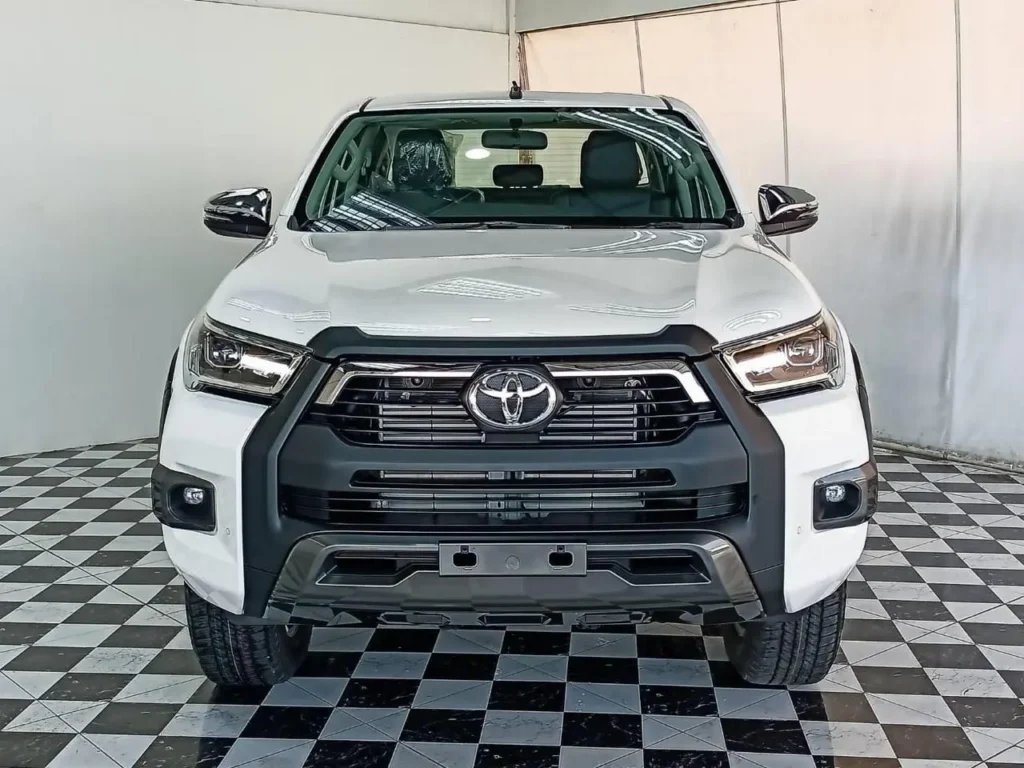
Cabin & Cargo Area Design
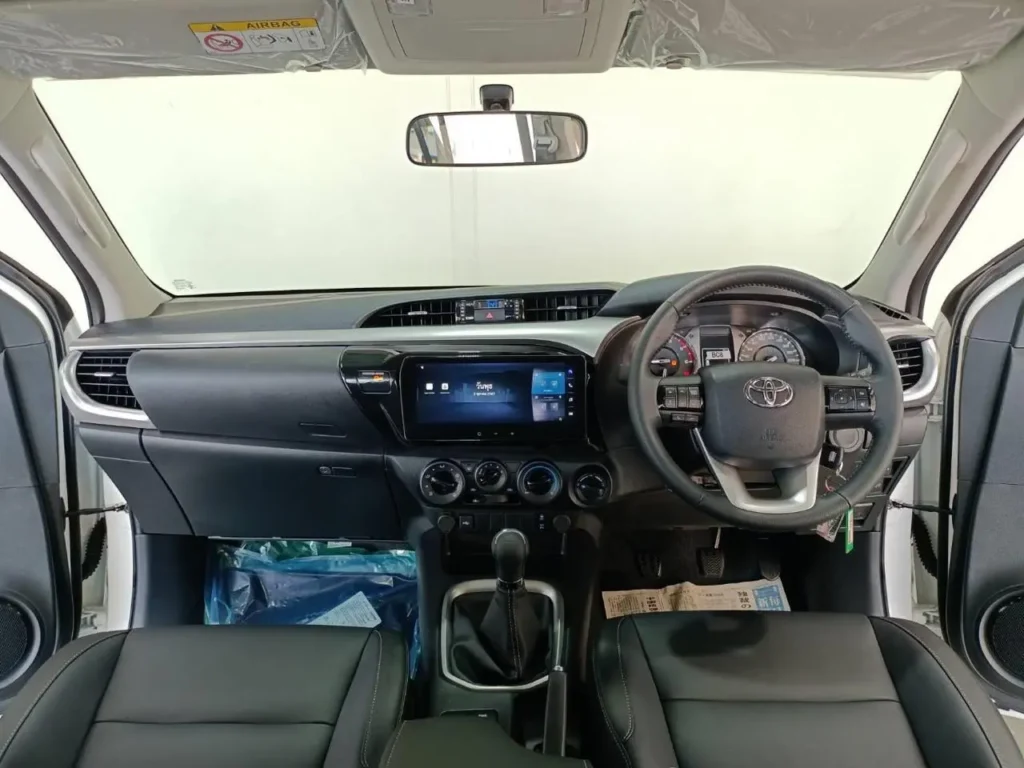
The double-cab RHD Hilux provides space for a driver, front passenger, and rear-seat occupants, all contained within the BR6 armored capsule. We pay particular attention to door overlaps, ballistic window frames, and the junction between windshield and roof armor to maintain continuous ballistic coverage.
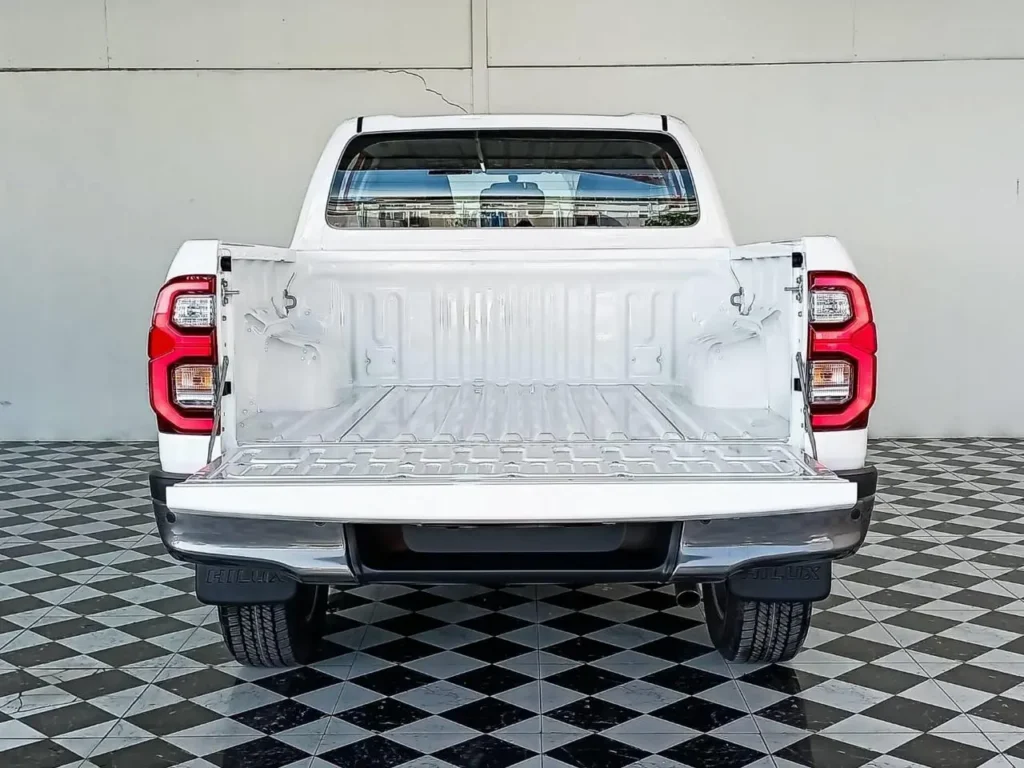
The cargo bed remains available for equipment or task-specific modules. For example, some customers fit lockable storage units, utility racking, or auxiliary power systems in the bed area without interfering with the protected cabin space.
Under the hood, components such as the battery and ECU can receive additional shielding where required by a project brief. These details help protect key systems so that the vehicle continues to function in difficult conditions.
5. Shop Variant: Toyota RHD Hilux 2.8L BR6 Armored Pickup
On our shop platform, the Toyota RHD Hilux 2.8L BR6 Armored Pickup appears as a product entry for customers who want a clear starting point for discussions. The core specification mirrors the detailed product page, with RHD layout, 2.8L diesel engine, and BR6 protection around the cabin.
From a fleet management perspective, having a documented baseline configuration helps with standardizing procurement, training, and maintenance procedures. It also simplifies documentation for compliance, auditing, and insurance purposes.
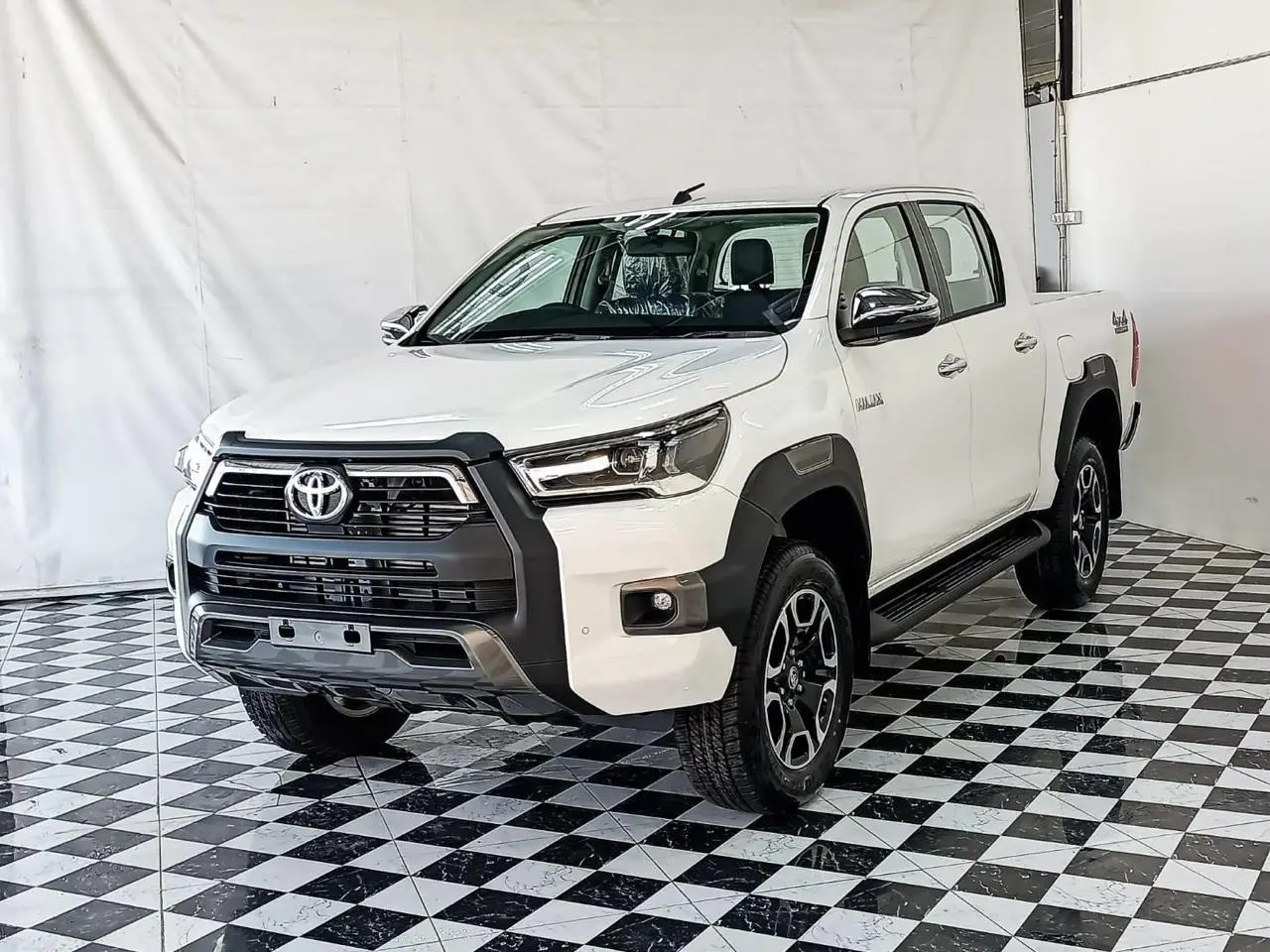
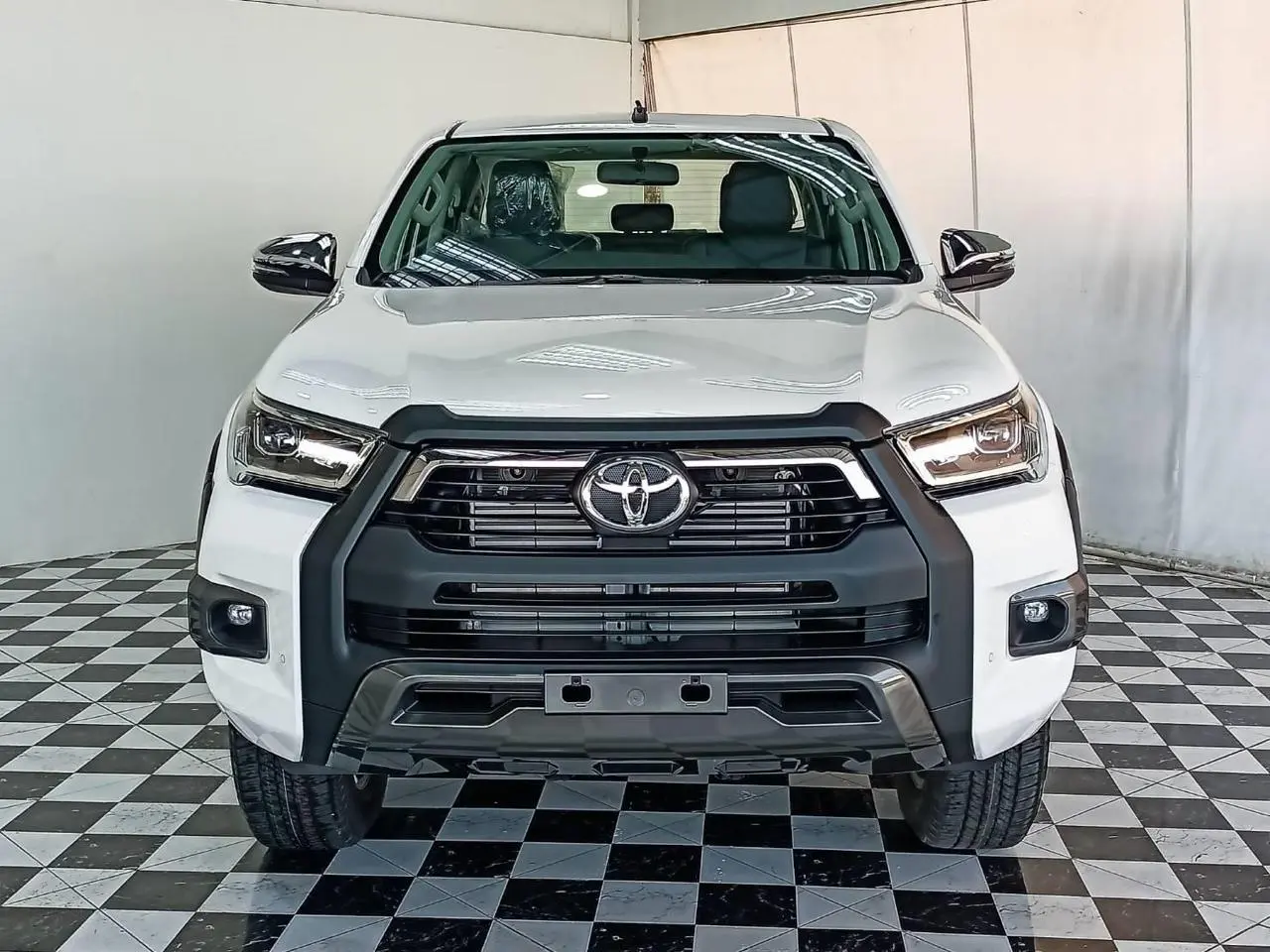
Customers can then request modifications around this basis. That might include interior upgrades, specialist communication equipment, rear cargo modules, or minor changes to seating layouts so that the vehicle aligns more closely with its intended task profile.
6. Cash‑in‑Transit Adaptations of the Hilux Platform
The Hilux chassis is also suitable for cash‑in‑transit and valuables transport, where the open bed can host a dedicated armored cash box. In these setups, the cab can remain armored for the crew, while a secure rear module stores valuables behind additional armored walls, locking systems, and sometimes surveillance equipment.
Our cash‑in‑transit configurations prioritize controlled access and protected storage. These features adapt the standard Hilux utility profile into a specialized logistics asset for banks, retailers, and service providers who move high‑value goods.
Compared to larger truck‑based armored carriers, a Hilux cash‑in‑transit vehicle offers a more compact footprint that can navigate tighter streets and limited access areas. This makes it practical for dense urban zones or mixed rural‑urban routes where maneuverability and discretion both matter.
Did You Know?
In 2024 the Toyota Hilux was reported as South Africa’s best‑selling vehicle with 32,656 units sold, a footprint that directly supports the strong demand for armored Hilux conversions in that market.
7. Comparing the Armored Hilux with Armored Toyota SUVs
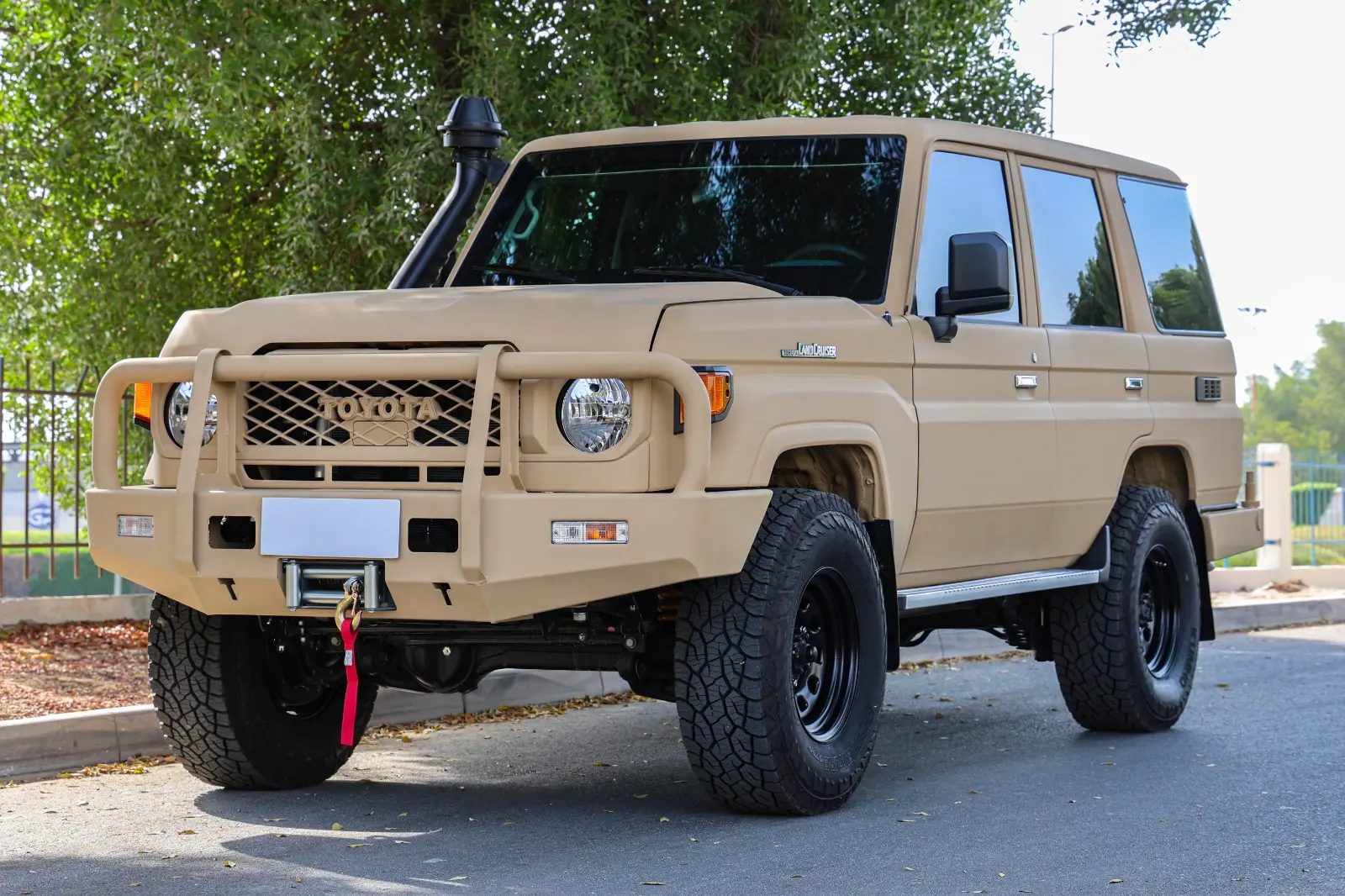
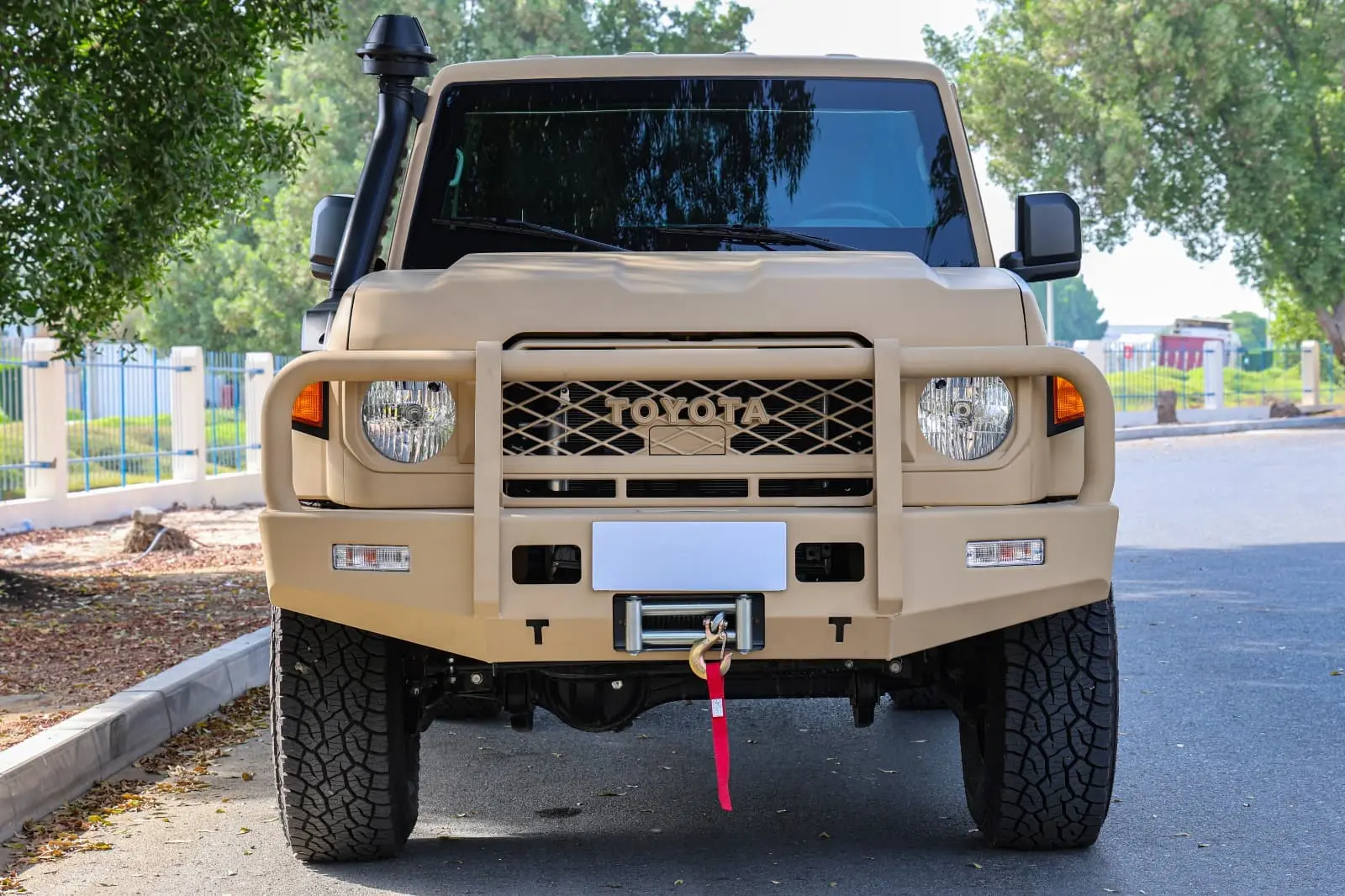
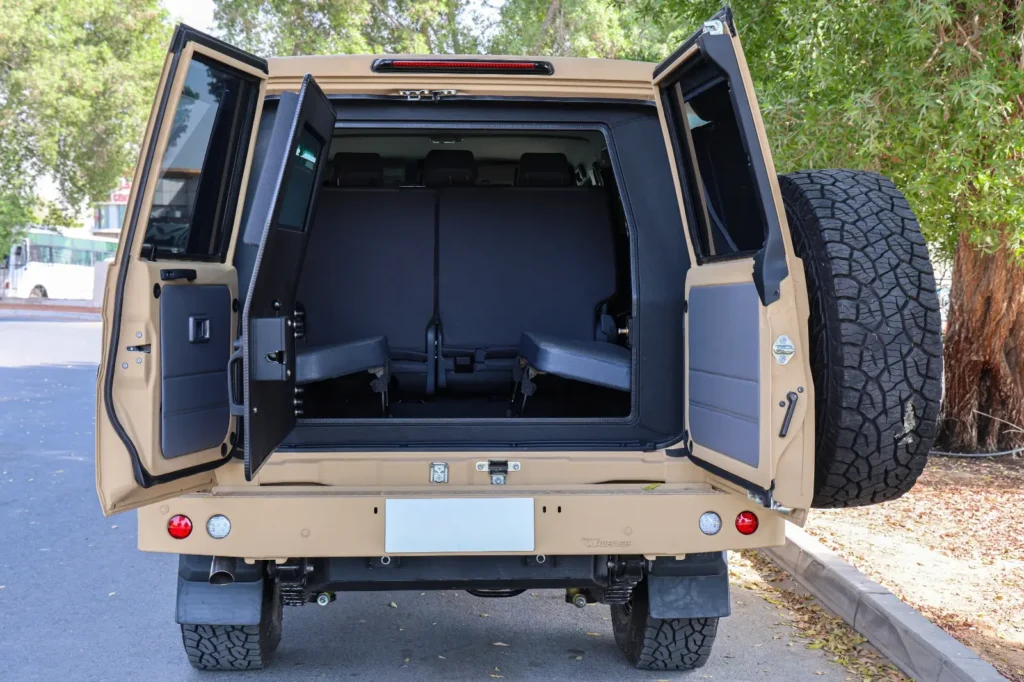
Many customers consider both armored pickups and SUVs for the same roles, so it helps to compare the Hilux with models like the Toyota Land Cruiser 76 BR6 Armored SUV. Both platforms can share similar BR6 armor concepts, powertrains, and suspension upgrades, yet they differ in layout and cargo handling.
An SUV such as the Land Cruiser 76 encloses passengers and cargo in a single body, which can be beneficial for certain mission profiles. The Hilux, by contrast, separates the armored cabin from the rear bed, which is helpful if you need open cargo space, modular boxes, or task‑specific equipment that you might want to change over time.
For some clients, the decision comes down to how equipment is stored and accessed throughout the day. If you frequently carry large or irregular loads, or need to swap cargo modules between vehicles, the Hilux bed layout offers clear advantages. If you prefer a single fully enclosed cabin for both passengers and gear, an SUV platform may be more suitable.
8. Inside the Cabin: Ergonomics and Comfort in Armored Hilux Builds
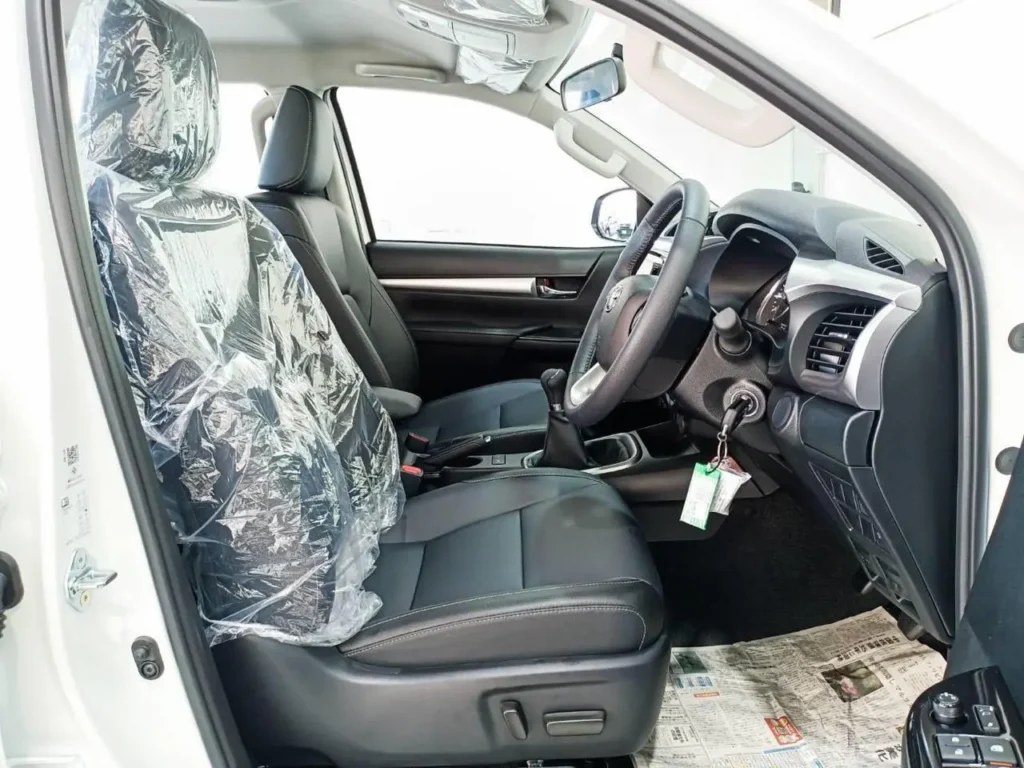
Armoring a vehicle inevitably changes aspects of the interior, yet our goal is to preserve as much of the original Hilux comfort and usability as possible. We start with the OEM dashboard, seats, and controls, then integrate ballistic glass and armor panels so they feel cohesive rather than added on.
Extra weight from the armor can influence noise levels and ride characteristics, so we focus on sealing, trimming, and suspension tuning to keep the cabin comfortable for long shifts. Options such as upgraded upholstery, climate control enhancements, and additional sound insulation can all be specified if occupant comfort is a priority.
We also ensure that critical controls stay intuitive. For instance, if we integrate additional switches for lighting or external systems, we group them logically around the driver so they can be used with minimal distraction. The aim is to keep the armored Hilux as close as possible to a standard Hilux in day‑to‑day usability, while offering a higher level of protection.
9. The Hilux in the Wider Armored Vehicle Ecosystem
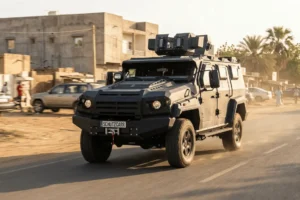
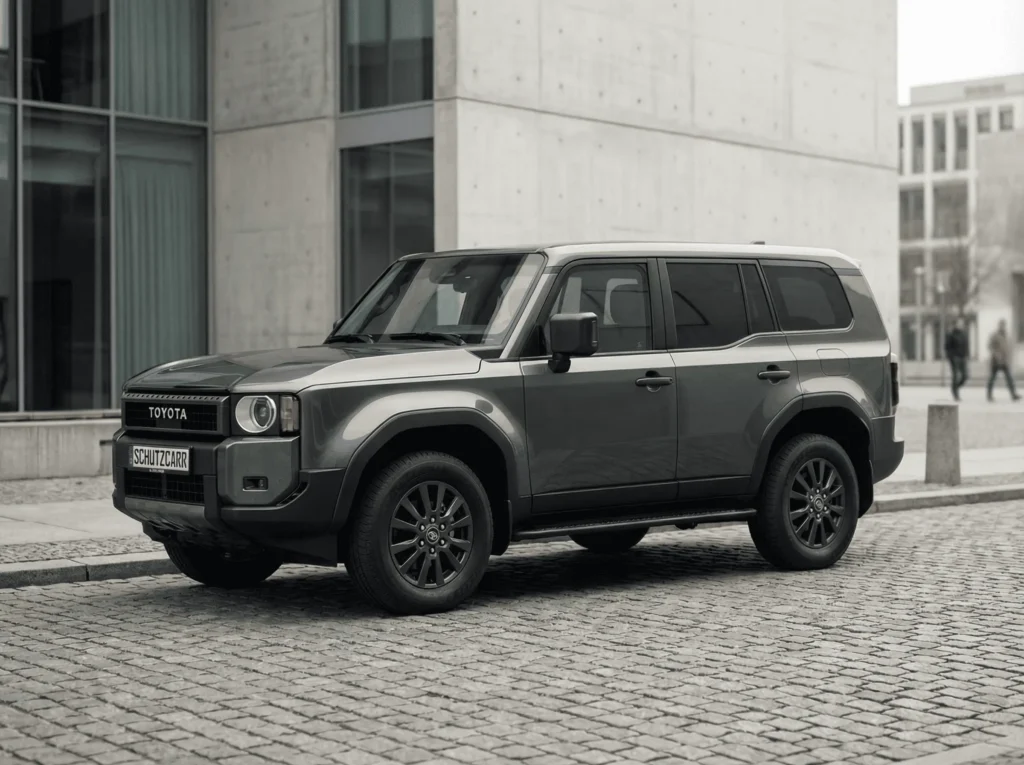
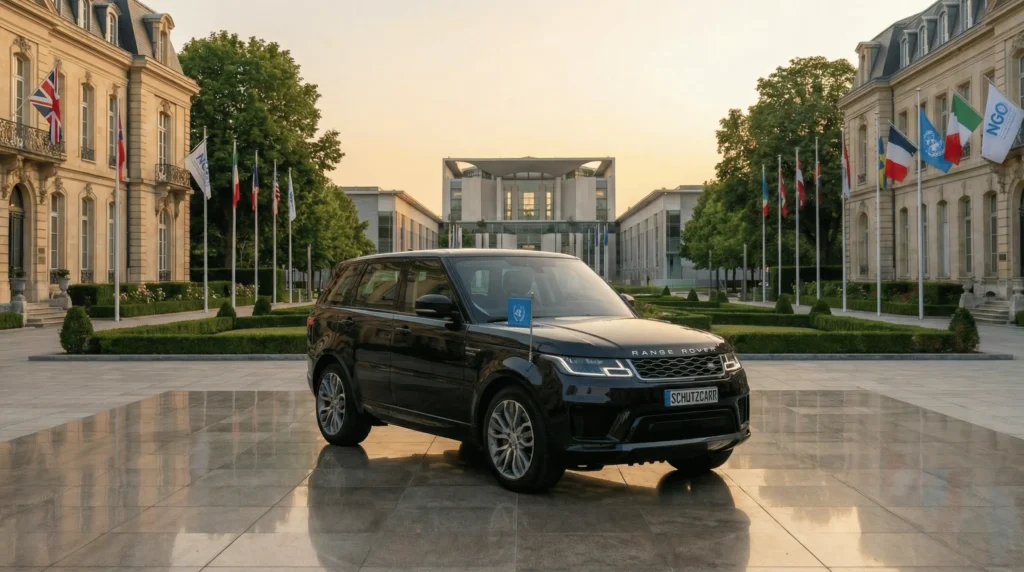
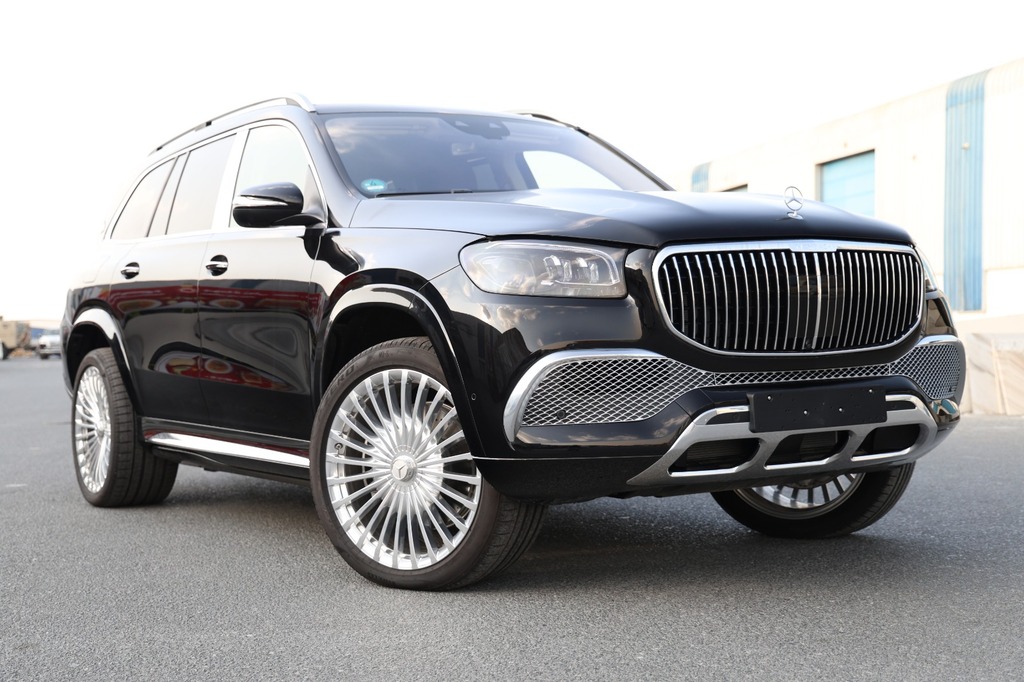
The armored Hilux does not exist in isolation. It sits within a broader ecosystem of armored pickups, SUVs, and armored personnel carriers that fleets might operate together. For instance, our range includes APCs, luxury SUVs, and extended wheelbase vehicles, all designed with different roles in mind.
Where the Hilux typically excels is in combining familiar pickup utility with BR6 protection for crews. Some fleets use Hilux pickups for escort and patrol roles alongside larger APCs that carry more people or specialized equipment. Others rely on Hilux units as primary vehicles on routes that demand compact size and off‑road ability.
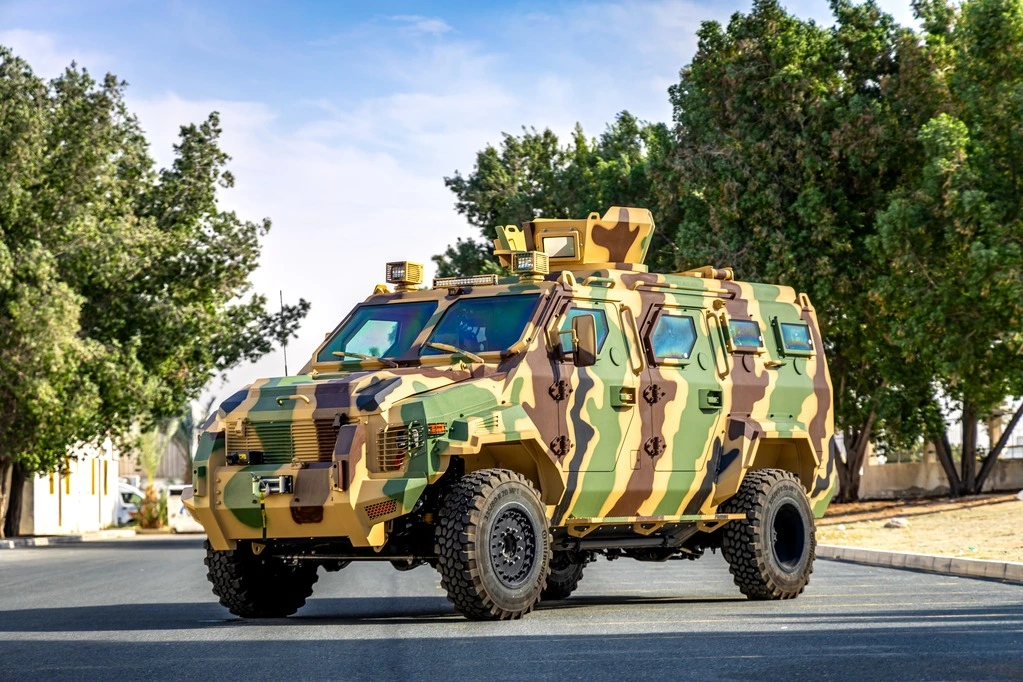
Globally, the armored vehicle market has been expanding, with increased use of armored pickups and 4x4s in security‑focused fleets. This trend supports continuous development in Hilux armoring techniques, materials, and integration methods so that each new generation of builds benefits from lessons learned in real‑world service.
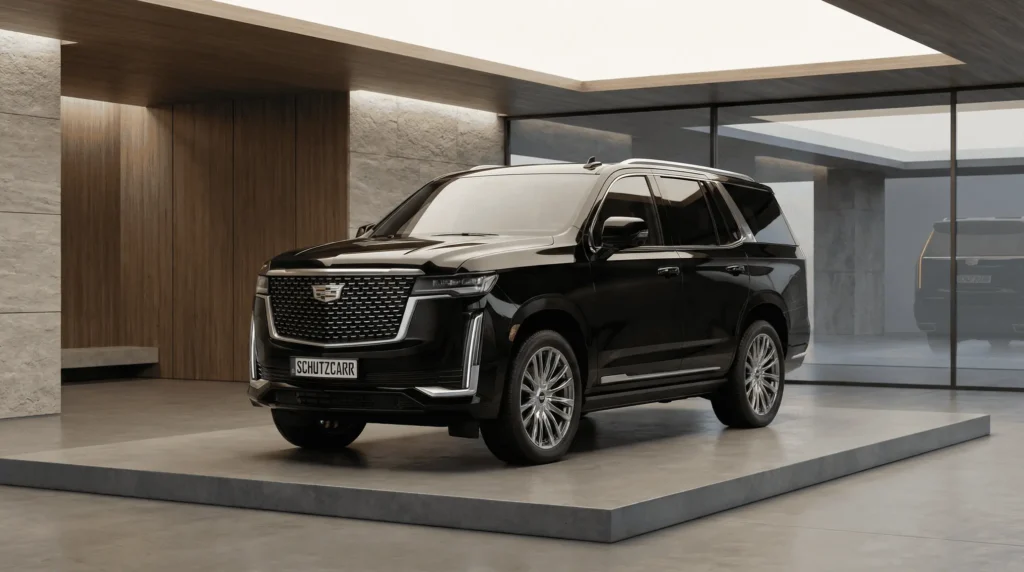
10. Visual Gallery: From Hilux to Land Cruiser and Beyond
To understand how the Hilux fits visually within the armored lineup, it helps to view it alongside related models. For example, our armored Toyota Land Cruiser 76 gallery shows a boxy, utilitarian SUV with a strong off‑road stance, which differs from the lower, more pickup‑oriented Hilux silhouette.
Likewise, extended SUVs and high‑end luxury models illustrate how armoring can be integrated across very different platforms. The common thread is a focus on discreet appearance, robust engineering, and careful integration of armor so that the vehicles remain practical and presentable in daily use.
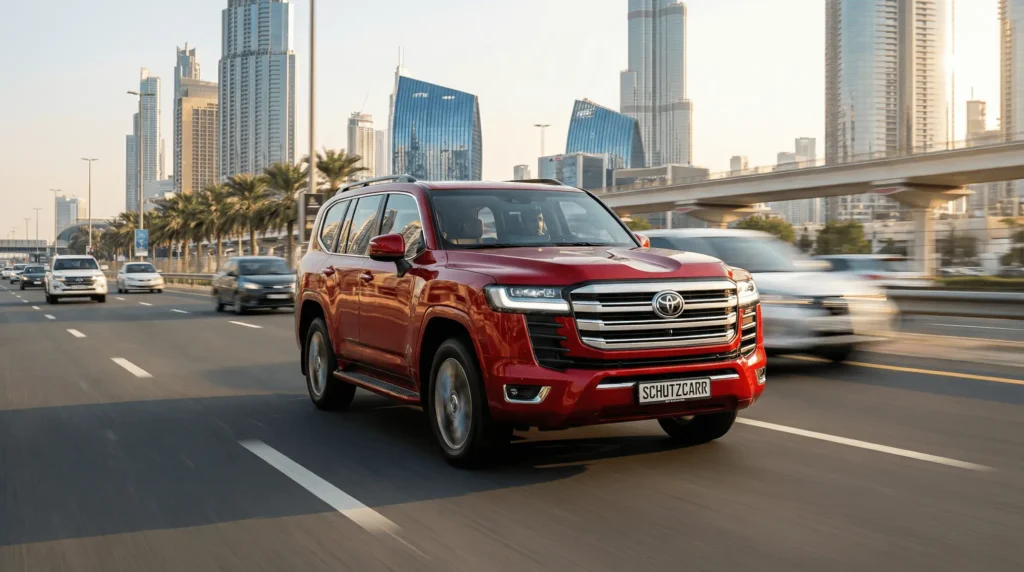
These visual references can help decision‑makers picture how an armored Hilux would sit within an existing fleet composed of SUVs, sedans, and APCs. Across all of them, our approach is consistent: clear specifications, careful engineering, and build quality designed around long‑term operational use.
Conclusion
The armored Toyota Hilux has become a key tool for organizations that need secure, reliable, and versatile pickups. Its popularity in standard form, combined with strong support from armoring specialists, has created a mature ecosystem of BR6 Hilux configurations that cover personnel transport, cash‑in‑transit, and mixed utility roles.
When you evaluate an armored Hilux for your fleet, it helps to think in terms of base powertrain, drive layout, protection level, and role‑specific adaptations for the cargo area and interior. With a clear brief and a proven platform, we can configure a Hilux‑based solution that supports your operational needs while retaining the practicality and familiarity that have made the Hilux such a widely used vehicle worldwide.